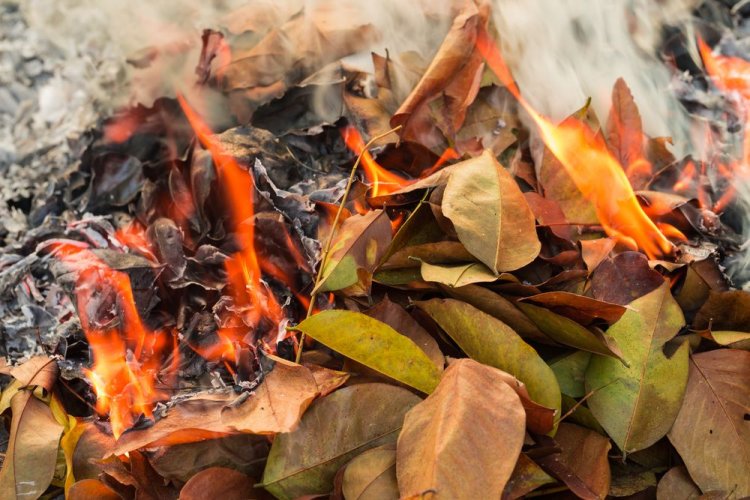
In Ukraine, in the autumn period, the problem of burning dry leaves by citizens, which causes air pollution with toxic and carcinogenic substances, worsens.
People who are responsible for the occurrence of fires in ecosystems face criminal and administrative liability, and these actions can be qualified as sabotage, the State Inspectorate in the Vinnytsia region reports on Facebook.
When fallen leaves and other plant remains are burned, dust, nitrogen oxides, carbon monoxide, heavy metals and a number of carcinogenic compounds enter the air. In smoldering leaves without access to oxygen, benzopyrene is released, which can cause cancer in humans, and dioxin is also released - one of the most poisonous substances.
In addition, during burning, the entire microflora that ensures normal biological processes dies. After such actions, the fertile soil cover is restored only after 5-6 years.
Flora and fauna also suffer great damage.
Fines for burning fallen leaves range from UAH 3,060 to UAH 6,120, and in nature conservation areas – from UAH 6,120 to UAH 12,240.
The message also emphasized that during martial law, the burning of dry grass or other vegetation can be qualified by law enforcement agencies as sabotage according to Article 113 of the Criminal Code.
Earlier, EcoPolitic wrote, Ukraine will be strengthened criminal liability for arson fallen leaves, stubble, etc., which provoked the destruction or damage of plant life objects.
As EcoPolitic previously reported, burning weed can cause cancer and pollution of nature.