Over €50 billion for carbon: EU revenues from eco-taxes have tripled in six years – Eurostat

Over €50 billion for carbon: EU revenues from eco-taxes have tripled in six years – Eurostat Shutterstock

Maria Semenova

The largest taxpayer is the energy sector, followed by the manufacturing industry

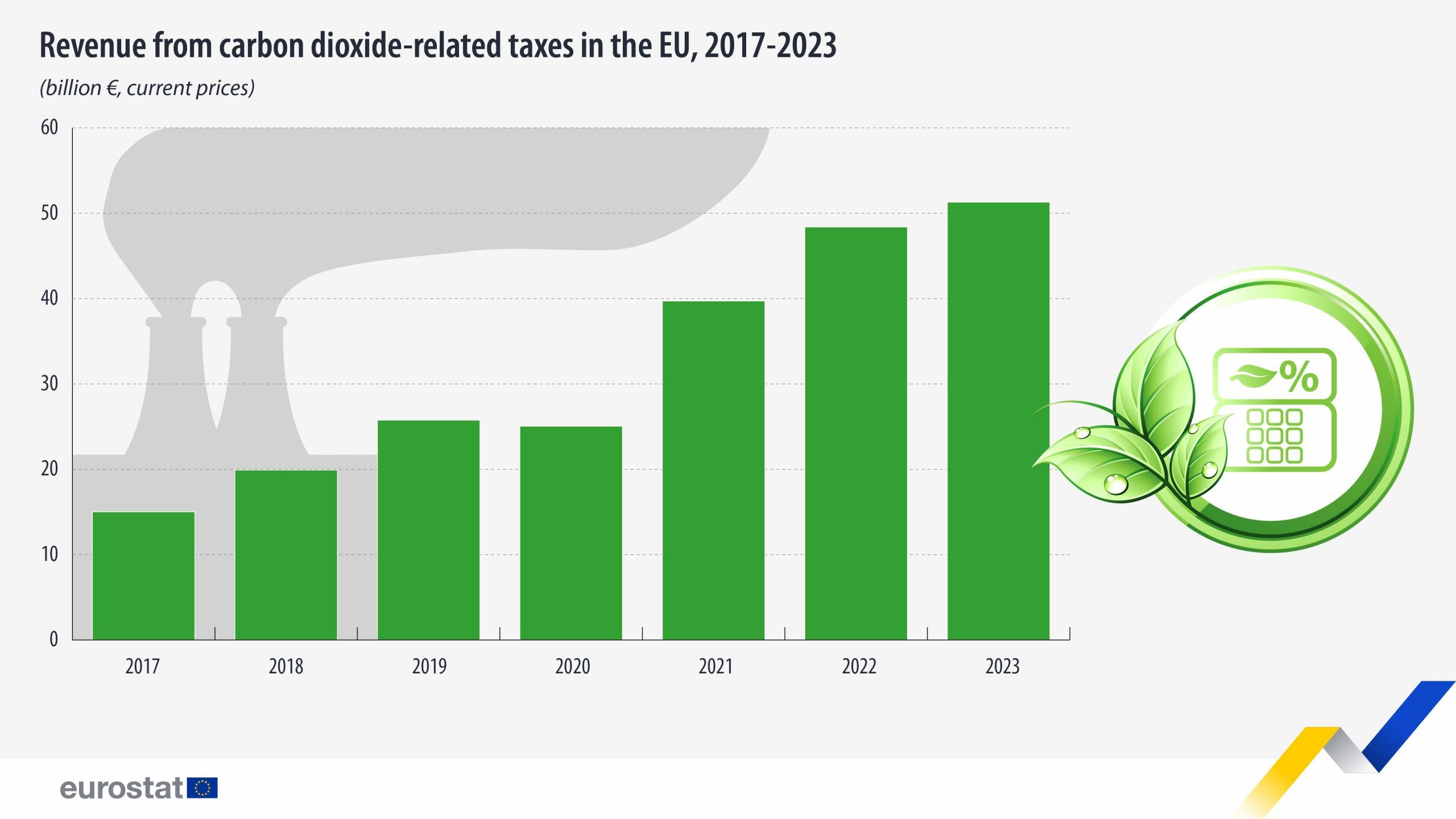
In the European Union, revenues from carbon taxes increased from €15 billion to €51 billion between 2017 and 2023. These taxes are levied on the CO2 content of the fossil fuels used by taxpayers.

This is according to data from Eurostat.

During the same period, the share of carbon taxes in the overall energy tax structure more than tripled, from 6% in 2017 to 19.7% in 2023.
ec.europa.eu/eurostat

Source: ec.europa.eu/eurostat.

Who pays more?

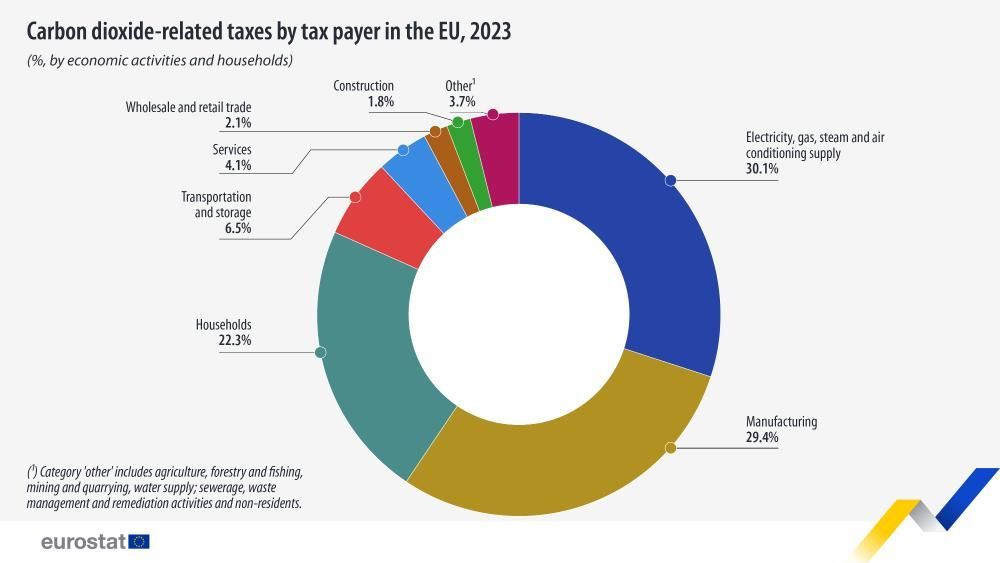
In 2023, EU households accounted for 22.3% of carbon tax payments. At that time, businesses paid the lion's share of carbon taxes – 76.4%. Non-residents of the European Union accounted for another 1.3% of revenues.

The energy sector was the largest payer of eco-taxes. Carbonization fees for the supply of gas, electricity, and steam accounted for 30.1% of this amount of revenue to the EU budget.

The manufacturing industry came in second place, accounting for 29.4% of carbon taxes paid.
ec.europa.eu/eurostat

EcoPolitic previously reported that, starting from January 1, 2026, the Carbon Border Adjustment Mechanism (CBAM) has entered into force in the EU. Within its first week of procedure, importers declared nearly 1.7 million t of goods.


Tags: , , ,
Related
CBAM is already in effect. What products are importers declaring?

Ferrous metallurgy remains the undisputed leader

Fire disaster in Odessa region: fire destroyed 645 hectares in the Danube Reserve

Damage to the environment caused by air pollution alone amounted to approximately UAH 5 billion

The EU will compensate for EU ETS emissions allowances for 20 more economic sectors

In particular, this concerns the production of organic chemicals, as well as certain processes in the manufacture of batteries and glass

European Commission strengthens CBAM: expanding scope, closing loopholes, support fund for producers

Officials acknowledged that the system was too broad, cumbersome, and provided too many opportunities for circumvention