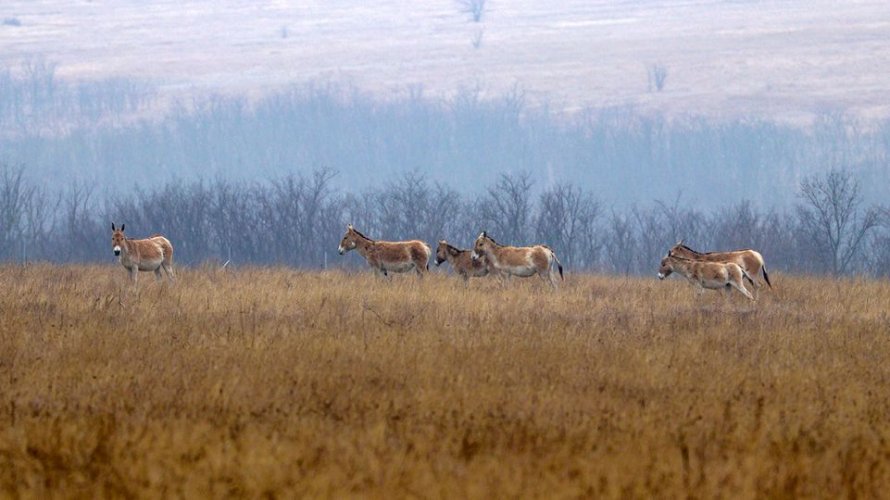
As part of the rewilding, wild animals that once lived in the European steppes are being returned to the Budzhak territory: wild kulan donkeys, European fallow deer, steppe marmots, common hamsters, and others.
This was reported by the environmental organization Rewilding Ukraine on Facebook.
In the Budzhak steppe in the south of Odesa region, a herd of wild kulan and six cubs successfully survived the winter.
"They have to resume the process of natural grazing, which heals the steppe and reduces the risk of natural fires. At first, all the animals are acclimatized on a large fenced steppe area, which can also serve as a nursery for wild animals. After some time, we released some of the kulan into the wild steppe, and this is probably the only wild kulan herd in Europe," the organization reports.
It is noted that after the occupation of the Askania-Nova Biosphere Reserve and the Biryuchyi Island Spit, there are no other territories left to replenish the herd. That is why they decided to release the kulan into the steppe in Odesa region.
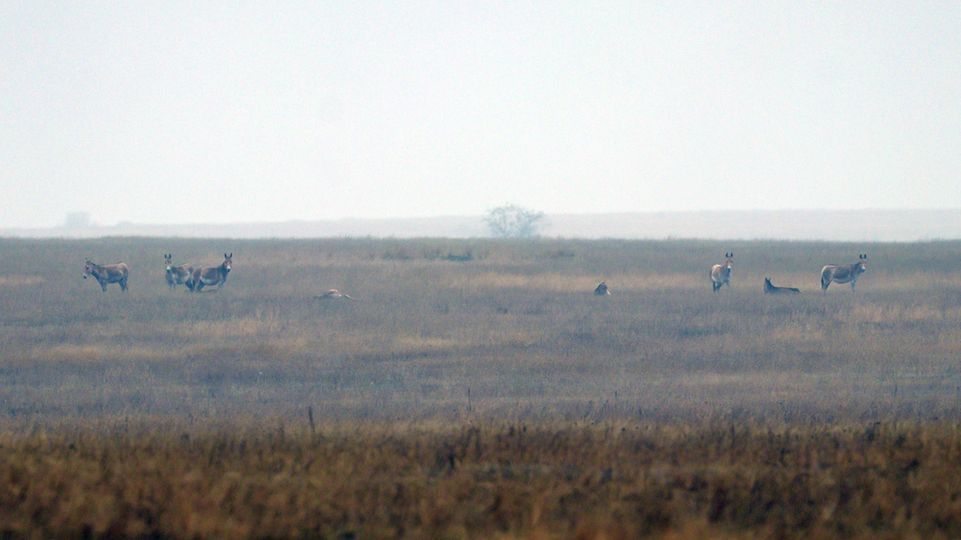
As it became known, the first babies have already started to appear. Six little kulans were born last year, which gives hope for the future of the population of this species.
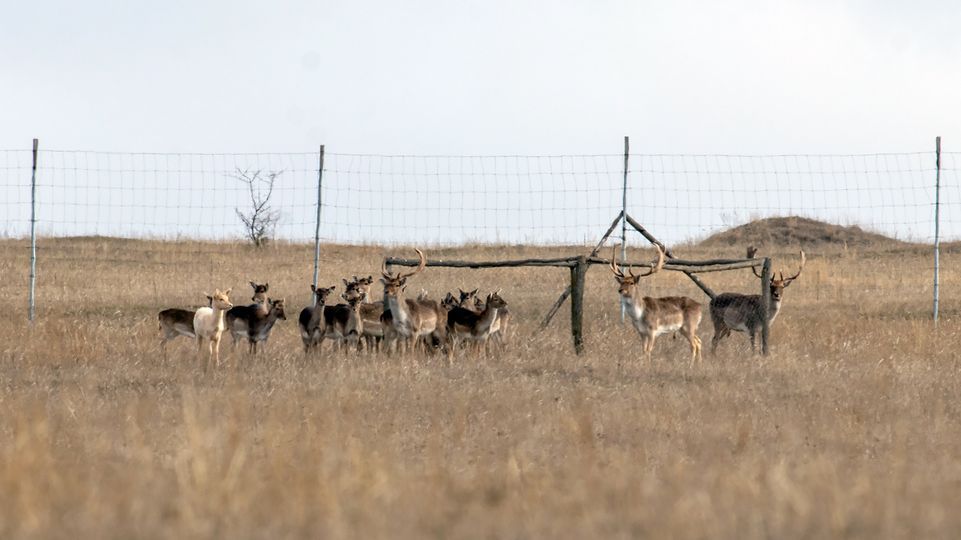
"The winter has passed, and we can happily report that the Kulans have endured the bad weather and the cold season well, both in the enclosure and in the wild. All the babies have survived, the animals are keeping together, they look healthy and calm, they are happy about the first young grass," – they say in Rewilding Ukraine.
As Ecopolitic previously reported, in the Zakarpattia National Park, the entrepreneur purchased about a hundred deer fawns from New Zealand, England, Austria, and Hungary at his own expense to restore their population in the wild.