Lviv residents turned 27 thousand tons of garbage into fertilizer in four years

Lviv residents turned 27 thousand tons of garbage into fertilizer in four years shutterstock
Katerina Belousova

The capacity of the composting station reaches 30,000 tons per year

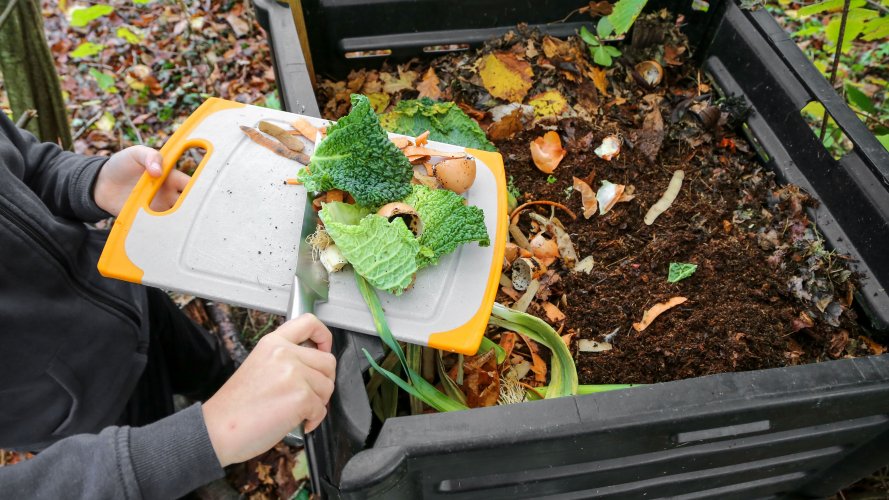
Over the four years of the composting station's operation, Lviv residents have handed over 27,000 tons of organic waste for recycling.

They have produced and sold 2,900 tons of organic fertilizer that can be used for gardens and vegetable gardens, the Green City utility company reports on Facebook.

"The city's composting station has been operating for a long time and is confidently keeping pace with global environmental standards. An important part of our mission is the processing of separately collected organic waste," the statement reads.

It is noted that the station can process 30,000 tons of organic waste per year. This ensures their efficient processing and reuse. In addition, such recycling helps reduce the negative impact on the environment.

"Choose environmentally friendly solutions and join our initiative to preserve the environment with us," the Green City called.

Earlier, EcoPolitic wrote, that in Lviv, containers for separate collection of organic waste are installed at 99% of all container sites in the city.

As EcoPolitic previously reported, in the Kharkiv region of Ukraine, in Liubotyn, composters with a volume of 16 m3 helped to avoid the release of 2644 tons of CO2 equivalent emissions into the atmosphere, which would have been generated during the decomposition of organic waste at a landfill.
Related
Each EU resident generates 12.3 kg of electronic waste — Eurostat

This is almost a third less than the volume of new equipment released onto the market, which points to a risk of growing waste stockpiles and unreported disposal

Waste sorting: where to start, what to sort, where to take it

This can become a useful and straightforward habit if you prepare properly for the process

Where to dispose of hazardous household waste in Lviv, Poltava and Khmelnytskyi: the eco-bus timetable

The list of waste accepted for recycling by the eco-bus varies from city to city

Millions of tonnes of food go to waste: how much food does the average EU resident throw away?

Most food waste is generated in households – it is thrown away by residents themselves, rather than by restaurants or supermarkets