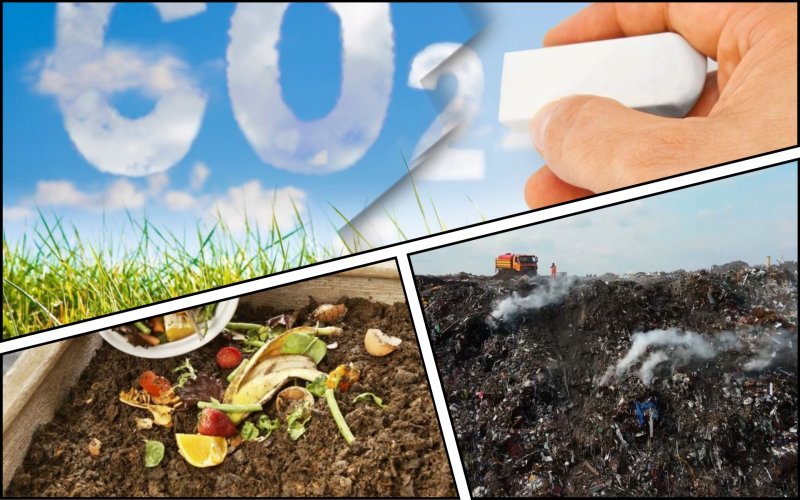
In the Kharkiv region of Liubotyn, 16-m3 composters helped prevent 2,644 tons of CO2 equivalent emissions from entering the atmosphere, which would have been generated by the decomposition of organic waste at a landfill.
This recycling of organic waste produced only 0.2 tons of carbon emissions, the initiators of the composting project and eco-activists from the NGO Zero Waste Kharkiv said on Facebook.
They emphasized that composting helps to solve the problem of disposal of fallen leaves, other plant waste, and household organic waste. In addition, composting reduces the risk of dangerous landfill fires, as the accumulation of landfill gas can lead to spontaneous combustion.
The environmental activists noted that the introduction of composting only for multi-apartment residential buildings in Liubotyn will reduce greenhouse gas emissions by 130 tons by 2030. The community will also be able to reduce methane emissions by 30% if people compost 20% of their organic waste.
The report added that the amount of carbon emissions from the decomposition of 10 thousand tons of organic waste is equivalent to the operation of 6639 cars for a year.
"The creation of an effective and well-organized waste management system at the local level is intended to solve a whole set of important problems," said expert on waste management Olga Khandogina.
She emphasized that the creation of a network of public composters and composting in private Lyubotin households will allow:
- reduce waste transportation costs;
- to improve the sanitary and hygienic situation;
- get valuable fertilizer (compost);
- reduce the number of spontaneous combustion at landfills;
- reduce greenhouse gas emissions.
Earlier, EcoPolitic wrote, that in August 2022, the first public composter went into operation in Lyubotyn, Kharkiv region.
As EcoPolitic previously reported, in the Lutsk community, all schools installed four heat-saving composters with a volume of 1,800 liters.