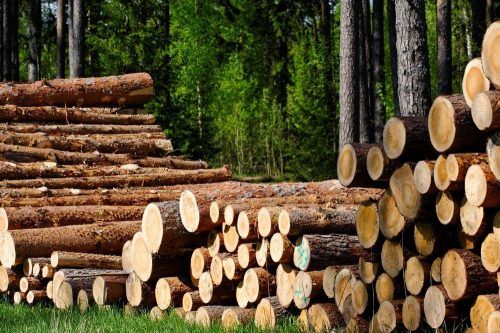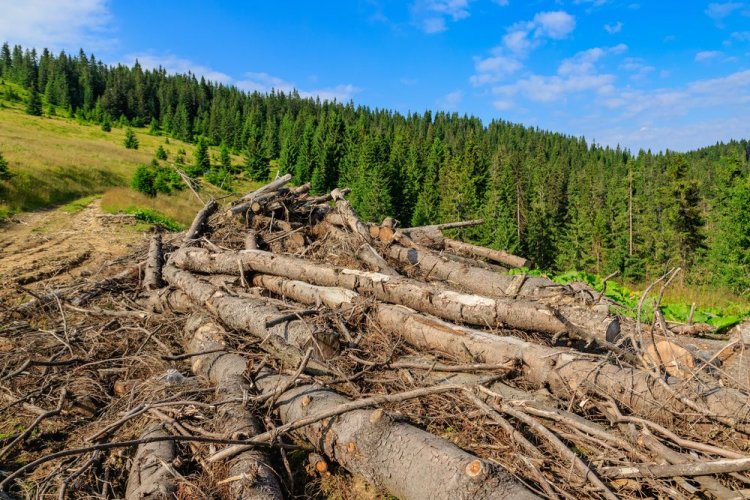
A return to clear-cutting, carte blanche to conceal information from the public, and the destruction of red-listed plants—the environmental community has criticized new changes that the State Agency of Forest Resources of Ukraine is trying to legalize through the Cabinet of Ministers.
According to Petro Testov, head of the analytical department of the Ukrainian Nature Conservation Group (UNCG), in his Telegram channel, this concerns a draft resolution "On Amendments to Certain Resolutions of the Cabinet of Ministers of Ukraine Regarding the Regulation of Timber Harvesting."
"This is a rollback of almost all environmental protection regulations that were introduced in 2020-2023 and the legalization of illegal logging, which is currently the subject of criminal proceedings and suspicions," the environmentalist writes.
A complex of anti-environmental changes
The eco-activist highlights several harmful and openly criminal practices that the resolution will approve if adopted:
- The return of clear-cutting. In particular, this refers to forest restoration works and logging in sparse forests in the Carpathian Mountains. The conservationist considers this especially hypocritical given the ongoing announcements from the State Forest Resources Agency about the ban on clear-cutting in the Carpathians;
- Blocking access to information. One of the changes is the cancellation of the requirement to publish data about sanitary logging on data.gov.ua;
- Elimination of one of the safeguards that previously prevented formative cutting in natural forests. The eco-activist sees this as preparation for commercial logging in forests where it was previously forbidden;
- Weakening forest protection. The document will abolish the requirement to preserve the oldest trees and at the same time make the establishment of protected zones in forests more difficult.
A blow to rare species
What is particularly outrageous is that the document encroaches on legislation in an area that does not directly concern forests. According to Petro Testov, the State Forestry Agency initiated amendments to the "Procedure for the creation of protected areas for the conservation of species listed in the Red Book of Ukraine."
The text of the resolution looks like an attempt to push through a "package" of regulations that would simplify construction in the Carpathians. It is telling that these supposedly "technical changes" suspiciously resemble those mentioned by the Transcarpathian Regional State Administration. The UNCG wrote that they were considered necessary to simplify the construction of wind farms and resorts.
“I doubt that this will be implemented. However, the fact that the State Forest Resources Agency has overstepped its authority and has actually sought to make the protection of Red Data Book species impossible not only in forests but also on subalpine meadows is already a fact,” emphasized Petro Tiestov.
EcoPolitic previously reported that the government might adopt the abolition of the EIA procedure for total sanitary logging, citing martial law. The National Agency on Corruption Prevention (NAZK) saw corruption risks in this document.