Every year, active leaf fall in Ukraine is accompanied by the burning of fallen tree crowns. However, if this harmful practice is abandoned, leaves can significantly help the ecosystem.
The State Environmental Inspection Agency has outlined ways to use fallen leaves and reminded the public of the fines for burning them.
From weed suppression to soil enrichment
Leaves have several useful roles.
- Natural fertilizer. Leaf decomposition enriches the soil with phosphorus, nitrogen, and potassium-substances also found in fertilizers. As leaves decompose, they turn into fertile humus. Therefore, if fallen crowns are left in tree wells, they nourish and protect the trees from diseases.
- Ecological filter. According to experts, leaves also act as a natural barrier-retaining dust, heavy metals, and dirt, softening the runoff of rainwater, and helping to avoid flooding from heavy rain. Additionally, they maintain the microclimate around trees, allowing the soil to retain moisture and warmth longer. Thus, plants are better protected from freezing.
If you choose fire
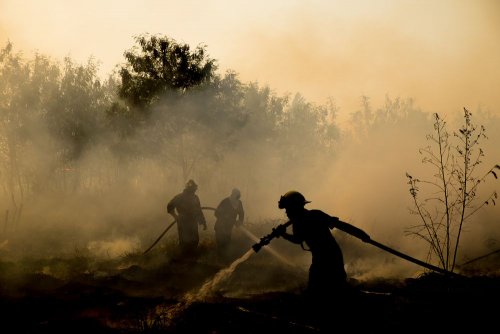
Destroying leaves by fire harms both health and the environment.
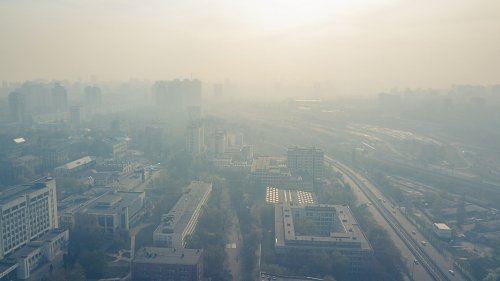
- Air pollution. Burning 1 kg of leaves emits up to 9 kg of carbon monoxide and up to 0.5 kg of particulates. At the same time, this method of disposal fills the air with carcinogenic toxins.
- Irrecoverable loss of nutrients. Leaf decomposition returns to the soil what the tree has taken from it. By burning fallen crowns, a person disrupts the natural order.
Responsibility for the wrong choice
Burning leaves is not only a crime against the environment but also an administrative offense. Committing such an act leads to penalties under the current Code of Administrative Offenses:
- A fine ranging from 1,530 to 4,590 UAH for citizens, and from 4,590 to 15,300 UAH for officials, under Article 77 “Violation of fire safety requirements in forests.”
- A fine ranging from 3,060 to 6,120 UAH for citizens, and from 15,300 to 21,420 UAH for officials, under Article 77-1 “Unauthorized burning of vegetation or its remnants.” If leaf burning occurs on protected lands, these amounts increase-to 5,120–12,240 UAH for citizens and 21,420–30,600 UAH for officials.
EcoPolitic has previously reported on how leaves are used in Ukrainian cities.