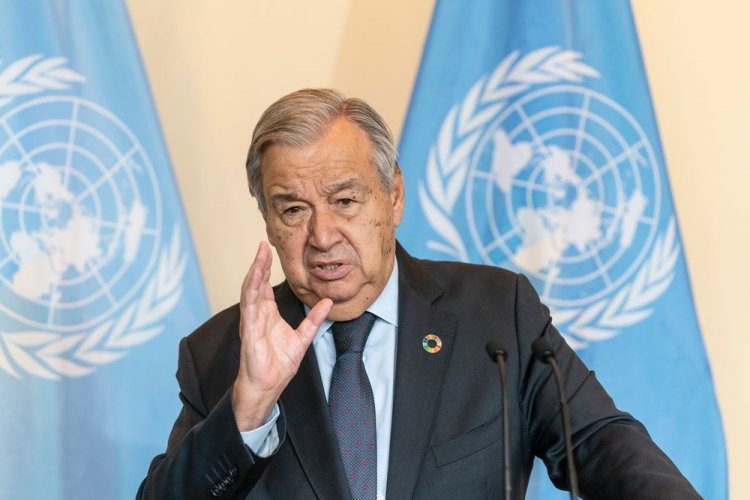
UN Secretary-General António Guterres said that it is still technically possible to limit the average global temperature increase to 1.5°C by the end of the century.
This was reported by the press service of the United Nations Secretary-General on its official website.
António Guterres stressed that it is still possible to limit global warming to 1.5°C by the end of the century. After all, the Paris Climate Agreement has changed the situation for the better over the past 10 years, as the projected global temperature increase has fallen from 4°C to less than 3°C. But now we need to develop new plans to combat global climate change by 2035.
Leaders from more than 100 countries announced or confirmed new national climate change plans during the UN summit.
The main points of the UN Secretary-General's speech at the summit:
1) Last year, investment in clean energy was twice as high as in fossil fuels, so clean energy is competitive;
2) China has achieved its 2030 wind and solar energy targets six years ahead of schedule.
3) India has achieved 50% of its electricity from non-fossil sources five years ahead of schedule.
Guterres also named five factors influencing climate change:
1) Energy is the first. “Fossil fuels still dominate. We must accelerate the transition to clean energy,” the official said;
2) Methane emissions must be reduced;
3) The destruction of forests, as the largest natural carbon sinks, must be stopped;
4) Technologies that reduce emissions from heavy industry must be promoted;
5) Developing countries, which have contributed the least to the climate crisis, suffer the most from it, so it is necessary to provide financial assistance to such countries.
The science demands #ClimateAction.
The law commands it.
The economics compel it.
And people are calling for it.
At the #UNGA Climate Summit, I called on leaders to step-up their national climate plans to accelerate a just energy transition globally.https://t.co/YKctgL33qk pic.twitter.com/f7DptPuQG3
— António Guterres (@antonioguterres) September 24, 2025
It should be noted that EU environment ministers plan to set a new target of reducing greenhouse gas emissions by 90% by 2040.
The changes concern a 90% reduction in greenhouse gas emissions for European Union countries and signatory countries by 2040 compared to 1990 levels. At the meeting, the European Commission also outlined the key elements and conditions that it should reflect in its legislative proposals on greenhouse gas emissions after 2030 so that the Paris Agreement signatories can achieve their climate goals by 2040.
As EcoPolitics wrote in September, in Brussels (Belgium), the United Nations called on countries to develop more ambitious climate plans within a month, with the aim of putting pressure on large economies, including the EU and China.