Ukraine has been trying to implement a European-style chemical safety reform for several years. However, despite the implementation of the REACH and CLP Regulations, which form the basis of the chemical safety system in the EU, into domestic legislation, progress has been extremely slow. Businesses are not receiving the necessary explanations, the state is unable to launch the necessary mechanisms, and deadlines are being postponed.
EcoPolitic asked experts what is happening with the practical implementation of REACH and CLP in Ukraine, why the process has been delayed, and what steps are needed to finally get the reform up and running.
CLP and REACH regulations: what are these documents?
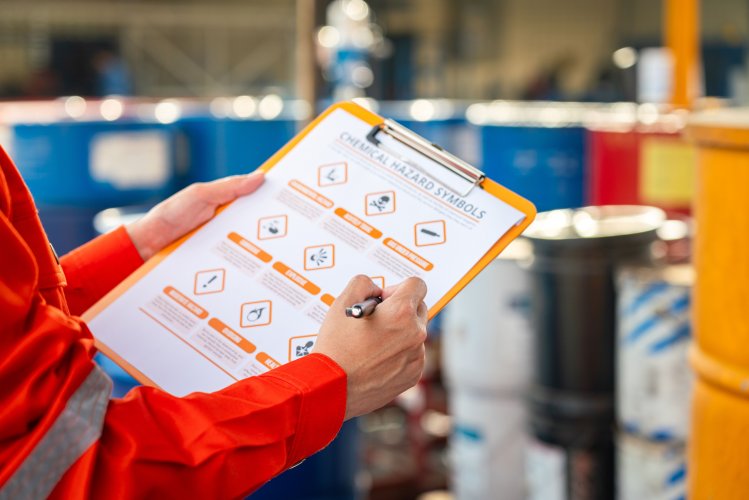
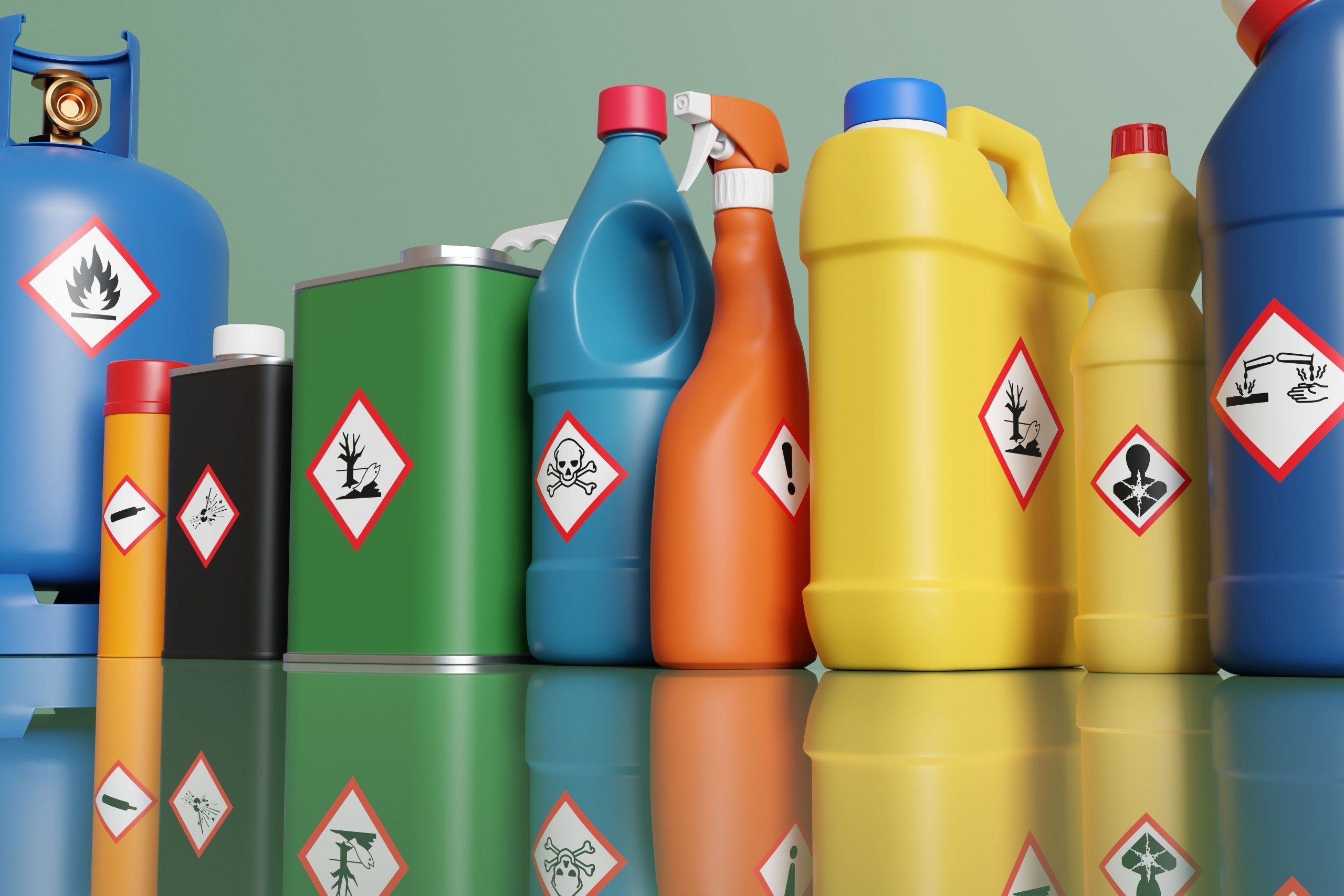
CLP (Classification, Labelling and Packaging) is an EU regulation concerning the classification, labelling, and packaging of chemicals and mixtures in the European Union. It provides for the classification and labeling of chemicals in accordance with the international GHS system (Globally Harmonized System of Classification and Labelling of Chemicals, developed by the UN). This regulation is legally binding in all EU member states and is directly applicable in all industries.
In Ukraine, it was implemented on May 10, 2024. Notifications containing information about chemical substances under this regulation must be submitted to the Ministry of Economy, Environment and Agriculture of Ukraine, as well as to the Ministry of Health (MoH).

REACH (Registration, Evaluation and Authorisation of CHemicals) is an EU regulation on chemicals and their safe use. It covers the registration, evaluation, authorisation, and restriction of chemical substances.
UA-REACH, implemented on July 23, 2024, requires mandatory registration of all chemical substances that are produced in Ukraine or imported from abroad. The relevant information must be submitted to the Ministry of Economy.
In the EU, new rules regarding the registration, labelling, and classification of chemical substances came into force in December of last year. Officials in the bloc aim to ensure information transparency regarding potential risks posed by certain chemicals. In addition, clear labelling and understandable tags speed up the identification of substances and mixtures.
What updates to chemical safety regulations has the government adopted?
On December 5, the Cabinet of Ministers of Ukraine amended two key documents in the field of chemical safety—the Ukrainian equivalents of the European UA-CLP and UA-REACH Regulations. Here is what they provide for.
-
If a chemical product was already on the market before the UA-CLP regulation entered into force, it may still be placed on the market for one year. That is, if the chemical product was released before January 1, 2027, it can be available on the market until July 1, 2028 without withdrawal, even if non-compliance with the hazard classification, labelling, or packaging of the chemical product is detected.
-
For the same period – one year – the Cabinet of Ministers has extended the validity of the preliminary state registration of a chemical substance – that is, until January 26, 2027. However, lawyer and founder of Koshyk & Partners Law Firm, as well as agrochemistry and chemical products expert of the Professional Association of Environmentalists (PAEW), Olena Koshyk, whom “EcoPolitica” approached for comment, noted that this issue remains unresolved.
“It has been officially announced that the term of preliminary state registration has been extended by another year. However, the amendment to clause 142 of the regulation itself has not been made. The draft resolution included such a provision, but it did not make it into the final version. Therefore, formally, the preliminary registration should end on 26.01.2026, although the political rationale behind the decision could indicate 2027,” she explained.
Therefore, the company’s lawyers are preparing an appeal to obtain an official explanation regarding this legal uncertainty.
-
The deadlines under the UA-CLP Regulation are now as follows:
-
by November 15, 2027 the hazard classification for chemical substances must be carried out, and proper packaging and hazard labeling ensured;
-
by May 1, 2028 the hazard classification for mixtures of chemical substances must be completed, and proper packaging and hazard labeling provided.
-
The provisions of the UA-REACH regulation will be implemented in stages. The specific timeframe will depend on the annual production or import volume of the chemical substance:
-
by October 1, 2029 – for substances in quantities exceeding 1,000 t/year;
-
by June 1, 2031 – for 100–1,000 t/year;
-
by March 1, 2033 – for 1–100 t/year.
President of the All-Ukrainian NGO “Living Planet” Svitlana Berzina also clarified that until October 1, 2028, the requirements of the Technical Regulation on the safety of chemical products regarding the mandatory state registration of chemical substances do not apply:
-
to chemical products placed on the market;
-
to the calculation of their volumes (production, import, placement on the market);
-
to monomers and other chemical substances within polymers;
-
and also to the inclusion of chemical substances contained in articles into the Chemical Safety Information System;
Furthermore, the use of specific signal words is not mandatory until that date.
Difficulties in regulating the circulation of chemicals in Ukraine
According to experts, there are problems on both sides: on the part of manufacturers and retailers, as well as on the part of the state.
Business unpreparedness
Lyudmila Tsyganok, president of the PAEW Association of Environmental Professionals, aptly described the situation from the perspective of companies and entrepreneurs:
"Right now, the picture on the market is very simple and very familiar: some people still have safety data sheets from their previous lives, some labels live their own lives and do not match the classification, and SVHC requests are often only mentioned when someone "calls and asks where the answer is." It's also fun in retail: product cards are filled in as they happen, not as they should be according to the documents."
At the same time, the expert reminded us of the difficulties associated with the war: blackouts, logistical "swings," staff shortages caused, in particular, by mobilization, and "survival" budgets.
Olena Koshyk also emphasized this:
"Ukrainian businesses are operating in conditions of military aggression: shelling, destruction of property, and staff shortages. In such conditions, implementing complex chemical reform without instructions and official materials is an almost impossible task."
Shortcomings on the part of the state
However, the administrative apparatus also lacks a clear order and a ready-to-use system. According to Olena Koshyk, the real reason for the postponement of the UA-CLP and UA-REACH regulations was not the government's declared "harmonization of Ukrainian procedures with European requirements" and "giving businesses the opportunity to adapt," but rather the state's delay in fulfilling its own obligations.
The expert said that for almost four years after the law was passed, the state had not provided any practical explanations regarding it.
"The transition period is coming to an end, the government is announcing the resumption of inspections, but there is no quality information," she said.
Olena Koshyk emphasized that, apart from the law and regulations, no subordinate mechanisms have been developed. According to the expert, currently, there is only a template for a preliminary registration application and a form for reporting hazard classification.
“That is all. Hence the rhetorical question: is fulfilling European obligations in the field of chemical safety really just about writing a law, without establishing mechanisms for its implementation?” she asked.
According to the expert, since 2022, their law firm has sent dozens of official requests to various government agencies asking for clarifications due to existing legal contradictions and gaps. In response, lawyers received mostly formal replies.
Experts from the European Business Association (EBA) have stressed the urgent need to develop practical implementation mechanisms for the chemical safety reform since late May of this year. They appealed to top Ukrainian officials, requesting more active communication with businesses about the practical aspects of implementing both regulations and the state's long-term plans in this area. The EBA pointed out the lack of publicly available procedures for preliminary registration of substances, information on the status of the State Register of Chemical Substances, as well as deadlines and responsible authorities.
Stakeholders also requested consultations, the creation of conditions for a phased adaptation to the new requirements, and proposed to establish joint working groups with business representatives.
After the postponement, the Association emphasized that for its member companies it was vitally important to adopt a decision allowing the circulation for one more year of chemical products that were already on the market before the Technical Regulations entered into force.
“In fact, this was one of our proposals, because the shelf life for chemical products is at least 24 months, meaning the new timelines cover this period and make it possible to avoid withdrawing the products from the market and subsequent disposal, which would entail losses for manufacturers and suppliers, and could also lead to negative environmental impacts,” said Maria Kobiz, Coordinator of the EBA Subcommittee on Chemical Safety, to EcoPolitica.
She emphasized that companies are also grateful for and welcome the new deadlines for the registration stages under the REACH Technical Regulation, but businesses are asking for more time for pre-registration.
Olena Koshyk cited the constant reorganization of government agencies as another factor slowing down the successful implementation of chemical safety regulations in Ukraine.
"Specialists simply did not have time to immerse themselves in the subject before the structure was changed again," she explained.
What businesses should do
Expert Liudmyla Tsyhanok listed several key steps that companies should take to timely adapt to the requirements of the UA-CLP and UA-REACH regulations:
-
Take your top 20 items and review them as a future inspector or a strict purchasing manager would.
-
Check what is written in the SDS and ensure the same is stated on the label.
-
Update the library of safety data sheets in the correct format.
-
Ensure contracts with suppliers include the obligation to promptly provide updates and notify of changes in classification.
-
Streamline the process for responding to SVHC requests.
-
Review product cards in retail to make sure there is no “marketing creativity” instead of proper safety information.
“The point is simple: either you use this window as insurance and get everything in order calmly, or in 2026 you will be putting out fires where you could have just done a review and worked out the processes,” the expert warned.

What steps the state should take
-
Establish effective communication between the state and businesses.
Its absence, according to Olena Koshyk, is the key problem in reforming chemical safety mechanisms in Ukraine.
The urgent need for such interaction was also emphasized by the EBA.
“A reasonable and effective solution would be to create joint working groups with businesses to develop further amendments to the regulations and approaches for their effective implementation,” the Association believes.
-
Provide companies with expert assistance and support from the state.
“Methodological recommendations, clarifications, guides, and, very importantly, continued harmonization with European approaches in interpreting the provisions of both Regulations are necessary,” says Mariia Kobiz.
The expert emphasized that, according to the business community of the Association, it is extremely important to involve specialists in European legislation in this work, since certain provisions of Ukrainian documents are not harmonized with EU standards.
-
Ensure the operation of the Chemical Safety Information System.
According to Olena Koshyk, this tool for collecting, analyzing, storing, and sharing information about chemical substances, their hazards, and circulation will become the key to transparency, increased awareness, and responsible chemical management – in full compliance with European standards.
Svitlana Berzina also emphasized the importance of launching this tool.
“I hope that the Ministry of Economy, Environment and Agriculture of Ukraine will accelerate the reform and fulfill all tasks, starting with the creation of the Chemical Safety Information System,” she noted.
Despite the significant number of unresolved issues and concerns, the European Business Association (EBA) expressed sincere gratitude to the ministry representatives for reviewing the comments of the Association's member companies and providing clarifications.
“We can summarize that our dialogue was active and constructive. Most of our amendments were taken into account, and the result we have today is undoubtedly a major step by the state towards meeting the needs of business,” summarized Mariia Kobiz.