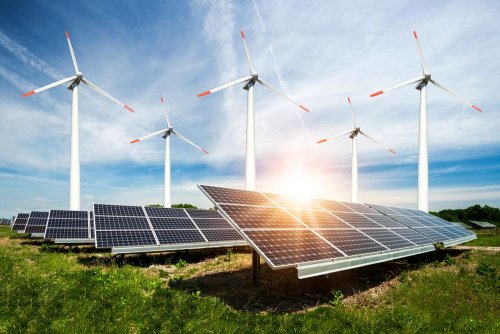
Members of the European Parliament on Wednesday, September 14, voted to increase the share of renewable energy sources in final consumption in the bloc to 45% by 2030.
Also, in a separate vote, they supported reducing final energy consumption by at least 40% by 2030 and 42.5% in primary energy consumption, compared to 2007 projections, reports European Parliament.
The RES share targets are supported by the Renewable Energy Directive (RED) and the RepowerEU package.
The legislation also defines sub-goals for the following sectors:
- transport, where the introduction of RES should lead to a 16% reduction in emissions thanks to biofuels and hydrogen;
- construction;
- central heating and cooling.
The article noted that industry should increase the use of renewable energy sources by 1.9 percentage points per year, and district heating networks by 2.3 percentage points.
Now, each member state must develop two cross-border projects for the expansion of green electricity, and countries with an annual electricity consumption of more than 100 TWh – a third by 2030.
The European Parliament also passed amendments calling for a gradual reduction in the proportion of virgin wood that is considered renewable energy.
This decision was supported 418 MEPs.
Energy saving
MEPs have backed the revision of the Energy Efficiency Directive (EED), the law that sets energy savings targets for both primary and final energy consumption in the EU.
MEPs have raised the EU's final and primary energy reduction target for member states to collectively deliver at least a 40% reduction in final energy consumption by 2030 and a 42.5% reduction in primary energy consumption compared to 2007 projections.
“This corresponds to 740 and 960 million tons of oil equivalent for final and primary energy consumption, respectively. Member states must establish mandatory national contributions to achieve these goals," the article says.
The objectives will be achieved through actions at local, regional, national and European levels in different sectors.
This decision was supported by 469 MEPs.
Earlier, EcoPolitic wrote, that the European Parliament made a decision on limiting the use of biomass.
As EcoPolitic previously reported, on August 9, the EU plan came into effect reduction of gas consumption in the block by at least 15%.