Iceland's fragile climate is directly dependent on the Atlantic Ocean's network of currents. However, climate change threatens them and, as a result, the security of this island nation.
According to CNN, Iceland takes the potential destruction of ocean currents seriously. The country considers this an existential threat and has recognized it as a risk to national security.
Ocean water circulation
The entire Atlantic Ocean is permeated by a system of currents that transport warm waters northward and, back southward, waters cooled by polar cold. This network is called the Atlantic Meridional Overturning Circulation (AMOC) and determines the climatic conditions along the entire coastline of the ocean. Moreover, it affects the circulation of air currents around the world.
Cause for concern
More and more researchers are reporting alarming facts—the AMOC is slowing down. The entire network is based on a balance between the temperature and salinity of the currents, and global warming is destroying this basic harmony. CNN notes that some scientists are not optimistic—a catastrophe could occur as early as this century.
Planetary-scale consequences
When the ocean circulation system fails, the whole world will feel it. Scientists say that global weather and climate changes can be expected, including the following:
- sea level rise along some European and US coastlines;
- disruption of monsoon circulation, which will radically alter the climate of Africa and Asia;
- winter sea freeze in Europe might 'descend' as far south as southern Great Britain.
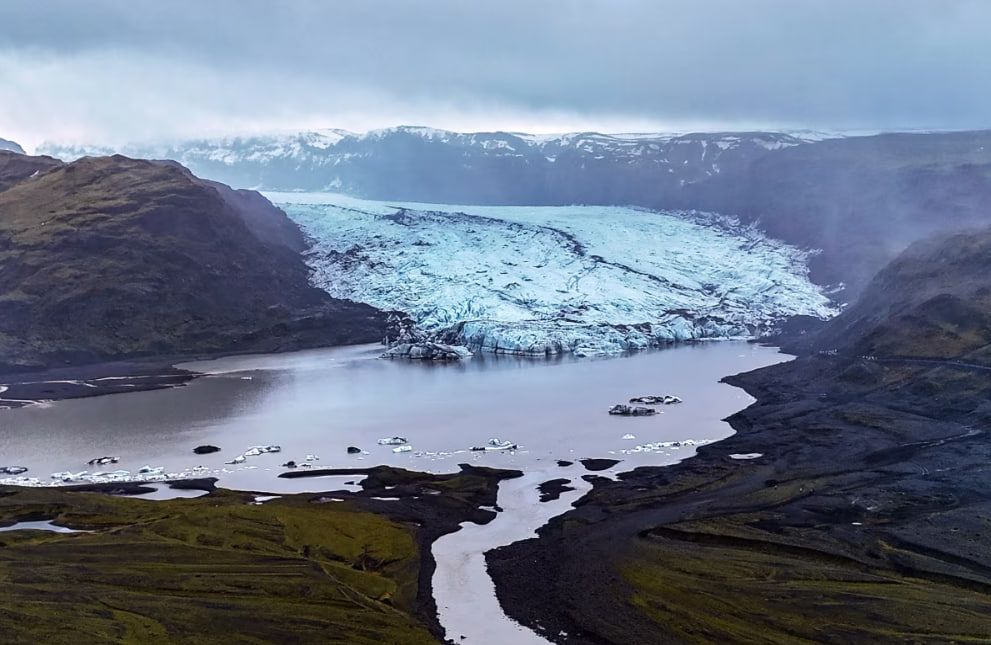
Photo: CNN
Iceland at the epicenter of a cold storm
"Our climate, economy, and security are closely linked to the stability of the ocean currents around us," CNN quotes Johanna Pallajohnsson, Iceland's Minister of Environment, Energy, and Climate.
If AMOC breaks down, Iceland will find itself at the center of a cooling trend in the region. The waters around the island could freeze, which would directly affect the economy. Fishing, transportation, heavy industry—various sectors would suffer.
Therefore, a report was presented to the Icelandic government that modeled AMOC behavior and confirmed the slowdown of ocean currents and their potential collapse in the future. Climate change was recognized as a national threat for the first time. The government plans to analyze the situation more thoroughly and develop a plan to prevent it. If the worst cannot be avoided, Iceland will develop a strategy to mitigate the consequences.
The country is calling on other states to take similar action. After all, the destruction of currents will destroy the climate, and with it the food security and industry of entire regions.
Earlier, EcoPolitic reported that a United Nations report confirms – the world will not be able to meet the Paris Climate Agreement targets.
Humanity has only four years left to emit 170 billion t of carbon. This is the amount that would bring us to the 1.5°C warming threshold.
Global warming also threatens Ukraine. Southern regions may become desertified.