Last year, the increase in global generation amounted to a record 582 GW of renewable energy capacity, which is a 15.1% annual growth rate. At the same time, achieving the target by 2030 will require an annual increase of 16.6% from 2025 to 2030.
This is stated in the report of the International Renewable Energy Agency, Reuters reports.
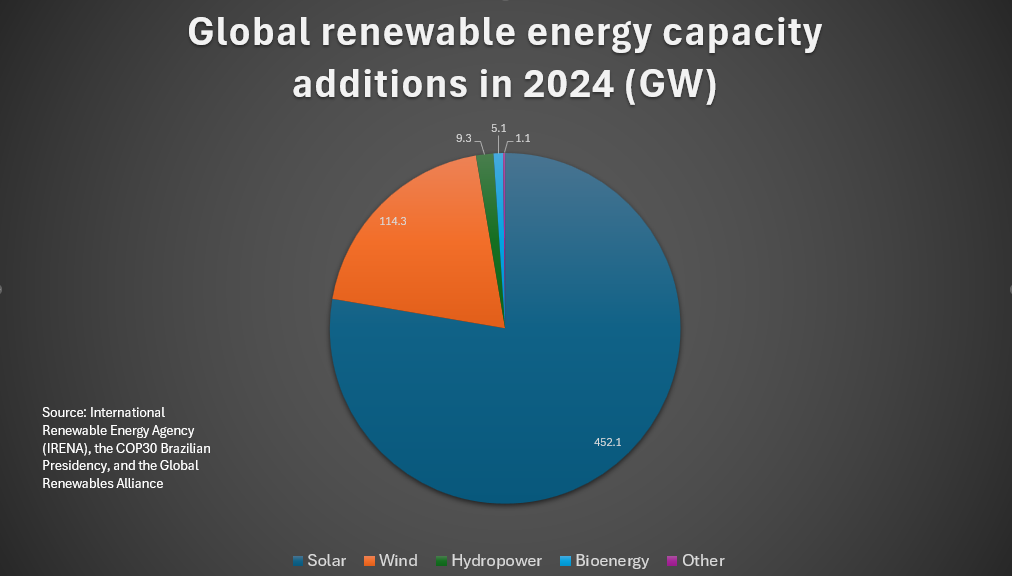
Photo: reuters.com
The total installed capacity in 2024 was 4,443 GW of renewable energy, compared to the UN target of tripling the 11,174 GW target. According to the report, renewables generated more electricity than coal-fired power plants in the first half of 2025
In particular, more than 100 countries at the COP28 climate summit in Dubai in 2023 agreed to triple renewable energy capacity by 2030 as part of efforts to achieve global climate goals.
According to experts, to achieve this goal, governments should develop policies that better support the development of renewable energy sources. They should also promote workforce retraining and work to improve supply chains and infrastructure.
This year, US President Donald Trump revised tax incentives for solar and wind power plants, which experts say could hinder investment in new renewable energy projects in the country.
"This transition (to renewable energy) cannot be stopped. The renewable energy market has made this choice, it is the cheapest way to generate electricity," said Francesco La Camera, Director General of the International Renewable Energy Agency.
We would like to remind EcoPolitic readers that solar power generation will account for the main share of renewable energy by 2030. Its capacity will double in 5 years.
Such data is provided by the International Energy Agency (IEA) in its annual report, which was analyzed by EcoPolitic. In it, experts have published the latest forecasts for the development of renewable energy technologies and barriers until 2030.