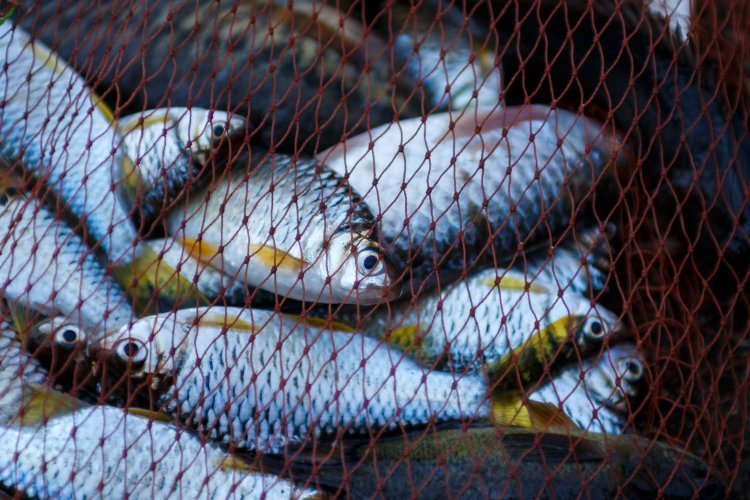
The Cabinet of Ministers may delegate the management of industrial fishing in Ukrainian nature reserves to the State Fisheries Agency. The relevant resolution was prepared by the Ministry of Economy. The document refers to an "experiment" that will give the agency, which is primarily interested in harvesting volumes rather than preserving aquatic animals, the right to set catch limits and issue permits for two years.
The government document has outraged environmental activists from the Ukrainian Nature Conservation Group (UNCG).
It concerns a draft resolution of the Cabinet of Ministers "On the implementation of an experimental project on the special use of aquatic biological resources within the territories and objects of the nature reserve fund."
Obvious and hidden reasons
The authors of the resolution state the following as its public goal:
“Elimination of double pressure on business and the introduction of a unified and transparent approach regarding the harvesting (catching) of aquatic bioresources within the territories and facilities of the nature reserve fund, and the fight against illegal, unreported, and unregulated fishing.”
In practice, the provisions of the document will allow the State Agency for the Development of Land Reclamation, Fisheries, and Food Programs to independently determine how much fish should be caught in protected areas.
Eco-activists see an obvious conflict of interest in this, since, in their opinion, the main task of the State Fisheries Agency is to ensure the maximum possible fish catch.
An experiment against the law
According to the environmental community, the draft resolution contradicts current Ukrainian legislation. According to its provisions, permission for industrial fishing in nature reserve areas can only be granted by the body responsible for nature conservation.
"If the motivation of fishermen in developing this resolution is obvious, then why is the Ministry of Economy, which should be responsible for the territories and objects of the Nature Reserve Fund in accordance with its regulations, primarily concerned about a business that, in its opinion, is heavily burdened?" UNCG notes.
Activists note that currently, only about 7% of Ukraine's territory is protected by nature reserve status. Therefore, there are enough places for industrial fishing in the country without interfering with protected areas.
Earlier, activists publicly criticized a draft government resolution that supposedly aims to regulate timber procurement. However, as EcoPolityka reported, the provisions of the document would in fact legalize clear-cutting and the destruction of rare plant species.