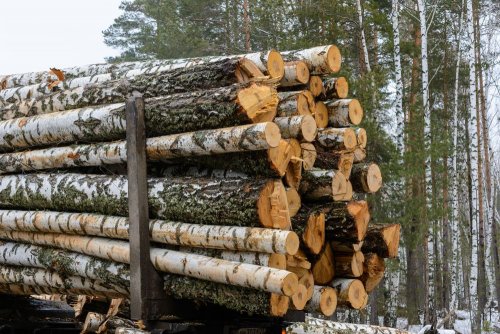
The European Union is committed to sustainable timber production. The key indicator for this is ensuring that natural growth rates exceed the volume of timber harvested. And most EU member states managed to achieve this in 2023.
This is evidenced by Eurostat data.
Forestry leaders
Overall, 23 countries—among those for which statistical data is available—meet the principles of sustainable forestry in the European Union.
The top three leaders are as follows:
- Romania. Here, 39.9 million cubic meters less timber was harvested than the amount of live forest that grew during the same period.
- Sweden. The country’s forest growth exceeded the volume harvested by 26.4 million cubic meters.
- Poland. The net annual forest growth here was 26.3 million cubic meters more than the logging volumes.
The only exception to this positive statistic was Estonia. There, forest growth was 9.1 million cubic meters over the year, while 11.6 million cubic meters were felled. Thus, the available timber stock decreased by 2.5 million cubic meters.
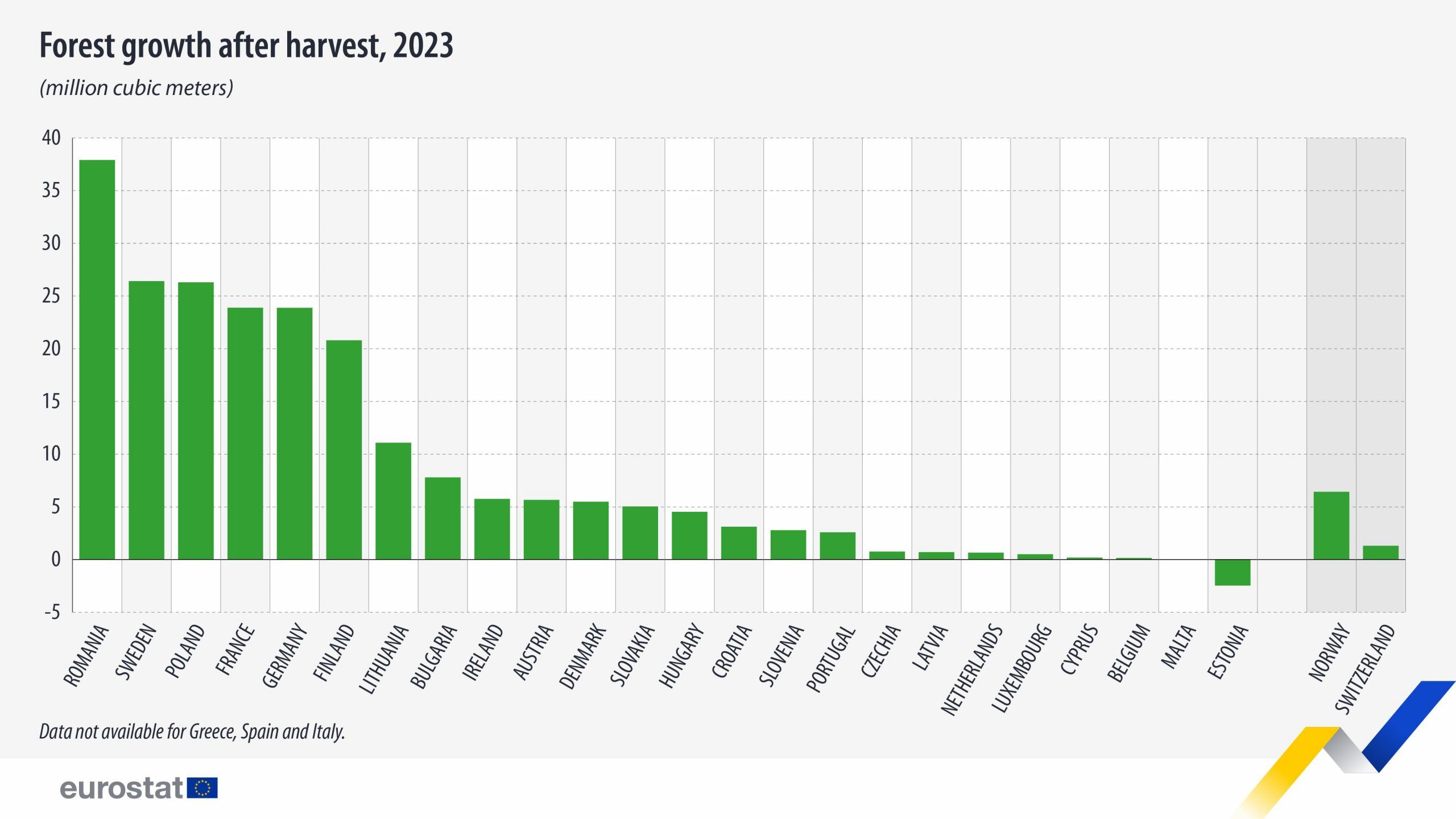
Source: Eurostat
“A sustainable approach to logging is crucial in forest management as it focuses on intentionally harvested timber, excluding unforeseen catastrophic losses. This approach provides a clearer understanding of the forestry sector’s environmental footprint,” Eurostat emphasized.
EcoPolitic previously reported that in Ukraine, the fine system for tree cutting in settlements is ineffective. Experts found that financial penalties are often lower than the real value of the felled timber.
Meanwhile, the European Union also highlights the security significance of forest ecosystems. They noted that their restoration along the borders with Russia and its allies could become an obstacle for enemy troops.