
Scientific research shows a direct link between pollution levels and mental health problems. This is particularly true for air quality, noise, and chemicals. Although further research is needed to establish a clearer quantitative correlation, the EU is confident that its zero pollution action plan is also important for mental well-being.
This was reported by the European Environment Agency (EEA), which cited several examples of the impact of the environment on the human brain.
Noise pollution
An increase in road traffic noise also increases the risk of depression and anxiety by 3% and 2%, respectively.
The greater the noise excess, the greater the increase in risk. For example, a meta-analysis found that for every 10 dB of integrated daily aircraft noise excess, the risk of depression increases by 12%. For every 10 dB increase in railway noise, there is a 2.2% increase in suicide rates.
At the same time, noise pollution is directly linked to a higher prevalence of behavioral problems in children.
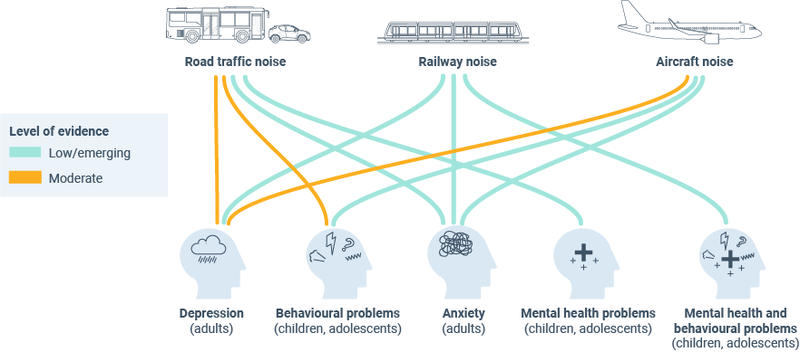
Source: eea.europa.eu
Air pollution
It is known that the brain is especially vulnerable during critical stages of development – from the prenatal period to early adolescence. Exposure to outdoor air pollution during this time is associated with both functional and structural changes in the brain.
Prolonged exposure to poor-quality air is linked not only to a higher risk of developing depressive conditions, but also to their greater prevalence. Fine particulate matter PM2.5 and nitrogen oxides are the main contributing factors.
Short-term peak pollution exceedances may worsen symptoms of schizophrenia.
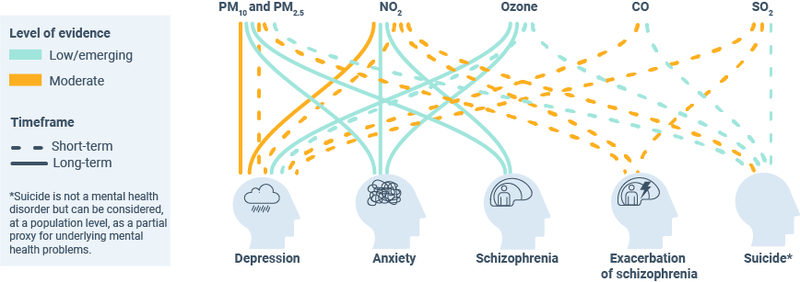
Source: eea.europa.eu
Chemical exposure
Lead exposure during the prenatal period or in childhood has been linked to an increased incidence of depression and schizophrenia.
Exposure to passive smoking is also associated with these same conditions. This can be especially harmful to the health of pregnant women and children.
Research connects prenatal exposure to bisphenol A with depression and anxiety.
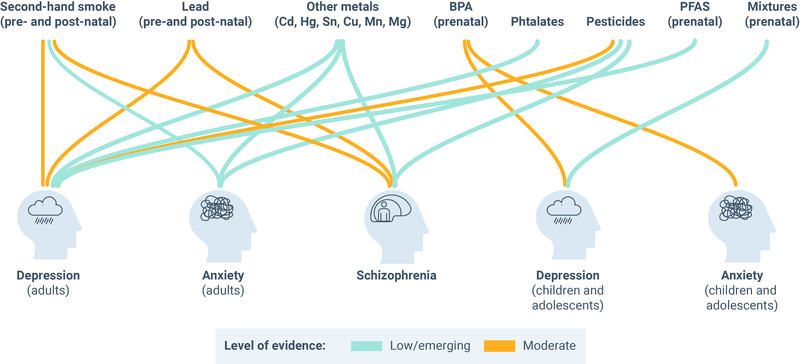
Source: eea.europa.eu
Room for action
The EEA briefing emphasized that further research is needed to explore these links in greater depth. However, the results already available highlight the importance of reducing pollution.
At the same time, the results confirmed the relevance of the European "One Health" approach. It recognizes the interconnection between human, animal, and environmental health.
This approach concerns not only reducing pollution, but also a range of effective natural solutions, physical activity, and social interaction. In particular, it addresses the importance of open access to green and blue spaces and nature therapy through gardening, outdoor exercise, and forest bathing.
EcoPolitic recently reported on the impact on the health of residents in Rivne region from the local wood processing industry.
We also reported that plastic pollution takes away millions of years of life from humanity.