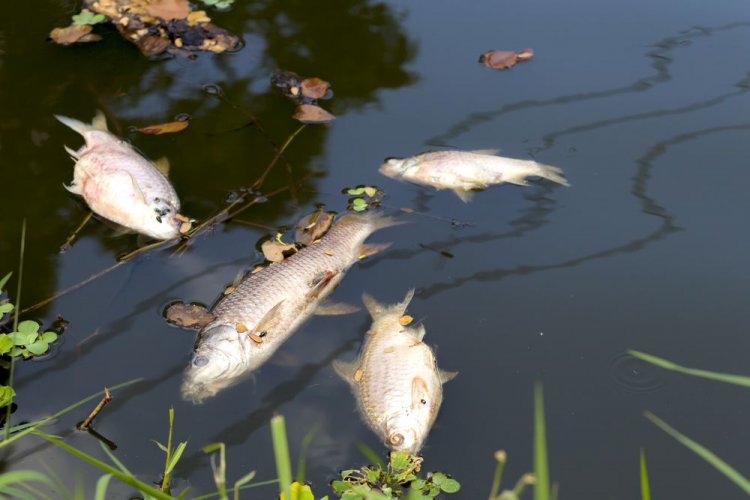
Eco-inspectors found that the probable cause of the sea of fish in the protected Tyligul estuary in the area of the village of Kordon in Odesa region was strong heat.
The laboratory analysis of the water showed an excess of biochemical oxygen consumption (BSK5), suspended solids and iron, the State Environmental Inspection of the South-West District reports on Facebook.
It is noted that the study of water samples revealed the following exceedances of the normalized values of maximum permissible concentrations:
Tyligul estuary in the area of the village. Border (east side):
- Suspended substances – 2.3 times;
- Total iron – 1.6 times;
- BSK5 – 2.5 times;
Tyligul estuary in the area of the village. Border (west side):
- Suspended substances – 2.7 times;
- Total iron – 1.8 times;
- BSK5 – 3.8 times;
- Dissolved oxygen is 1.3 times lower;
Tyligul estuary in the area of the village. Maryanivka:
- Total iron – 1.6 times
- BSK5 in 4.0 times.
"A decrease in the level of oxygen and an increase in the level of biochemical oxygen consumption were detected. Probably, this indicates that the tiring phenomena are a consequence of intense heat," the press service said.
Earlier, EcoPolitic wrote, that in the Odesa region on August 27 in the Tyligul estuary in the area of the village of Kordon, fish death was discovered.
As EcoPolitic previously reported, in Khmelnytskyi in the South Bug river a mass death of fish on the stretch between Svobody streets and Starokostyantinivske highway.