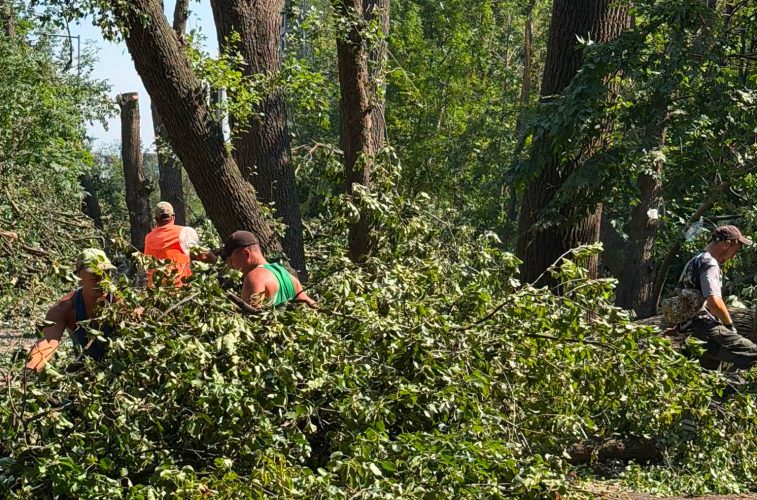
From the very beginning, the plan was for the backup branch of the heating pipeline in Kyiv to be laid along Teremkivska Street, rather than through a green space involving the felling of over 600 trees. As it turned out, the client itself — the municipal enterprise ‘Kyivteploenergo’ — had specified precisely this route in the design tender. However, why was the route changed? The authorities have not provided any technical reports.
This was reported by the ‘Golka’ civic initiative.
The tender is one thing, implementation is another
In the initial design plan, the client had envisaged the laying of utility lines along the street. This is evidenced by the official tender documentation.
The project initially planned to utilise the existing utility corridor. On one side of the street, between TC 114 and TC 107, the plan was to increase the diameter of the existing pipes. The intention was to complete the branch between TC 114 and TC 427/46-7, as there had previously been no heating networks in that area.
However, later on, when justifying the felling of trees in the park area, the Kyiv City State Administration stated that this was not possible, as there were already other utility networks in place there — sewerage, water and gas networks.
But activists are asking: at what stage exactly did it become clear that this was impossible, and where is the technical report confirming this ‘impossibility’?
"If this route was specified in the original design brief right at the start of work on the heating pipeline, then the community has the right to see the technical justification for changing this decision," emphasised "Holka".
Another point is that, in carrying out this controversial construction project, the authorities cite Kyiv’s sustainability plan. However, according to the initiative, the Kyiv City State Administration has still not provided any information as to who approved it, when, and why.
The community is demanding an explanation
Activists point out that, in the absence of technical evidence, claims that there is not enough space for a heating pipeline along the street appear to be nothing more than unsubstantiated assertions by officials.
Consequently, such a radical change to the heating pipeline route – from the planned route to the actual one – requires a documented reason. Another question arises: as the utilities were designed over the years using public funds, the authorities must also account for this questionable use of taxpayers’ money.
However, even if the route through the green belt is the only option, the plans regarding the number of trees to be felled can also be significantly revised. Independent engineers have drawn up a proposal that would allow only 11 trees to be felled, rather than the 662 the city wants.
Are the authorities listening?
On 31 August, representatives of the Kyiv authorities once again met with the public. Once again, statements were made regarding the technical impossibility of laying a heating pipeline along Teremkivska Street and the impracticality of other options.
As for alternatives that would help minimise interference with the green space, the Kyiv City State Administration has promised to take some of the proposals into account.
"Based on the results of this work, the agreed decision is to use the current project and the engineering corridor it provides for, whilst preserving as much green space as possible, in particular taking into account the recommendations made by the engineering community and the public," said Petro Panteleev, First Deputy Head of the Kyiv City State Administration.
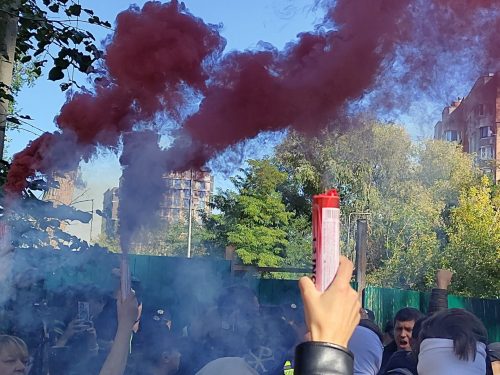
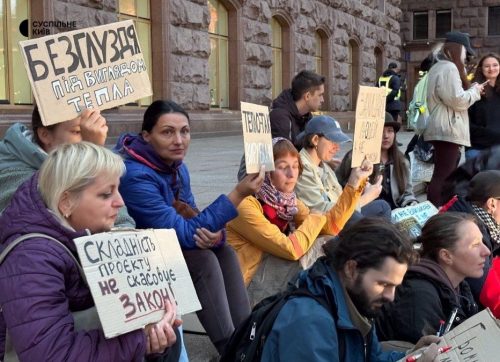
The felling of trees to make way for a heating pipeline in Kyiv began in early August. As reported by EcoPolitics, the authorities plan to fell over 660 trees, including oaks over 100 years old. Residents opposed to this took to the streets in protest, whilst law enforcement officers forcibly removed people from the felling site.
On 11 August, the authorities agreed to suspend the felling until alternative routes proposed by the public had been considered. However, even then, representatives of the administration maintained that there was no other route for the heating pipeline.
As for the trees, it won’t be possible to plant new ones everywhere, as only shrubs can be planted alongside the heating pipeline.