Industrial pollution reform, which has been one of the most discussed topics for domestic industry for many years, has moved into the most practical realm. On August 8, the Law of Ukraine "On Integrated Prevention and Control of Industrial Pollution" came into force. This marked the beginning of a three-year countdown during which enterprises must submit applications for integrated environmental permits and subsequently switch to the best available technologies and management methods (BAT).
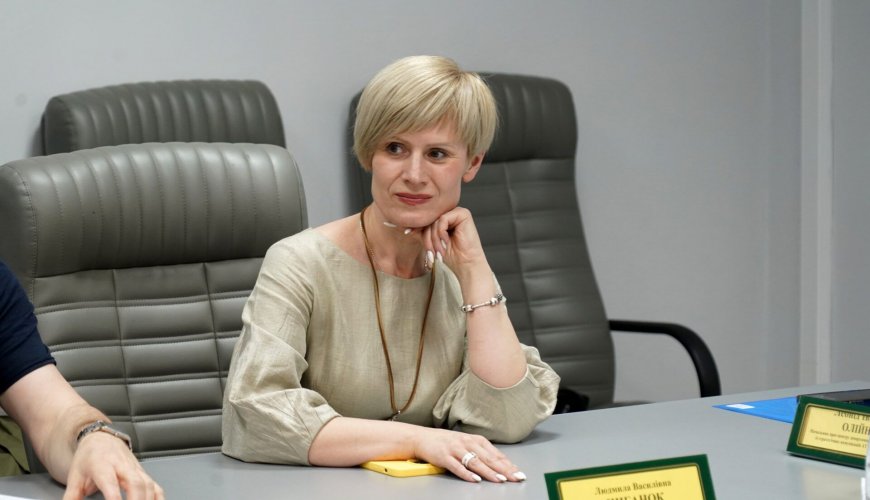
EcoPolitic discussed this highly topical issue with Lyudmila Tsyganok, founder of ESG Liga, president of the Association of Environmental Professionals PAEW, and CEO of the Office of Sustainable Solutions. We asked the expert about the current state of affairs in Ukraine regarding the eco-modernization of industry and the challenges that businesses and the state now face in successfully transitioning to European environmental standards.
– Based on your experience communicating with business representatives, how many of them are already considering introducing BAT into their production processes?
– Today, significantly more businesses are considering BATs than a year or two ago, because European integration is no longer a distant prospect, but a condition for survival in the markets. However, let us be realistic: thinking and calculating is one thing, but starting with real investments is quite another. Especially in a country under attack.
And here I have a very harsh comment: there is a risk of deindustrialization under the banner of European integration. Not because BATs are bad—they are right—but because we may try to implement them in the Ukrainian way: with laws and moralizing instead of engineering, modernization programs, and training.
Apart from the law on industrial pollution, what has the state actually given to business? Where are the co-financing instruments for old sites? Where are the accessible loans, grant windows, and technical support centers? Where is the plan to fill the personnel gap when there is already a shortage of experienced technologists, engineers, and ecologists, and mobilization is further squeezing the market?
We already have an alarming example—the OVD. Reform on paper and reform in real life are two different worlds. If BATs follow the same path of fancy forums and nice words without real joint work, we will not get modernization, but rather a beautiful instruction manual for closing down part of the old industry.
New enterprises will indeed be built according to new rules and, perhaps, even better than in the EU. But those that have been operating for 40-50 years cannot jump into BAT in one leap. They need a transition bridge, not an axe.
Therefore, my position is simple and unpleasant: if the state does not offer real modernization programs, personnel decisions, and honest technical support for the transition, then European rules may become not a path to a stronger industry, but a legitimate excuse to finish it off. And this will not be environmental reform. It will be deindustrialization wrapped up in the right words.
– If such businesses exist, what are the approximate capital expenditures required for this? Do industrialists have the ability to finance such modernization?
– The important truth of war is this: most enterprises cannot finance this modernization quickly and completely on their own. They have other fronts of expenditure in parallel: physical security of sites, restoration of damaged facilities, backup energy sources, logistics, and team maintenance.
A realistic scenario for Ukraine is a phased approach plus external instruments: long-term loans, guarantees, grant components, and recovery programs. Without this, BATs risk sounding like a moral slogan rather than an economic plan.
Here, it is very useful to look at the experience of countries that have integrated into Europe with a heavy legacy of old industry. Poland, the Czech Republic, Slovakia, Hungary, Romania, Bulgaria, the Baltic states, and later Croatia—all of them entered the EU not with ideal factories, but with a large number of outdated facilities. And there was no fairy tale of “implement BAT tomorrow” there either.
It was expensive, long, and painful, but the key thing was that, along with the requirements, there were mechanisms for implementation: transition periods, technical support, and powerful investment flows for modernization. That is why BAT became a path to development for them, not a death sentence.
I understand that certain circles may call me a fake or undeserving environmentalist for taking this position. Because it is not the easiest role to wave a white cape and declare everyone guilty, but real ecology is not a theater of purity. Real ecology is engineering, economics, and honest responsibility that produces measurable results.
So my answer is simple: BAT is the right course. But without money, personnel, and viable transition tools, we risk not modernization, but a survival selection, where new projects will be launched according to modern rules, and some of the old industries will simply have no bridge to this future. And this is no longer about ecology. It is about the risk of losing industry under the guise of the right European words.
Of course, some will say: well, that's great, there will be more new factories instead of old ones that smoke. But let's be honest: how many people today, during the war, are really willing to come to Ukraine from scratch and start production immediately according to strict European standards — with high capital costs, long payback periods, and security risks? This bright scenario will not automatically come true just because we have passed the right law.
There is another danger that cannot be ignored. If we do not establish strict technical criteria and proper control, then under the guise of BAT, we may start importing “ecological second-hand goods” – worn-out, morally obsolete European equipment that no longer has a place there. Then, instead of modernization, we will get imports of someone else's technological past, and this is definitely not the European integration that we are pursuing.
– What challenges are domestic enterprises currently facing on the path to implementing BAT?
– The main challenges on the path to BAT for Ukraine right now are not only technical difficulties, but also the clash between the European logic of long-term investments and the Ukrainian reality of war. In countries that integrated into Europe when they embarked on this reform, the main safeguards against chaos were time, money, and institutions: transition trajectories, modernization tools, and strong technical support. In our case, the risk is that we want to jump into the same model, but without such a safety margin.
The first is the investment uncertainty of the war economy. BAT is not about putting something up for review, it is about planning for years to come. If a company considers the risks of shelling, unstable energy, logistics, and a shortage of long-term cheap money, then the decision to undertake a major reconstruction becomes not an environmental one, but an existential one.
That is why in the EU and in countries that joined the EU, the transition was accompanied by feasibility mechanisms, not just a “you must” norm. Without this, the rules turn into a scenario of forced curtailment rather than development.
The second is human resources. In our country, BAT risks running into the banal “no one to do it.” There are fewer experienced engineers, technologists, and ecologists, and this is exacerbated by mobilization and burnout. BAT is not about buying equipment. It is about process management, measurement, optimization, habits of working with data, and responsibility. Without active teams, this reform will easily become either nominal or dangerously formal.
The third is the risk of technological substitution through imports. In countries that have modernized their industries to European standards, it was very important to focus on the modernity of solutions, rather than their “availability in hardware.”
We, on the other hand, are tempted to import obsolete or morally outdated systems under the guise of BAT – systems that are no longer profitable for someone in the EU or do not meet new requirements. If we do not set strict technical criteria and learn to distinguish modernization from “industrial second-hand goods,” then instead of a leap forward, we will end up importing someone else's yesterday.
And fourth – control and trust. Successful stories of industrial reform in Europe were based not on fear of inspectors, but on the predictability of rules and the competence of supervision.
In our country, weak or selective control creates a toxic culture: it is unprofitable to invest in modernization; it is more profitable to learn how to get around the system. Then BATs become a paper game, where the environment, business, and the state all lose.
– Are there already examples in your practice where manufacturers have decided to apply for a so-called death permit, i.e., they have decided to shut down production because it is too expensive or impractical to modernize it to the extent required by BAT?
– I don't see any widespread cases of “death permits” yet, it's a little too early for that, but the nerve of this topic has already appeared and should not be underestimated. The most vulnerable here are not all of them, but specific categories: production facilities with a deeply worn-out technological base, where modernization entails a complete overhaul of the entire business model, and sites operating in areas of high military risk, where investments become similar to a bet in roulette.
But something else is more important. Most companies are not looking for a graceful exit from the market—they are looking for a plausible way to stay in it. And this is where it is either/or for the state. Either BAT will be a tool for transition—with normal transition periods, financial solutions, technical support, and fair rules for all. Or we will end up with a two-speed market: some will try to shoulder the burden of expensive modernization, while others will imitate them, hiding behind acronyms and introducing questionable decisions under the guise of progress.
If we go down the other path, the “death warrant” may become not a one-off horror story, but a quiet mechanism of deindustrialization. Not because the requirements are wrong, but because we have not created conditions under which old enterprises can actually comply with the new rules, rather than simply disappearing from the map.