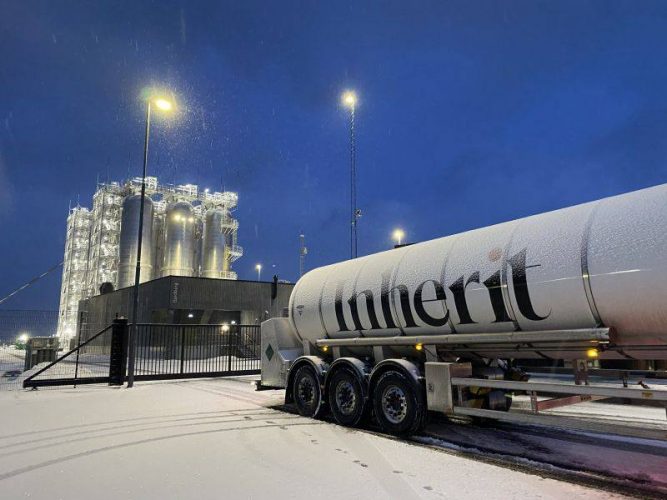
For the first time in the world, permanent geological CO2 storage technology has been implemented in Norway. Biogenic carbon captured from wastewater biogas has been permanently stored here beneath the seabed at a depth of 2.6 km.
According to the Bioenergy Association of Ukraine, the project is the result of a collaboration between HoopCO2, Inherit Carbon Solutions, and Northern Lights JV.
How it works
Slemstad is home to a wastewater treatment plant that serves over 800,000 residents.
At this plant, HoopCO2 uses a special unit that captures carbon and converts it into a liquid phase. The liquefied CO2 is then transported by road to western Norway, to the Northern Lights terminal.
From the terminal, a pipeline transports the carbon to a permanent storage site in geological formations beneath the seabed.
The company notes that in this way, the carbon is permanently removed from the natural cycle.
“For the first time, biogenic CO2 from biogas is stored underground permanently. This proves that the entire value chain works – from capture at the biogas facility to permanent storage beneath the seabed,” stated the CEO of Inherit Carbon Solutions.
EcoPolitic previously reported that a Ukrainian agricultural company plans to enter the international carbon certificate market. For this purpose, in Chernihiv region, an innovative carbon capture project covering 15,000 ha is being implemented.