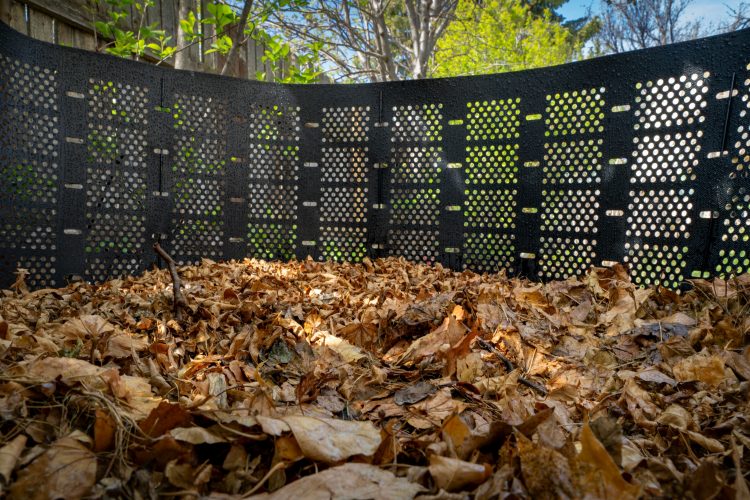
Instead of throwing them away, organic waste and plant scraps can be turned into organic fertilizer. This can reduce the burden on landfills while providing households and entire communities with useful organic fertilizer for plants. Moreover, composting can be done in a private home, an apartment, or at the community level.
Suspilne Kharkiv spoke with Yuriy Bengus, a biologist and lecturer at the H. S. Skovoroda Kharkiv National Pedagogical University, about this.
A simple box where nature does its work
Composters should be set up for composting. Essentially, these are large containers into which you can throw any organic waste, leaves, and grass clippings.
“Ideally, if they are designed so that leaves are thrown in from the top, and at the bottom there is a board that can be removed, leaving you with decomposed leaves below. Worms turn them into vermicompost. This is the best fertilizer,” the biologist explained.
From ready-made to DIY
You can build a composter yourself. If you choose wooden planks as your material, you should treat them with special preservatives to prevent rot. You can also build the structure out of plastic or metal.
Ready-made products are also available for purchase. Manufacturers offer composters in various sizes and shapes, most often made of durable plastic.
The size should be chosen based on the amount of waste your household produces. If you live in an apartment, a small container will suffice.
“There are different models of biocomposters sold in building hypermarkets. They are small. For yards, it’s probably best to buy large biocomposters right away,” the scientist noted.
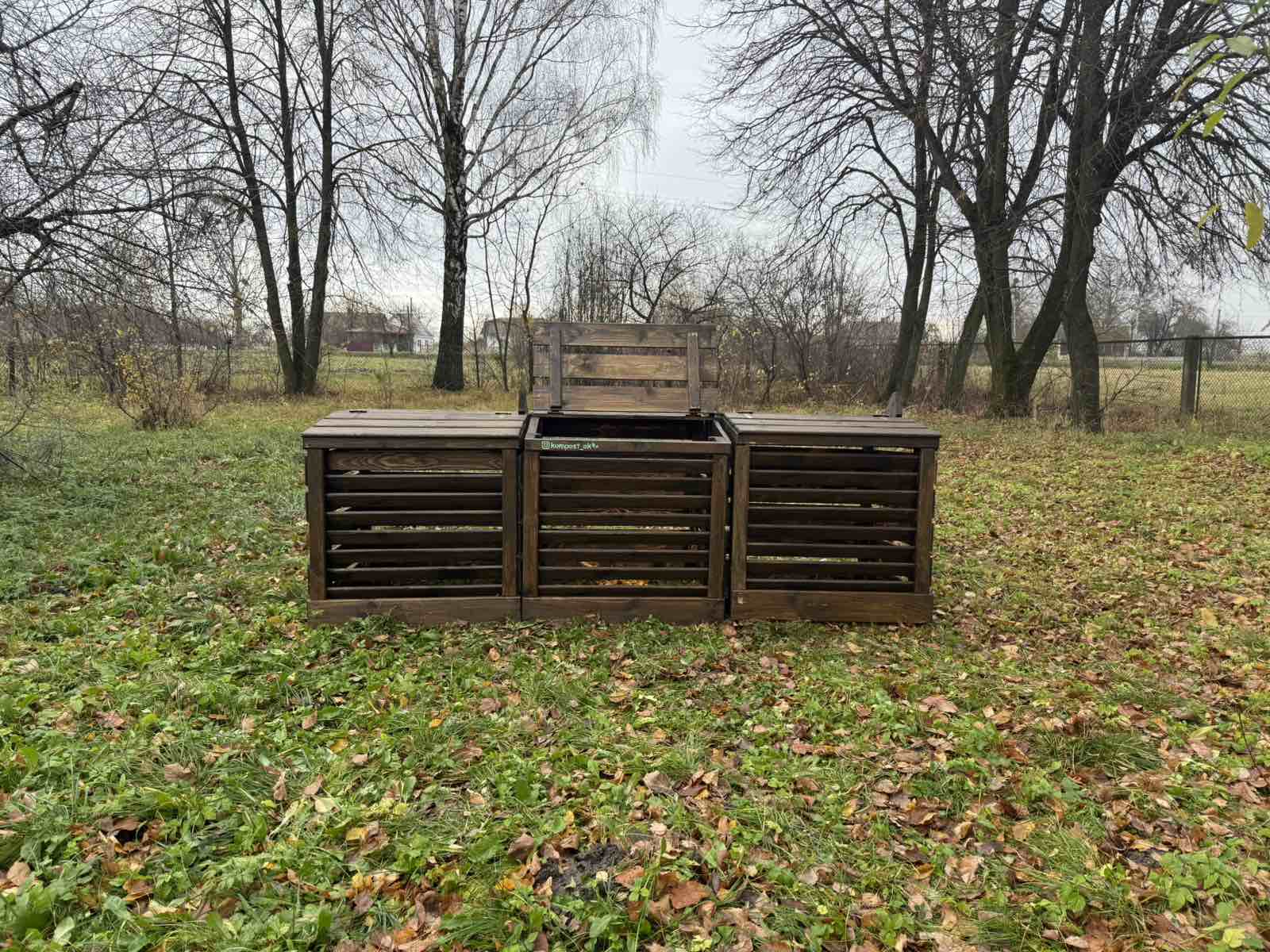
Composter in Korets community, Rivne region. Facebook Korets City Council
What about smell?
The biologist claims that most organic waste does not produce an unpleasant “aroma,” unless it is, of course, animal waste.
“My acquaintances have composters at home with Californian worms inside, because they process everything faster and form vermicompost. This does not smell and can be done at home as well,” said Yuriy Bengus.
Vermicompost is often used in apartments when replanting indoor plants. It is sold separately in stores and has no odor.
Composting in urban settings
The largest source of organic waste in cities every autumn is fallen leaves. An ecologically conscious solution, according to the scientist, is the following:
- leave leaves in green areas under the trees;
- compost leaves collected from roads and sidewalks, and use them as fertilizer.
“Interestingly, the rules for the care of green spaces state that leaves should not be collected where there are parks or plant groups, but rather where they are in the way: on tram tracks, roads, and paths. For some reason, we collect them everywhere, wanting everything to be clean. But in reality, it’s not cleanliness, we are just taking away fertilizer,” Yuriy Bengus emphasized.
This approach would help reduce municipal costs, particularly for fuel used in transporting leaves, and also decrease the burden on already overflowing landfills.
EcoPolitic reminds that every year, of all food waste that ends up in the trash, 20% is still edible.