The New Safe Confinement (NSC) of the Chornobyl Nuclear Power Plant (ChNPP) is not functioning as expected. It may have to be replaced.
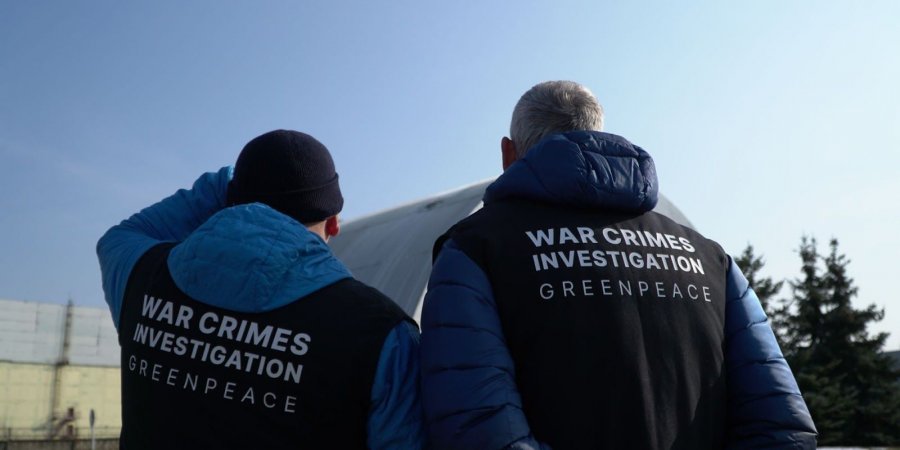
Greenpeace nuclear experts Sean Burney and Jan Vande Putte, who visited the ChNPP in February this year, earlier reached this conclusion.
A special mission of Greenpeace Ukraine arrived at the plant to investigate the current state of the NSC Arch. The experts talked to Artem Siryi, head of the Chornobyl NPP operating department and the "Ukryttia" (Shelter) facility. He reported that 50% of the northern roof, as well as the southern roof and side walls of the Chornobyl NPP, were affected by the fire caused by the russian drone attack.
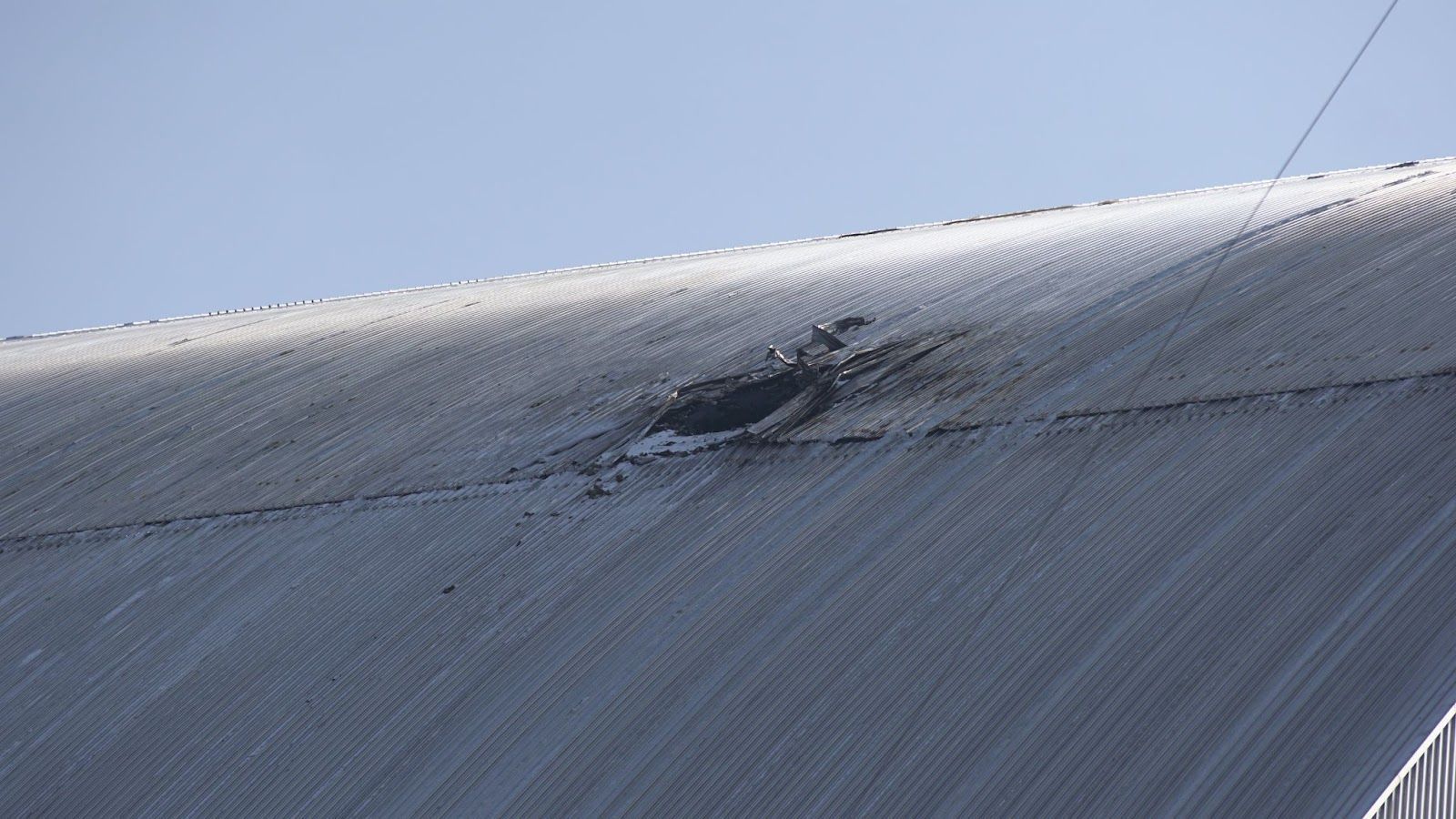
Photo: greenpeace.org.
According to the head of the operating department, the roof covering material and critical structures, including the crane system, have been seriously damaged. Snow and water getting under the ChNPP arch also pose a potential threat of corrosion. As a result, the structure no longer functions following the project design and license.
“The initial assessment shows that the future of the entire project (NSC – ed.) is unclear for now. Due to the high level of radiation above the sarcophagus, the entire Chornobyl NSC may have to be moved back to the site where it was built by railway before any repairs can be made, which will cost a lot in terms of money,” said Jan Vande Putte, nuclear and radiation expert at Greenpeace Ukraine.
It is worth reminding that the Chornobyl NSC is the largest land-based moving structure ever built. It is located above the “Ukryttia” ("Sarcophagus") facility and has a total surface area of 85,000 square meters.
Since the radiation level from the destroyed reactor was high, the NSC had to be built on rails to the west of the site. It was moved to the site above the Sarcophagus in 2016 and finally completed in 2019.
On March 4, Svitlana Hrynchuk, Minister of Environmental Protection and Natural Resources of Ukraine, announced that €400 thousand had been allocated from the administrative budget of The International Chornobyl Cooperation Account (ICCA) to investigate the damage to the NSC Arch.
The emergency at the Chornobyl nuclear power plant was finally eliminated only on March 7. According to the Ministry of the Environment, the radiation situation is under constant control, and no radiation exceedances are recorded. There is no threat to the population.
Earlier in December 2024, EcoPolitic reported that partner countries provide another €7 million for the restoration and development of the Chornobyl zone.