The Kyiv City Council has approved a targeted program for land use and protection. Over three years, it plans to spend UAH 783.2 million on the program. More than 60% of this amount will be allocated to defining the boundaries of protected lands—nature reserves, water reserves, and forestry areas. However, it is noteworthy that there are no plans to involve the Department of Ecology in this process.
According to KyivVlada, the Department of Land Resources of the Kyiv City State Administration has been designated as the responsible executor of the program, with the Kyiv Institute of Land Relations, a subordinate municipal enterprise, as the co-executor.
The priority for Kyiv's previous land conservation program was land inventory. Even then, experts had questions about the effectiveness and legality of the use of funds. The National Police opened a criminal case – according to law enforcement estimates, the Kyiv Institute of Land Relations could have overestimated the cost of the work by almost UAH 250 million.
Despite the "mistakes of the past," the same municipal institute remains the co-implementer of the new program. However, the focus of the Kyiv authorities has now shifted to land with environmental protection status. Between 2026 and 2028, the capital's authorities plan to spend UAH 477.7 million to develop land management projects for "the organisation and establishment of boundaries for nature reserve areas and other nature conservation areas [...], restrictions on land use and their regime-forming objects".
Over three years, new land management projects are expected to cover plots with a total area of more than 3,000 ha. However, it has been decided not to involve the Department of Environmental Protection and Climate Change Adaptation of the KCSA for this effort.
Why no environmentalists?
Experts consider this program to be very abstract overall. The vagueness in the wording of specific measures opens the way both for increasing the scope of the plan and for concealing the purpose of expenditures.
But that's only half the trouble. Experts express concern that the absence of environmental officials will "untie the hands" of land managers and allow them to tear off tasty pieces from nature conservation areas.
“It is interesting to see how the boundaries of protected zones will be determined if the Department of Environmental Protection and Climate Change Adaptation of the KCSA is not specified as a co-executor. Where is it? So, will the ‘land guys’ be the ones to ‘draw’ the boundaries of nature reserve fund (NRF) sites? We all understand how they will ‘draw’ them – what will remain of these NRF sites then?” – "KyivVlada" quotes lawyer and human rights defender Oleksandr Dyadyuk.
Concrete versus trees
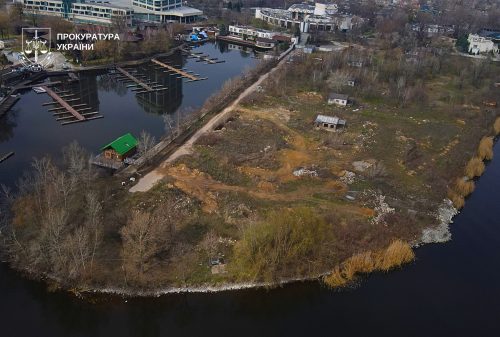
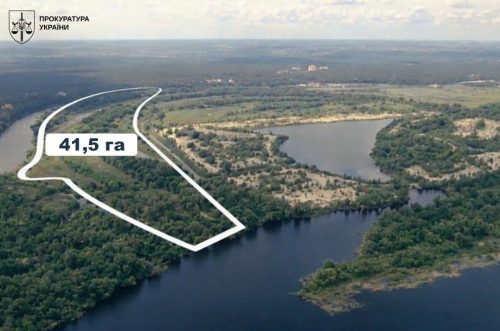
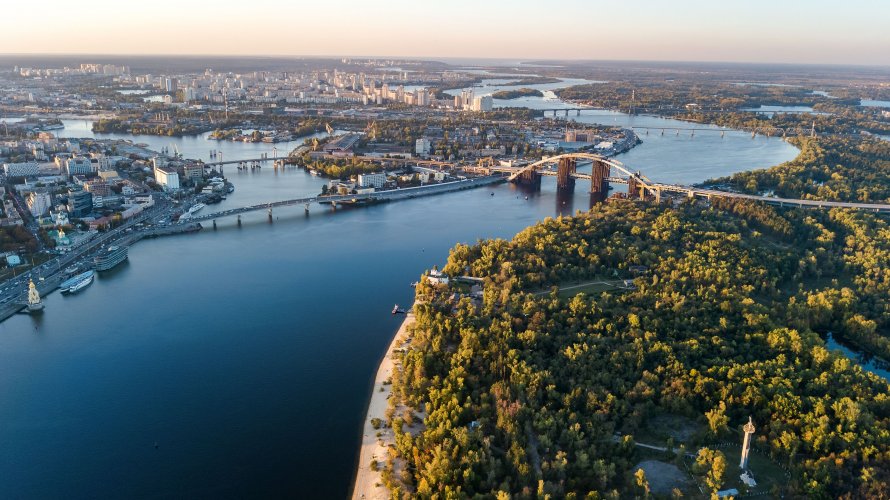
Such attention to the boundaries of the nature protection fund looks alarming, given that Kyiv is rapidly losing its green spaces. In just ten years, the recreational area in the capital has shrunk by 700 ha, as reported by environmental prosecutors. Parks are losing out to new residential complexes, for which the authorities are generously changing the land’s designated use.
To reassure the public, the Kyiv City State Administration (KCSA) skillfully presents figures showing an increase in the number of green spaces. EcoPolitica reported that activists noticed that the “new” parks were, in fact, being created within the boundaries of already existing natural green zones.
Additionally, city residents accused Kyiv officials of facilitating sand dredging on Vodnykiv Island, which resulted in fish die-offs and environmental pollution.