The infrastructure supporting artificial intelligence is becoming increasingly resource-intensive. Experts predict that by 2027, processing AI queries on a global scale will require as much water as half of the UK’s total annual consumption. Even now, writing a 100-word letter consumes over half a litre of water.
This is reported by Space Daily.
According to an article in the journal Communications of the ACM, generating a single AI response requires 519 ml of water. This figure includes both direct cooling costs and indirect costs associated with the energy required to power the servers. A simple ‘conversation’ with a language model consumes roughly the same amount of resources. Moreover, the longer the correspondence, the greater the water consumption.
Why does AI need water?
During intensive operations, data centers generate heat. To prevent chips from overheating, the system must be cooled.
Typically, server cooling uses a water-based system. As liquid passes through the pipes, it heats up, and more than 80% then evaporates into the air. The remainder returns to local water supply systems. Sometimes, this water has a higher temperature and contains chemical residues from the cooling process.
AI data centers are larger and produce more heat load. A single large AI block can "consume" more water in a day than a city of 10,000 residents.
Consumption volumes
A report from Google Corporation states that during 2024 alone, its operations consumed 8.1 billion gallons of water. Data centers accounted for 95% of this amount. Each year, this share increases – in 2023, it was 87%.
In 2023, Meta consumed about 813 million gallons, with, again, 95% used by data centers.
Microsoft’s annual consumption rose by 34% to 1.7 billion gallons. Independent researchers analyzing the launch of GPT-4 in a batch of Microsoft data centers found that a single model training “run” used 11.5 million gallons of water.
Future needs
AI’s appetite will only keep growing. Experts forecast that by 2027, due to increased global demand for artificial intelligence, its infrastructure will require between 4.2 and 6.6 billion cubic meters of water annually.
This scenario is based on current rates of AI popularity growth. In the event of a sudden surge, water demand will become unpredictably higher.
Countries with lower income levels will suffer water shortages first, as new data centers are planned exactly there. For instance, 32 new data centers are set to be built in Querétaro, Mexico, despite the region experiencing its most extensive drought in history in 2024.
Uruguay is currently facing its worst drought in 70 years. However, this did not prevent Google from proposing to build a data center in Canelones. It would consume 7.6 million liters of water daily – enough to supply 55,000 people.
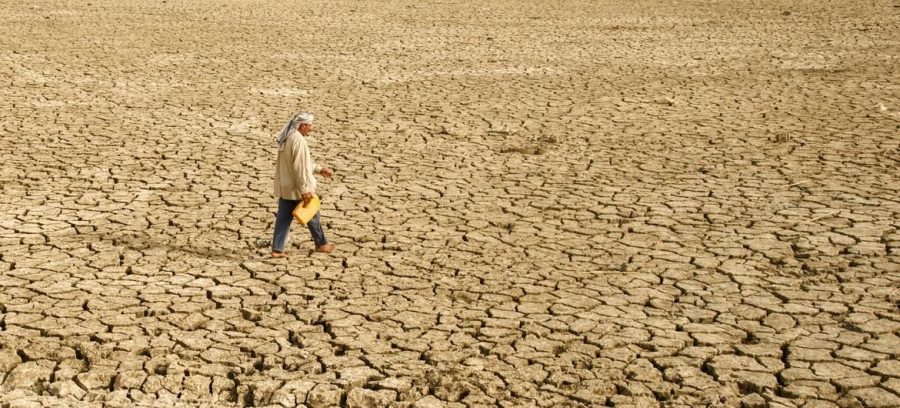
EcoPolitic reported that the United Nations (UN) referred to the global water shortage as global water bankruptcy. During 2022–2023, 1.8 billion people lived under drought conditions. Additionally, 4 billion people worldwide experience severe water shortages for at least one month each year.