Data for the incomplete year 2025, from January to November, showed an average increase of 1.48 °C above pre-industrial temperatures. According to European scientists, this will almost certainly secure this year's second or third place in the "ranking" of the hottest years in history.
This is evidenced by data from the Copernicus Earth Monitoring Program, as reported by The Guardian.
This year's climate anomalies correspond to the level of 2023, which is currently the second hottest year after 2024.
Hope is just statistics
The world has set itself the goal of limiting global warming to 1.5 °C above pre-industrial levels by the end of the 21st century. However, actual data shows that this year has already come close to this ambitious goal.
“In November, the global temperature was 1.54 °C higher than the pre-industrial level. The three-year average for 2023–2025 will, for the first time, exceed 1.5 °C,” said Dr Samantha Burgess, Deputy Director of the Copernicus Climate Change Service.
However, scientists are trying to "reassure" governments and the public. To do this, they consider the average temperature over 30 years rather than the annual temperature when assessing temperature exceedances. Otherwise, it would be reasonable to conclude that the world has completely failed in its climate efforts.
A catastrophically warm month
November was the hottest November in recorded history. It is noteworthy that the temperature increase was uneven, with the highest temperatures in the north, in the Arctic Ocean and Canada.
This month was marked by a series of dangerous weather events. These included destructive cyclones and catastrophic floods in South Asia.
The reason – emissions
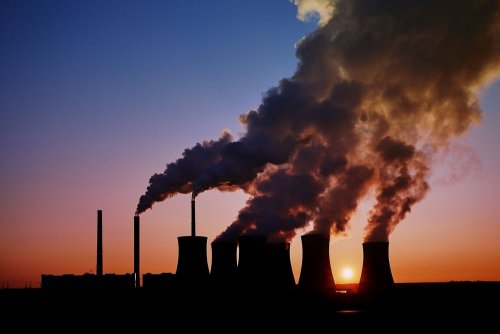
Global temperatures are rising for a long-known reason – carbon pollution. This exacerbates extreme weather events: rains become downpours, and heat waves become prolonged and fatal.
Ten years ago, the Paris Climate Agreement was signed, under which governments committed to working together to curb global warming and reduce emissions. However, the amount of carbon on the planet is still growing.
The results of all recent global studies confirm the conclusions of the Copernicus program. For example, prior to COP30, the World Meteorological Organization reported that 2015-2025 were the warmest years in the history of observations since 1850.
EcoPolitic had previously reported that heat has a significant negative impact on health.
For example, heat was a catalyst for the death of every fifth European who died from cardiovascular diseases.
Warming also harms animals, even in Ukraine. In Odesa region, a stoat was spotted that had turned white by winter, but the usual winter had not yet arrived. As a result, the animal became defenseless, which altered its behavior.