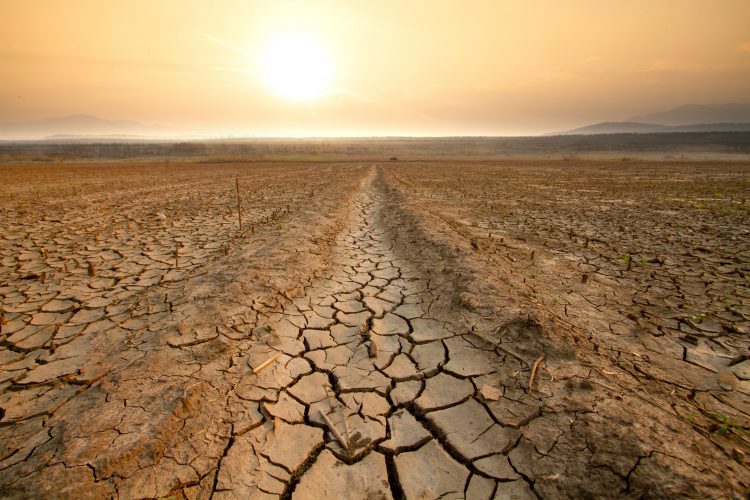
Arid ecosystems already cover more than 30 per cent of the planet’s total land area. This area is constantly expanding, and even regions that previously had sufficient moisture are now suffering from prolonged droughts due to climate change. The World Day to Combat Desertification and Drought is a high-profile initiative to draw the attention of all governments and communities to the importance of this issue and to unite them in a joint effort to secure water resources.
EcoPolitic has compiled key facts for its readers and will discuss the theme chosen as the central focus for 2026.
History of the date
As far back as 1994, a UN Convention was adopted to combat desertification globally. To mark the anniversary of this date in 1995, the General Assembly established a new observance: the World Day to Combat Desertification and Drought.
Desertification is a form of land degradation characterised by a catastrophic decline in a territory’s resource potential, the loss of its vegetation cover, and a gradual deterioration in soil quality. These processes pose a threat to biodiversity and food security for all of humanity. Therefore, on the World Day to Combat Desertification and Drought, the world comes together through themed activities, global events and awareness-raising initiatives designed to deepen global cooperation in tackling this planetary challenge.
The Theme for 2026 – Preserving Pastures
Every year, this date is marked by a specific focus and a central venue for the main events. In 2026, the focus will be on pasture protection, and global events will be held in Kenya, Africa.
At this time, approximately 50% of the world's pastures have degraded or are at risk of disappearing. According to the United Nations, the consequences are immense and affect many areas – from water and food security to the preservation of flora and fauna. This also reduces resilience to climate change, as degraded lands can no longer retain greenhouse gases.
"Pastures are among the simplest, yet most underappreciated ecosystems on Earth. They support the livelihoods of about two billion people worldwide, including many pastoralists and indigenous peoples whose knowledge and management have maintained these landscapes for generations," the United Nations notes.
Desertification and Ukraine
Climate change and the consequences of the war have made this issue relevant for Ukraine as well. The State Environmental Inspectorate has emphasized that desertification poses a direct threat to the southern regions.
An important factor was the destruction by Russia of the Kakhovka Hydroelectric Power Plant dam, which also led to the disappearance of the Kakhovka Reservoir. Exacerbated by climate change, this issue will inevitably lead to water shortages in the south. The National Academy of Sciences has stated that restoring the reservoir alone will not solve the situation – only a comprehensive approach to restoring the water regime of the entire Lower Dnipro will help.
At the same time, this disaster also affected the Odesa region, which was not directly impacted by the Kakhovka catastrophe. In that area, the system of lakes and floodplains at the mouth of the Danube is shrinking, posing a threat to local ecosystems, water supply for the population, and irrigation of agricultural lands. This problem is being addressed radically. For instance, it involves the forced filling of several lakes.