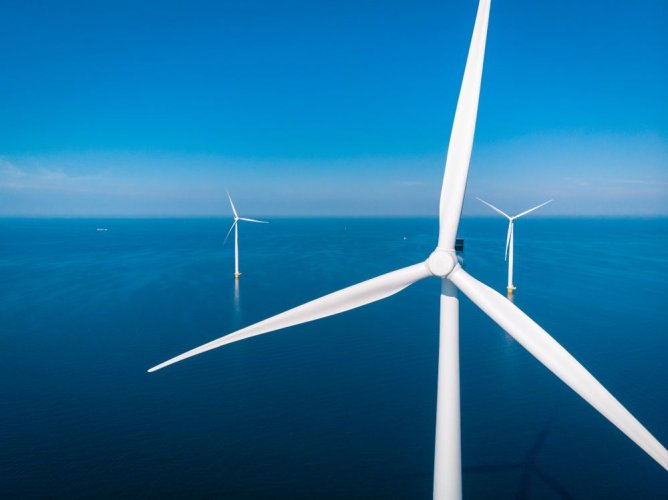
The French company TotalEnergies has agreed to abandon the construction of two offshore wind farms in the U.S. in exchange for $928 million in compensation. The Trump administration sourced this money from taxpayer funds, sparking outrage in several Democratic states. Meanwhile, New England was left without clean and cheaper energy, and the energy giant is investing the funds received in the construction of a liquefied natural gas plant in another state—Texas.
This was reported by CNN.
Fossil Fuels Instead of Clean Energy
TotalEnergies had planned to build offshore wind farms in waters near New York and North Carolina. The company leased the construction sites during the Biden administration and has already paid nearly $1 billion.
However, with Donald Trump’s return to power, the company was persuaded to abandon the construction of clean energy facilities in exchange for compensation for its expenses. Instead, TotalEnergies agreed to reinvest the funds into the development of a new liquefied natural gas plant in Texas. The CEO of the French energy giant, Patrick Pouyanné, stated back in March that this would allow the U.S. to export American gas to Europe.
As a result, not only was American taxpayers’ money lost—New York was left without much-needed additional electricity, and its cost may rise.
Lawsuit
Seven states filed a class-action lawsuit against the Donald Trump administration in the U.S. District Court for the District of Columbia, led by New York Attorney General Letitia James.
“After repeated defeats in court, this administration concocted a sham deal to pay a foreign energy company hundreds of millions of taxpayer dollars to abandon offshore wind power and invest in oil and gas instead,” James emphasized.
Attorneys general from New Jersey, Maine, Vermont, Connecticut, Rhode Island, and Massachusetts also joined the lawsuit. They cited violations of the law, a lack of public hearings, and threats to the environment and national security.
The government’s response
The U.S. Department of Justice did not respond to a request for comment on the lawsuit. However, a spokesperson for the U.S. Department of the Interior told CNN that the agreements were voluntary and “no one was forced to sign them.” As expected, they sought to shift the blame to the previous administration.
“These agreements were reviewed and approved by the Department of Justice, meaning they went through the proper channels. The only thing that was clearly illegal here was the process by which these offshore wind farm lease agreements were negotiated and imposed under the Biden administration,” the DHS spokesperson said.
The new U.S. administration is consistently moving away from global climate policy. Pressure on renewable energy is just one manifestation of Trump’s anti-environmental approaches. The blocking of large offshore wind farm construction became known as early as December 2025.
Meanwhile, the U.S. openly supports fossil fuel extraction projects. The approval of offshore drilling near the resort coasts of California and Florida has drawn particular attention.