After nine days of negotiations at the UN Climate Change Conference COP31, participating countries still have quite a few disagreements over the use of fossil fuels, financing for developing countries and adaptation to climate change.
Reuters analysed the draft agreement, which is officially due to be concluded on Friday, November 20. Here are the key points of the document.
What the draft already contains
The document contains two options for wording on fossil fuels. One of them, agreed back in 2023, refers to a "transition away" from their use, while the other, more ambitious option provides for a "phase-out" of fossil fuels. However, Reuters notes that both wordings may be dropped from the final agreement.
"According to observers, major producers and consumers of fossil fuels are resisting any agreement that would set clear new targets or a transition away from oil, gas and coal," Reuters notes.
The draft also records differences of opinion on Turkey's proposal to increase the share of electricity in global energy consumption to 35% by 2035.
Why finance has once again become a stumbling block
Countries also cannot agree on how much money rich nations should provide to help poorer ones adapt to climate change. There are several reasons for this.
First, Western governments are increasingly focused on national security and the cost of living, so calls for climate finance from the countries hardest hit by this year's climate disasters risk going unheeded.
Second, despite the agreement reached two years ago that rich countries would increase climate finance for poorer countries to $300 billion a year by 2035, and that total financing from all public and private sources would reach $1.3 trillion annually, it is not being implemented. Moreover, rich countries were two years late even in meeting their 2020 target.
Third, climate action has slipped down the political agenda of Western governments, as US President Donald Trump has withdrawn international funding, while the wars in Ukraine and the Middle East have increased inflationary pressure and the need for security spending.
As a reminder, previous UN conferences have quite often run over time, sometimes by several days. The likelihood of such a scenario is quite high this year as well.
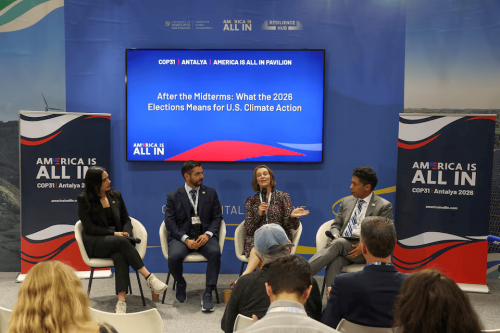
Recently, EcoPolitic reported that despite the absence of an official US delegation at COP31, about 120 delegates of the "America Is All In" coalition are actively taking part in the conference. They are American lawmakers, governors and former officials who assure that the US will return to the Paris climate agreement "with humility", and that climate action in the country continues despite the current president's policies.