
The world has experienced the hottest October since meteorological records began. At the same time, experts already forecast that 2026 will most likely become the second-warmest year on record after 2024. The temperature is virtually certain to exceed pre-industrial levels by 1.5°C.
This is according to a report by the Copernicus Climate Change Service.
A scorching October and future forecasts
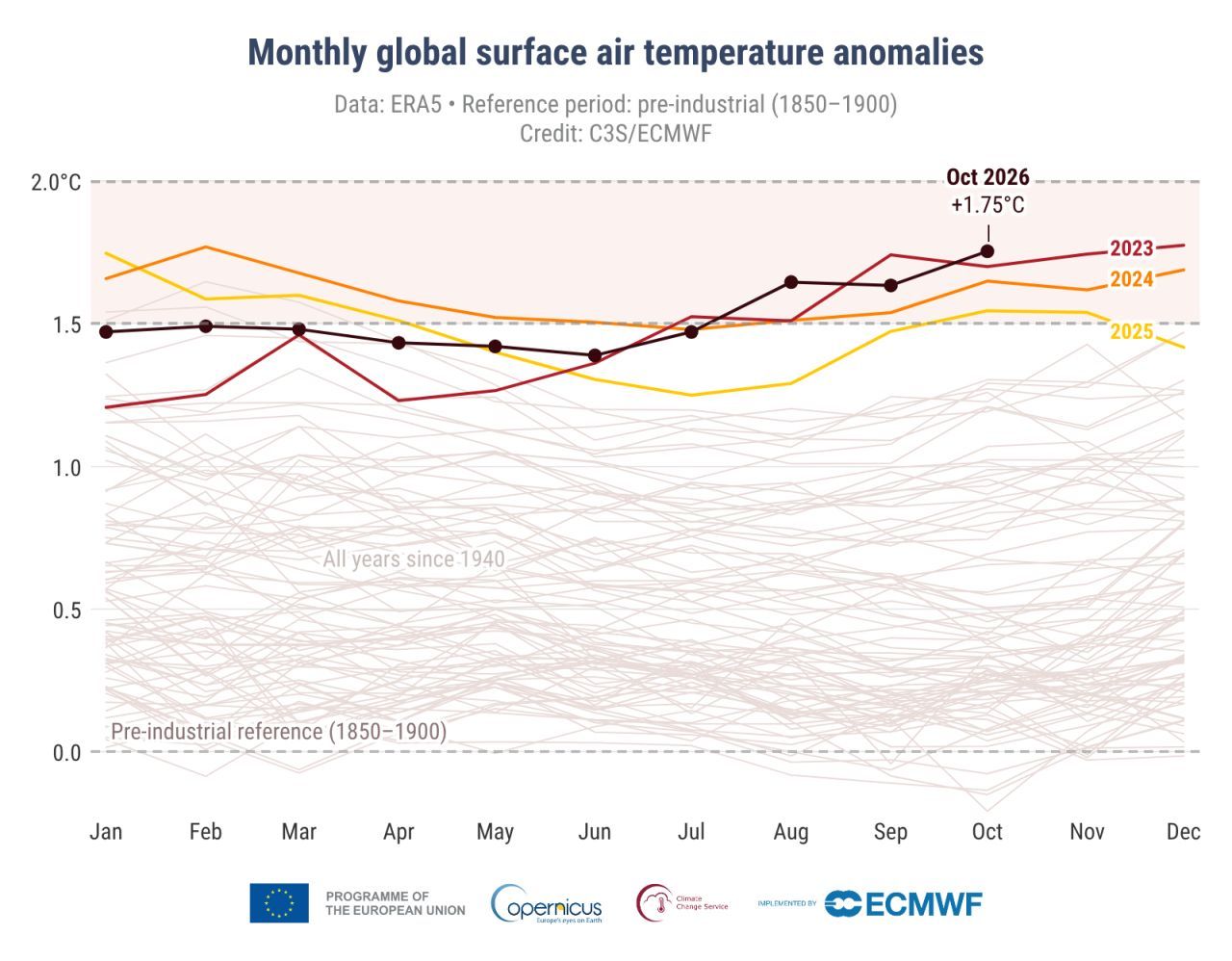
In October 2026, the average global temperature was 1.75°C above the pre-industrial level. This is the third consecutive month in which global temperatures have exceeded the limit set by the Paris Climate Agreement.
Source: Copernicus
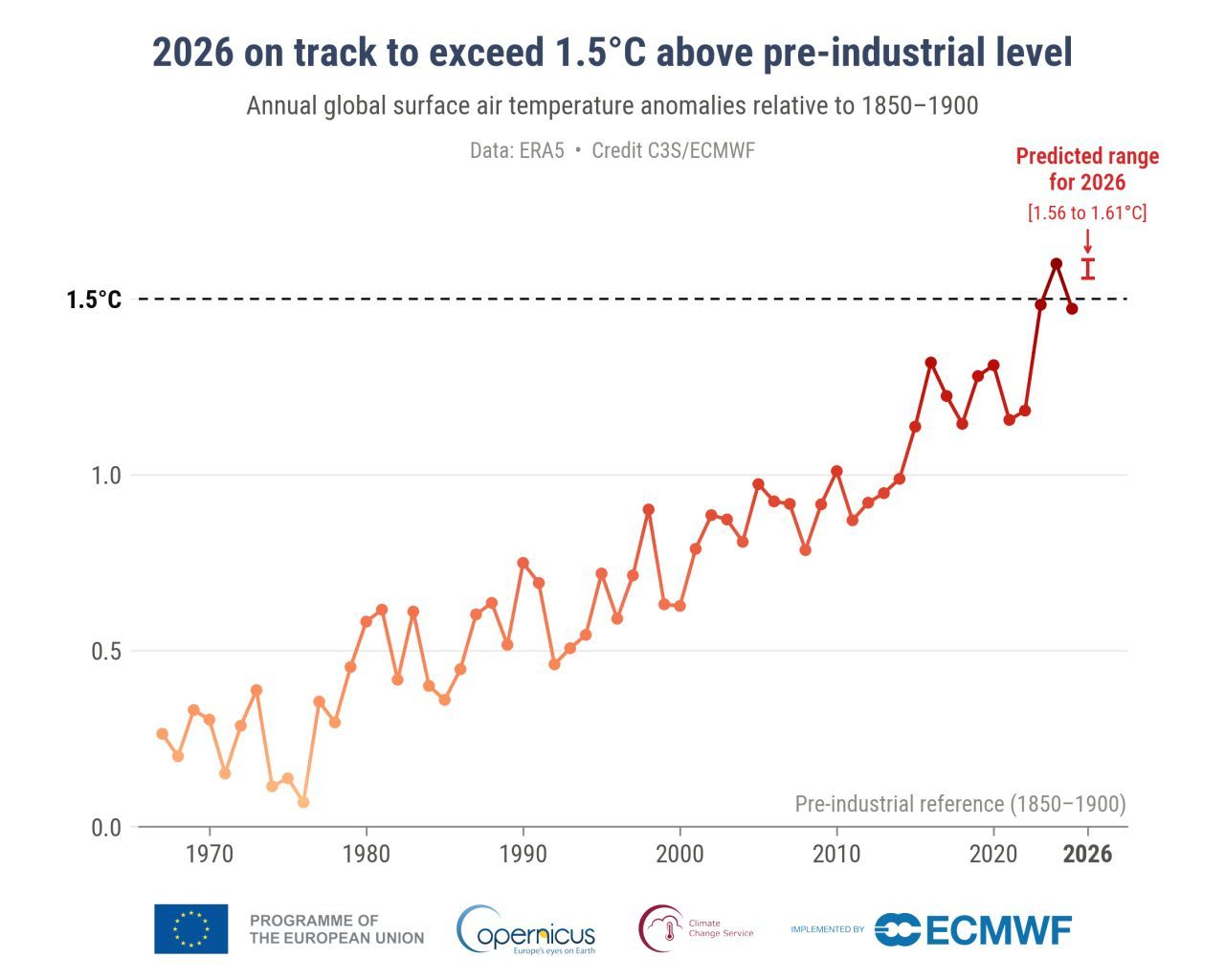
Copernicus noted that 2026 is virtually certain to become the second year in which the temperature exceeds 1.5°C. The projected range of the exceedance is from 1.56°C to 1.61°C.
Source: Copernicus
Sea warming also breaks records
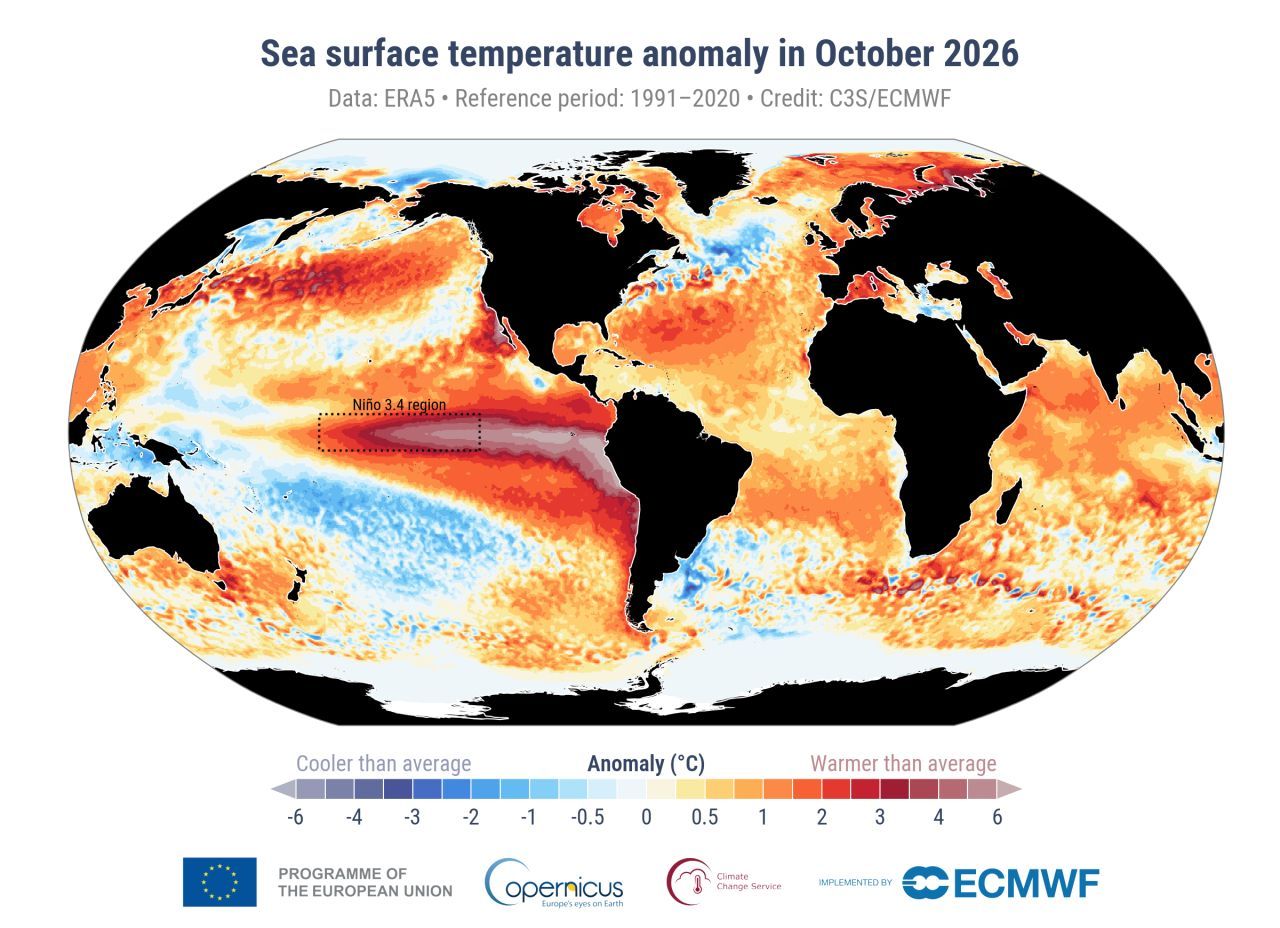
The sea surface temperature in October was also the highest on record. On average, it reached 20.95°C, surpassing the previous record set in 2023.
The El Niño weather phenomenon also played a role, exceeding the temperature peaks of all previous years. The historical maximum reached 3.21°C in the tropical Pacific Ocean.
Source: Copernicus
The European dimension
For Europe, October was the second-warmest on record. The largest temperature anomalies were recorded in Eastern Europe and Scandinavia. Meanwhile, Central and Western Europe experienced fewer heat anomalies.
Extremely low river flow was observed across most of central and eastern Europe. The Danube, Rhine and Vistula basins were particularly affected. At the same time, several countries, including the United Kingdom, Ireland, Spain, Türkiye and Greece, experienced heavy rainfall and floods.
As a reminder, normal water flow has still not recovered on a number of rivers in Ukraine, so the restriction on water abstraction remains in force for more than 90 businesses until 15 November.