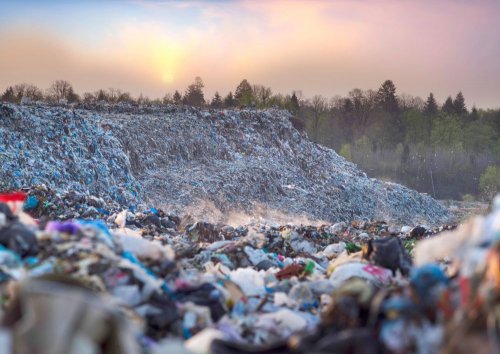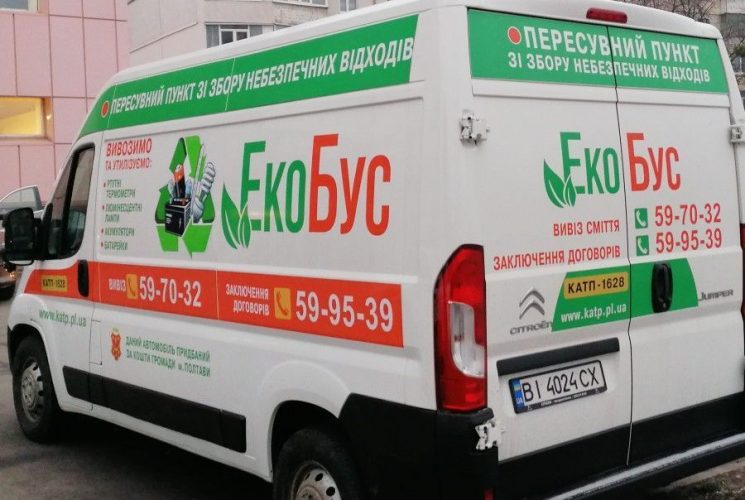
Hazardous household waste poses a delayed and rather long-lasting threat to the environment. Mercury from thermometers or heavy metals from batteries can poison nature for a long time. That is why the "Eco-bus" project continues to operate in a number of cities, allowing residents to hand over such toxic waste for free disposal at a location convenient for them.
EcoPolitic presents the eco-bus stop schedules in Lviv, Poltava and Khmelnytskyi for the last month of autumn.
Lviv
In addition to the oblast centre itself, the Lviv eco-bus will make stops in Dubliany, Lysynychi, Zashkiv and Riasne-Ruske in November.
Residents of the Lviv hromada can hand over hazardous waste free of charge, as usual, but it must be in safe, undamaged containers.
As the municipal enterprise "Bodnarivka" reminded, up to 10 fluorescent lamps, up to 5 mercury thermometers and up to 10 kg of batteries can be handed over at a time.
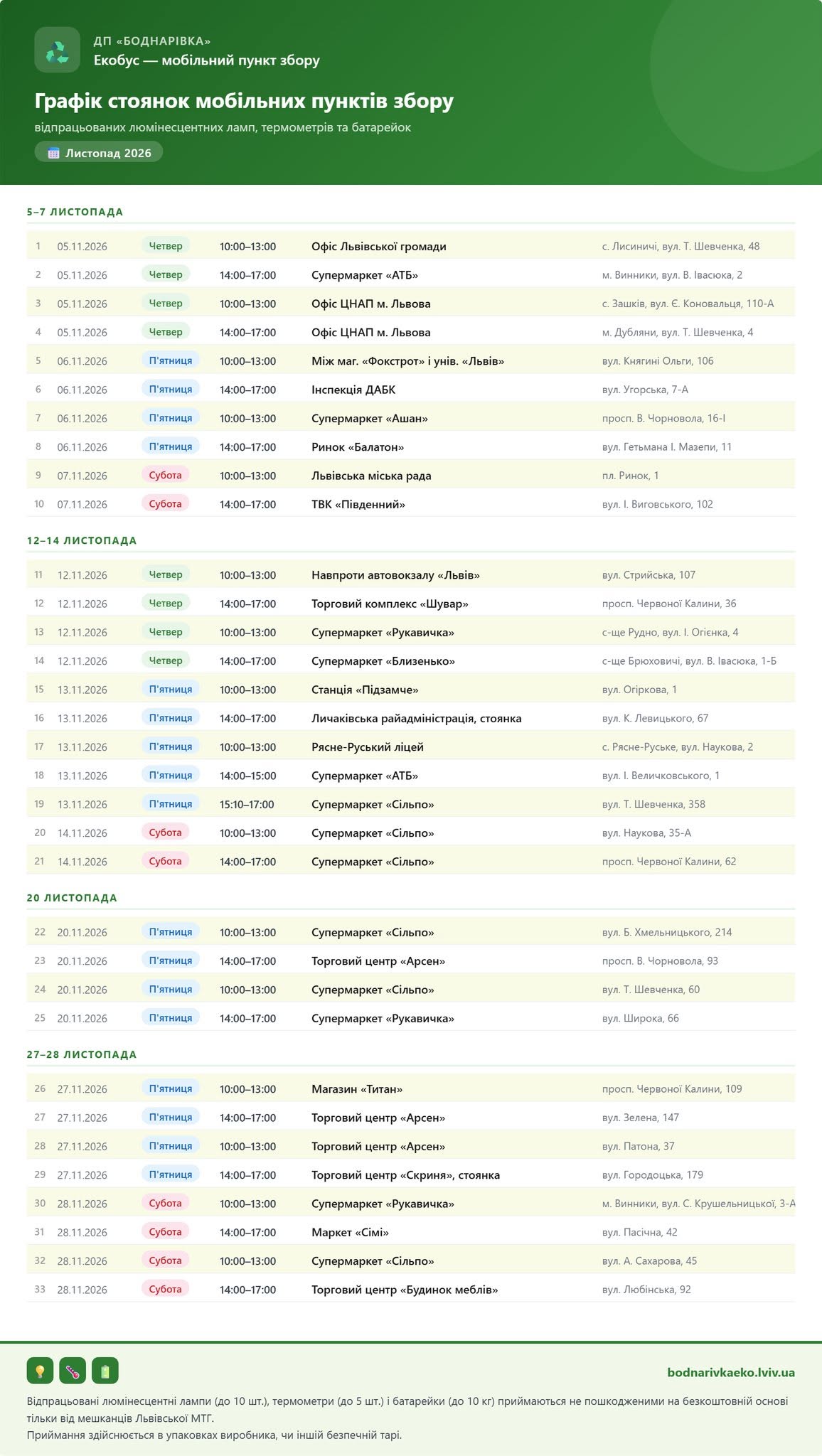
Source: municipal enterprise "Bodnarivka"
Poltava
In Poltava, the mobile waste collection point is also available not only to city residents. The November schedule also includes the villages of Suprunivka, Takhtaulove, Semianivka, Ivonchentsi and Hozhuly.
According to the city council's data, the eco-bus will accept batteries, mercury thermometers, fluorescent lamps and mobile phone batteries.
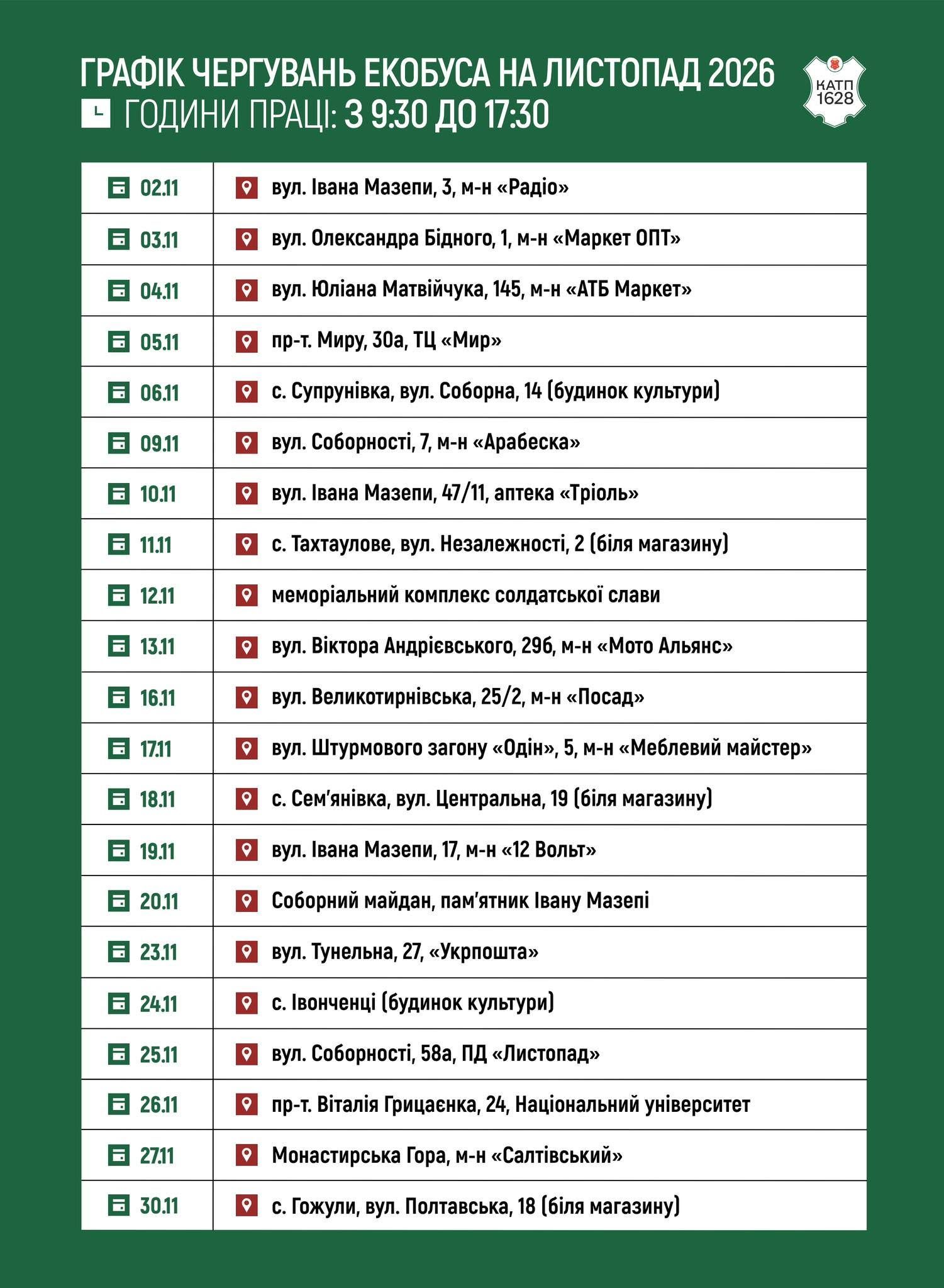
Source: Poltava City Council
Khmelnytskyi
In the Khmelnytskyi hromada, the eco-bus will operate not only in the oblast centre. As the city council specified, on 4 and 29 November the mobile collection point will visit villages belonging to the starosta districts centred in the villages of Kopystyn and Bohdanivtsi.
The list of waste accepted for disposal here is traditionally the widest. The following can be handed over to the eco-bus:
- used batteries and accumulators; fluorescent lamps;
- thermometers and other mercury-containing products;
- varnishes, paints and solvents in their original containers;
- electronic and electrical equipment;
- household chemicals, including detergents (must be in containers);
- expired medicines.
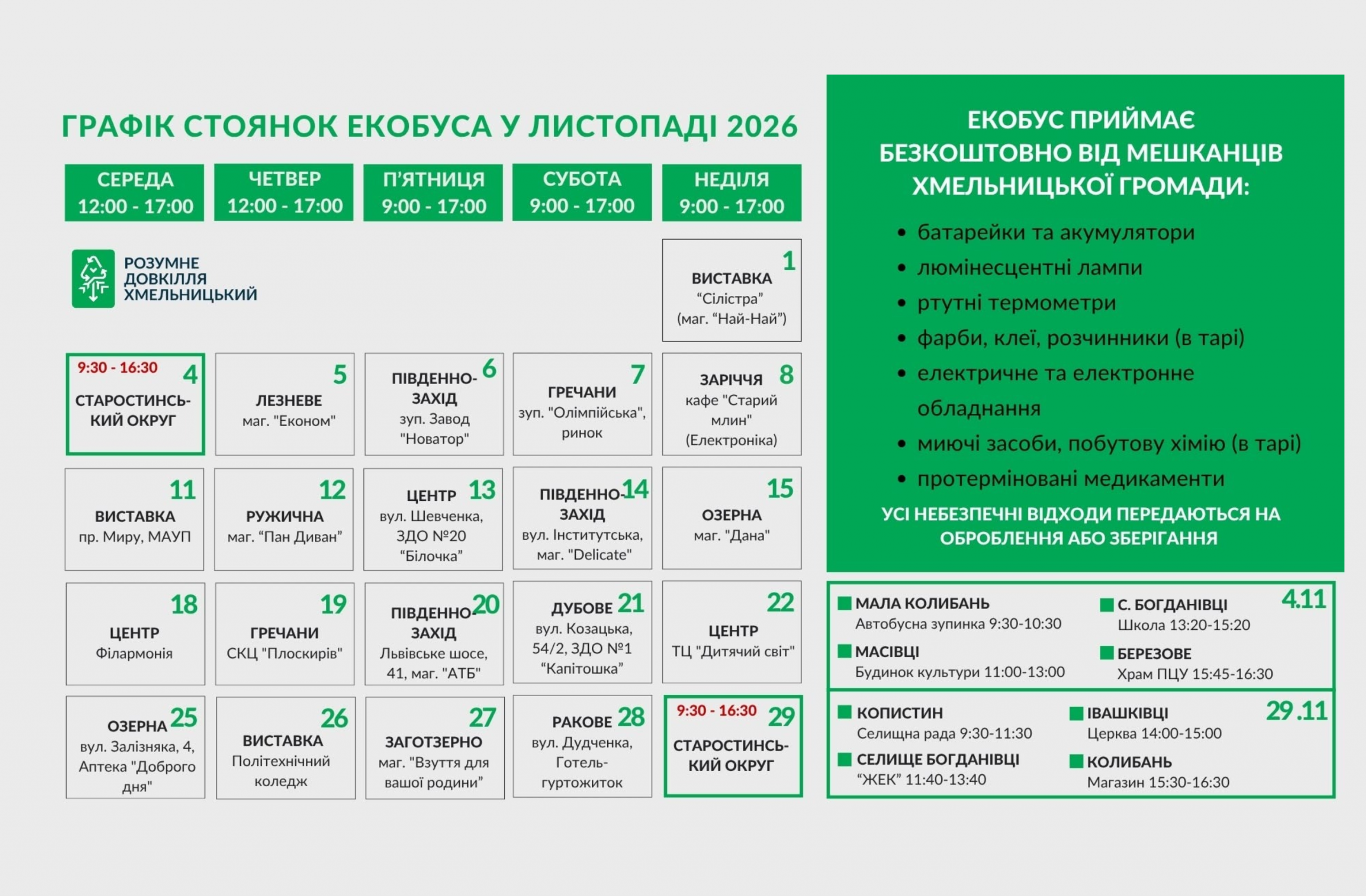
Source: Khmelnytskyi City Council
As a reminder, an eco-bus is also set to start operating in Lutsk. Until 15 November, residents can take a survey to help determine the locations of future stops and more convenient operating hours.
Separate disposal of hazardous waste is a useful environmental habit and part of waste sorting. How to start sorting waste at home – in this article by EcoPolitic.