In 2024, each EU resident generated 181 kg of packaging waste. In total, this amounts to a staggering 81.5 million tonnes of waste. And almost 20% of it is plastic packaging waste. This is according to Eurostat data. Compared to 2023, the total amount of packaging waste increased by 3.2 kg per person. Over ten years, since 2014, the volume has grown by 19.6 kg. The structure of packaging waste is as follows:
- 40.8% – paper and cardboard;
- 19.9% – plastic;
- 18.1% – glass;
- 16.2% – wood;
- 4.8% – metal;
- 0.2% – other materials.
Growing volume of plastic waste
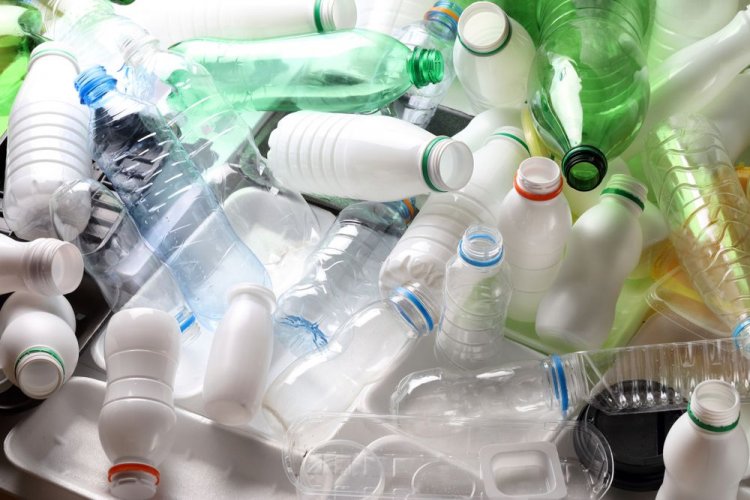
In 2024, plastic packaging waste in the EU amounted to 35.9 kg per person. Around 43% of it was recycled, or 15.3 kg per person. Both figures rose by 0.6 kg compared to the previous year. Over the ten-year period, the growth in the amount of waste has far outpaced recycling. Between 2014 and 2024, the amount of plastic waste per person increased by 6.1 kg, while recycling grew by only 3.4 kg.
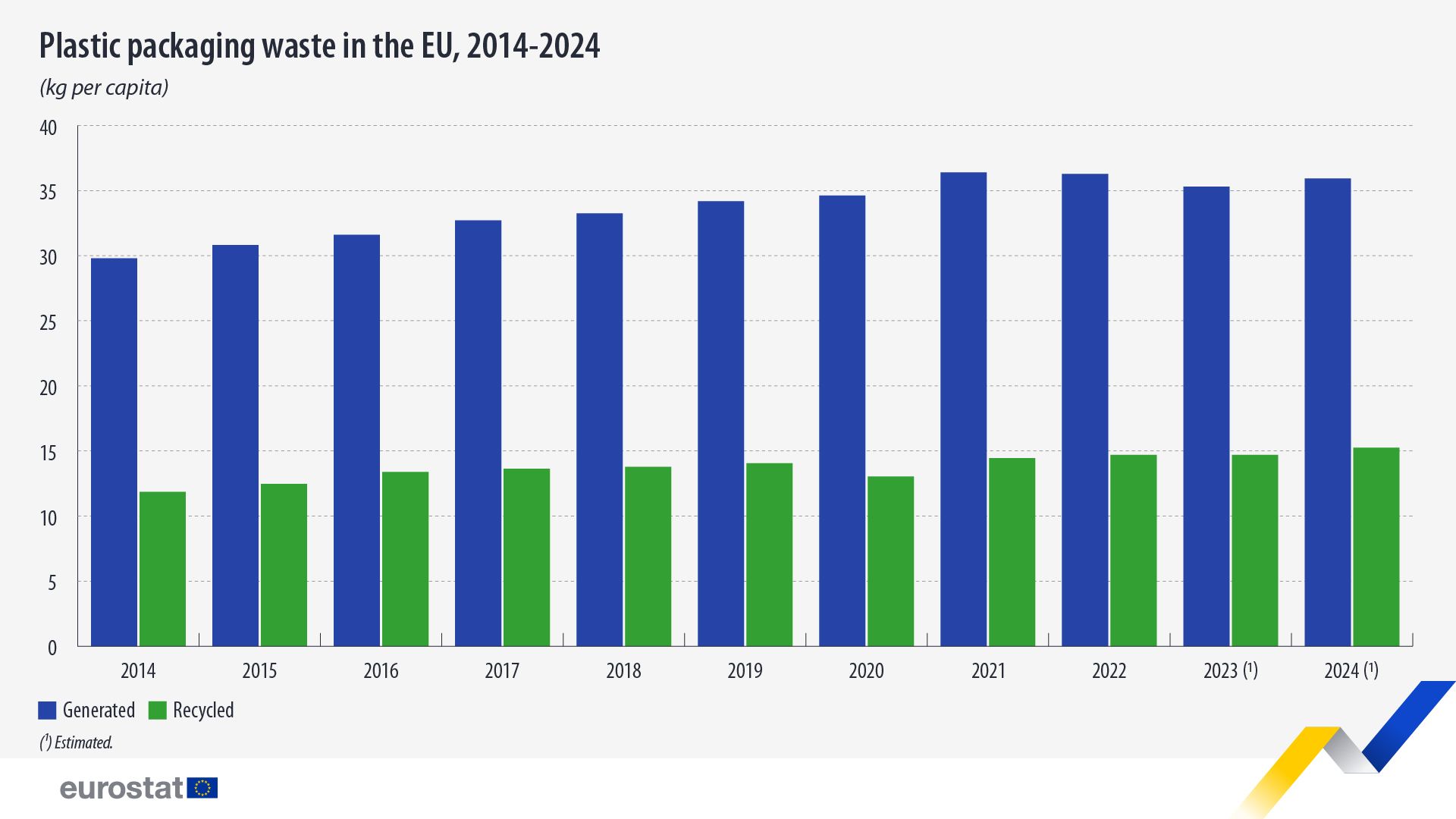
Source: Eurostat
Slow strengthening of the recycling sector
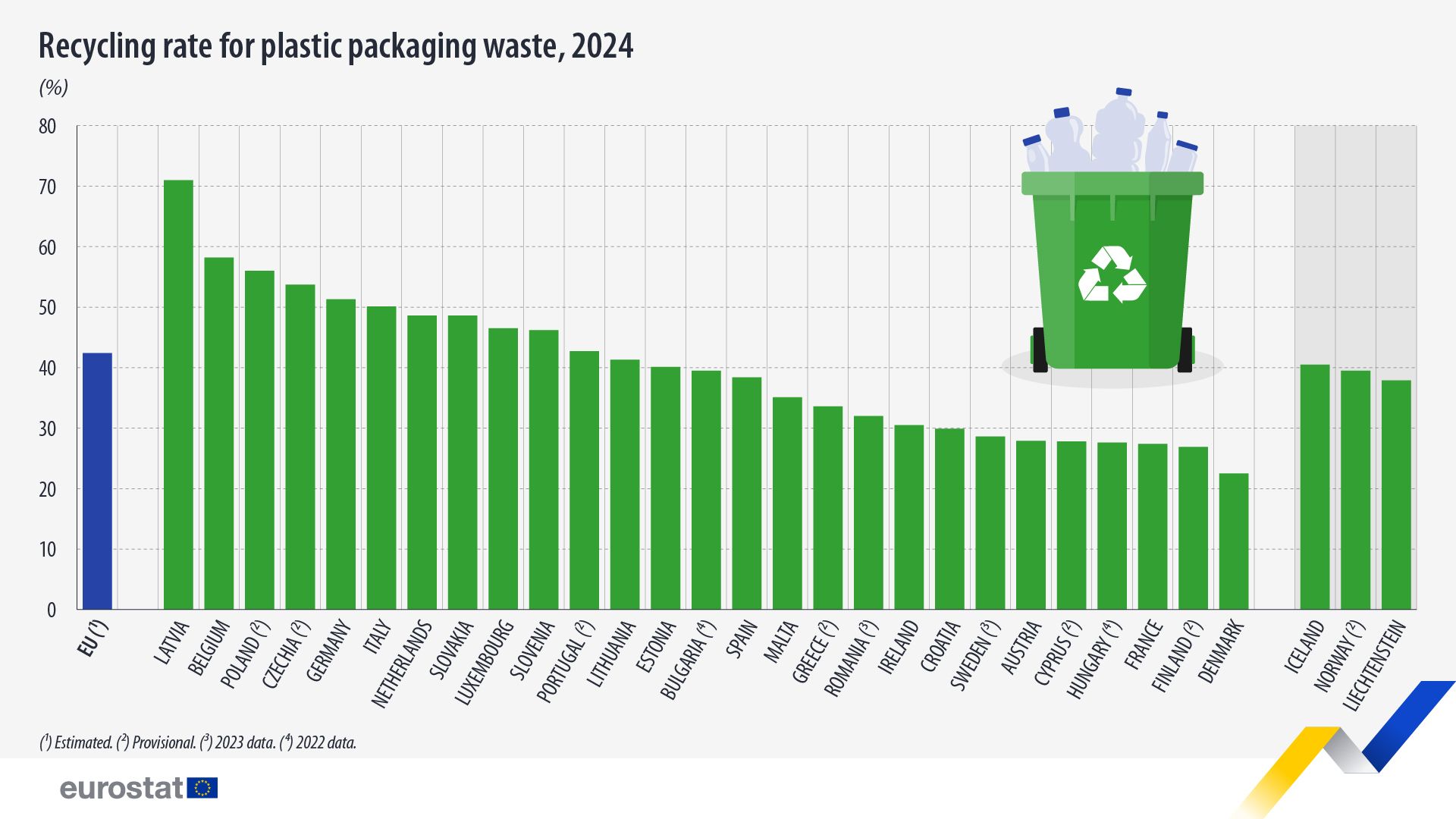
However, in percentage terms, the share of recycled waste is gradually increasing. Compared to 2023, there was a slight increase, from 41.6% to 42.4%. Latvia has the highest recycling rate for plastic packaging at 71%. It is followed by Belgium (58.2%), Poland (56.0%) and Czechia (53.7%). The three countries with the lowest recycling rates are Denmark (22.5%), Finland (26.9%) and France (27.4%).
Source: Eurostat
EcoPolitic previously reported that six EU countries have reached the EU's single-use plastic collection target ahead of schedule. Meanwhile, researchers have found that microplastic particles in the air can intensify the effects of global warming.