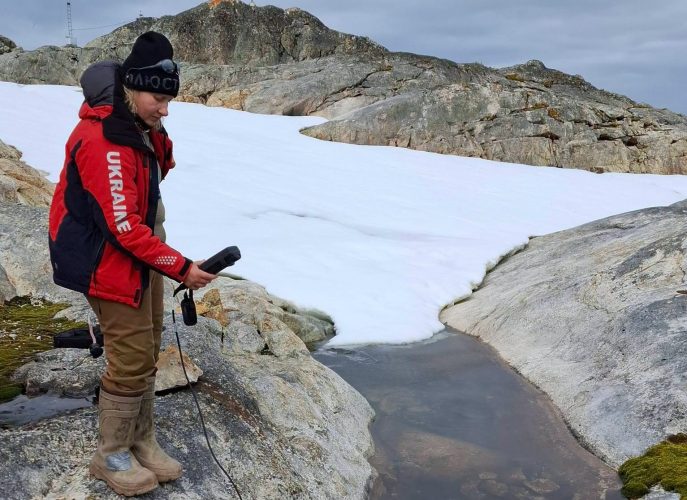
Scientists from the Ukrainian ‘Akademik Vernadsky’ station, in collaboration with colleagues from the University of South Bohemia (Czech Republic) and the Czech Antarctic Research Programme, investigated whether there are any chemical pollutants in Antarctic waters.
This was reported by the National Antarctic Scientific Centre.
How does it work?
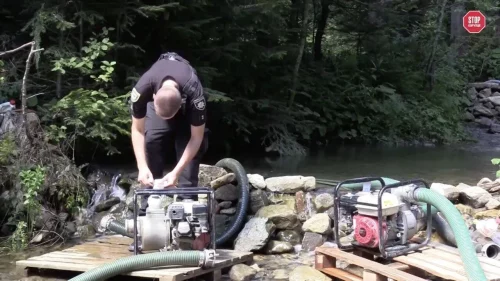
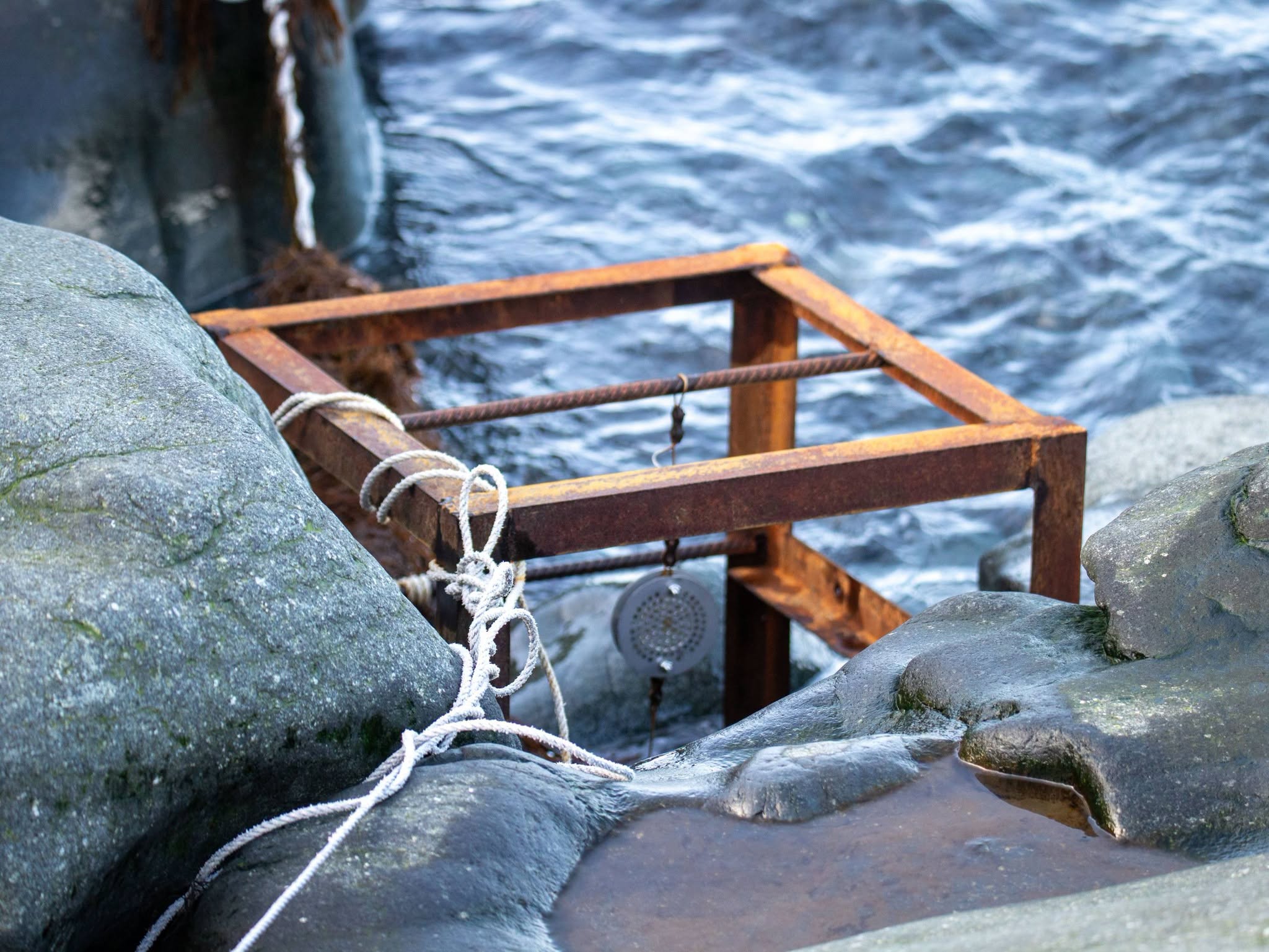
The traps collect water samples passively. Over time, they accumulate organic pollutants dissolved in the water.
This is better than taking samples using traditional methods, as the cumulative effect makes it possible to detect even those chemical compounds present in very low concentrations in the water.
The traps were ‘in operation’ for two weeks at two locations – near the Ukrainian ‘Academician Vernadsky’ station (Galindez Island) and near the Czech field base CZ*ECO Nelson (Nelson Island). Four devices were deployed at each trap site – in glacier-fed waters, in coastal marine waters, and in freshwater bodies upstream and downstream of the stations.
Source: National Antarctic Scientific Centre
Results of the analysis
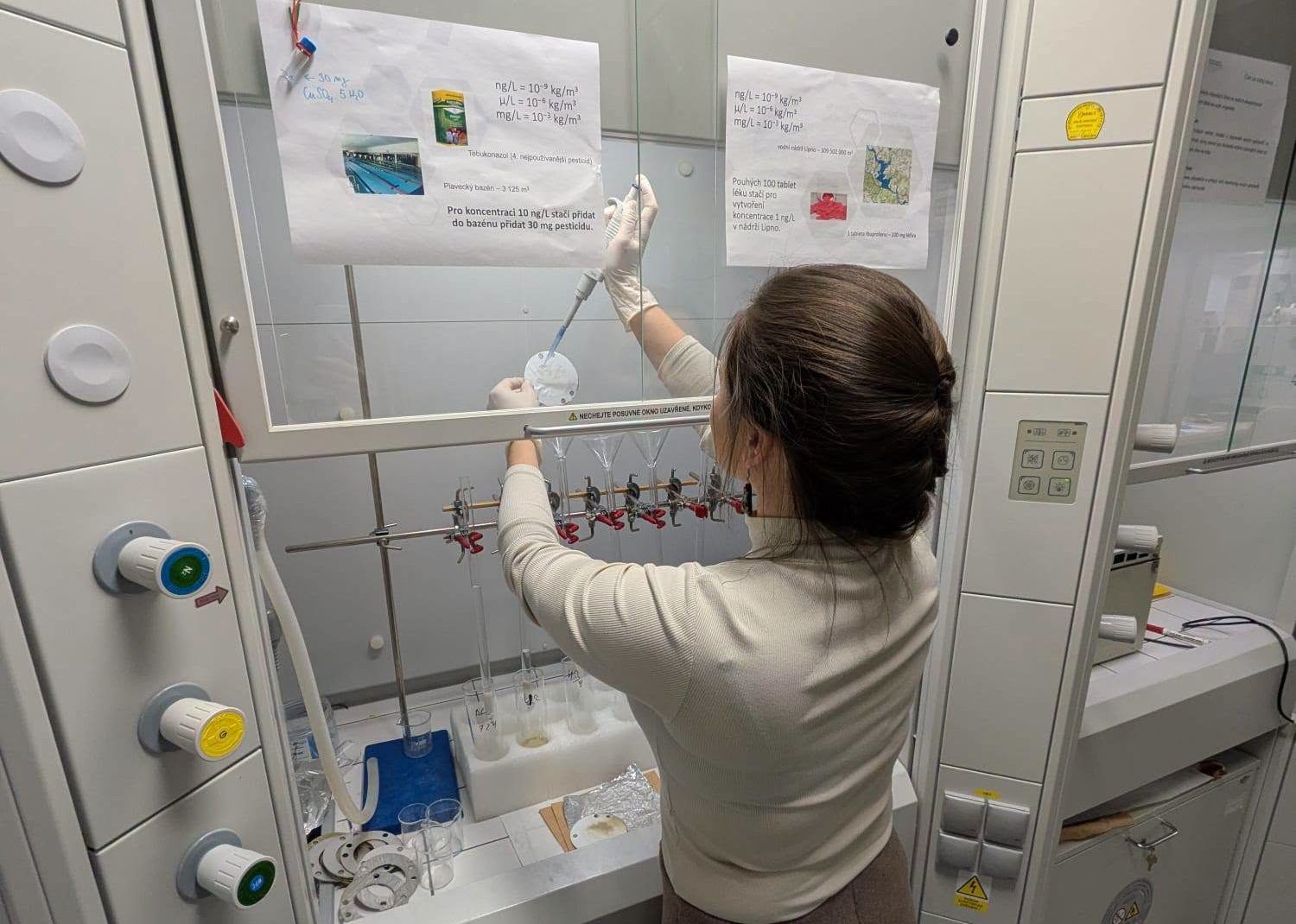
The researchers used liquid chromatography-mass spectrometry, which enables the detection of a wide range of chemicals:
- pharmaceuticals;
- pesticides;
- PFAS, known as ‘forever chemicals’;
- industrial chemicals.
Source: National Antarctic Scientific Centre
The results of the laboratory tests proved to be extremely encouraging. Only a few compounds from the list were detected. One of these was benzotriazole – a substance used to protect metals from corrosion. Another was DADMAC-C10. This is an ammonium compound found in the formulations of surfactants and disinfectants. It was detected at low levels in seawater from the bay near the ‘Vernadsky’ pier.
"Scientists have successfully tested the method in Antarctic conditions, so in future the traps can be set up for longer periods. Such research will make it possible to track compounds that can be transported over long distances, as well as to assess the impact of the stations’ operations on vulnerable Antarctic ecosystems," the Antarctic Centre emphasised.
You can find out why PFAS are so harmful in this article. At the same time, the level of environmental pollution caused by so-called ‘forever chemicals’ in the EU is steadily rising and could cost the bloc around €440 billion by 2050.
Another harmful man-made pollutant is liquid crystal monomers. Scientists have found that more than 60 LCM compounds are already present in various types of tissue in dolphins and porpoises – from blubber to the brain.