Over the course of three summer months, the State Decarbonisation Fund of Ukraine has funded more than 20 projects relating to solar power generation for government bodies and manufacturing enterprises.
These and other summer results were reported by the State Agency for Energy Efficiency and Energy Saving.
Additional solar power generation with storage
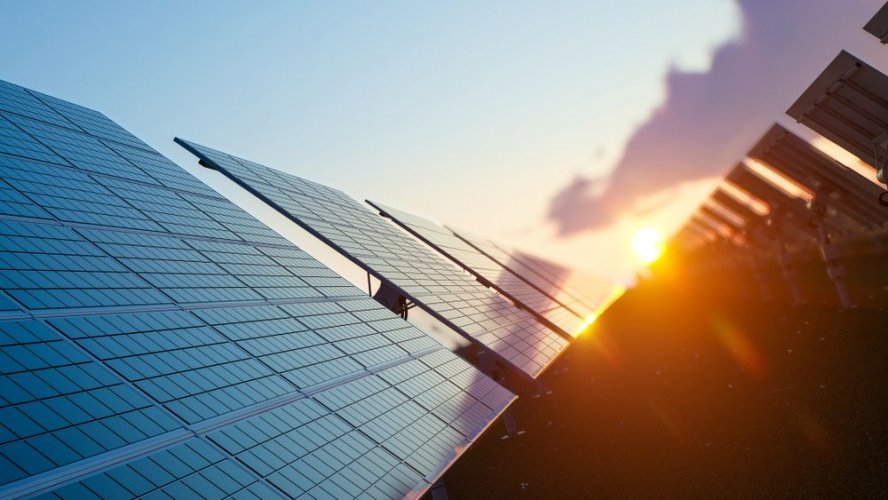
Over the course of three months, more than 20 solar power stations (SPS) equipped with energy storage systems have been installed with funding from the Decarbonisation Fund. The cost of the projects exceeded 500 million hryvnias and was funded as part of the ‘EnergoNezalezhnost’ project.
The installed solar power stations have a combined capacity of over 10 MW. Meanwhile, the battery systems have a total capacity of 35 GWh.
The State Agency for Energy Efficiency is convinced that such projects are important for ensuring a reliable energy supply to businesses, communities and organisations.
Industrial energy resilience
In the summer, the Foundation received $1.5 million in international funding from the United Nations Industrial Development Organisation (UNIDO). These funds are to be used exclusively to improve energy efficiency at industrial enterprises.
According to the agency’s director, Hanna Zamazeyeva, these measures are aimed at reducing energy consumption and making businesses more resilient.
However, there are no specific details regarding the use of funds from international partners.
New offices and ancillary areas
A Decarbonisation and Efficiency Office has been opened in Zaporizhzhia to provide practical support for the implementation of projects. The agency states that it will help to prepare projects and secure funding.
The fund will also be used to purchase a further 10,000 portable charging stations for children with disabilities. These will be provided to families to ensure a backup power supply for the medical equipment the children need.
Previously, the publication "Nashi Hroshi" reported that the Decarbonisation Fund had commissioned such stations worth over 422 million hryvnias from BukEnergy Group LLC.
EcoPolitic reported that the Decarbonisation Fund has allocated a total of nearly 2.2 billion UAH to implement 90 projects. You can find out about current programmes and conditions on the Fund’s website.
The fund is financed by payments made by polluting companies for CO₂ emissions, as well as through contributions from partners. However, the use of these funds sometimes raises questions among experts, particularly because the decarbonisation of industry – which is the very source of the fund’s revenue – is often sidelined in favour of support for state institutions. At the same time, the fund has been linked to corruption scandals, such as the allocation of nearly 200 million hryvnias to a single supplier without any competition or tender process.