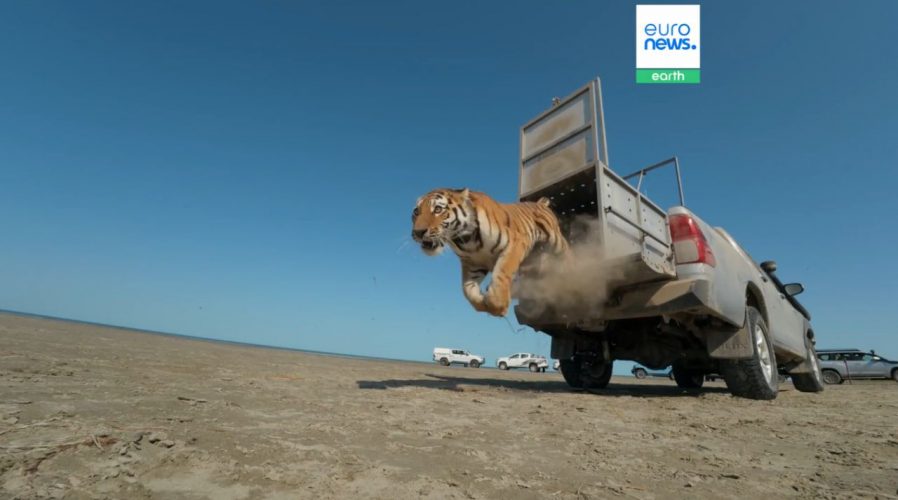
The first female Amur tiger has been released into the wild in Kazakhstan. She is named Umit, which means ‘hope’. This is just the first step towards realising an ambitious project — the restoration of the wild Amur tiger population in Central Asia, which disappeared over 70 years ago.
This was reported by Euronews.
Future founders of the population
Umit was brought to Kazakhstan in May, becoming the first to be released into the Ile-Balkhash Nature Reserve.
Before her release, the tigress was monitored and studied. For two months, experts assessed her health, hunting skills and behaviour. This allowed them to ensure that the animal would be able to survive independently in the wild.
Next in line is a male Amur tiger. Scientists are currently keeping a close eye on him to determine once and for all whether he is ready for life in the wild.
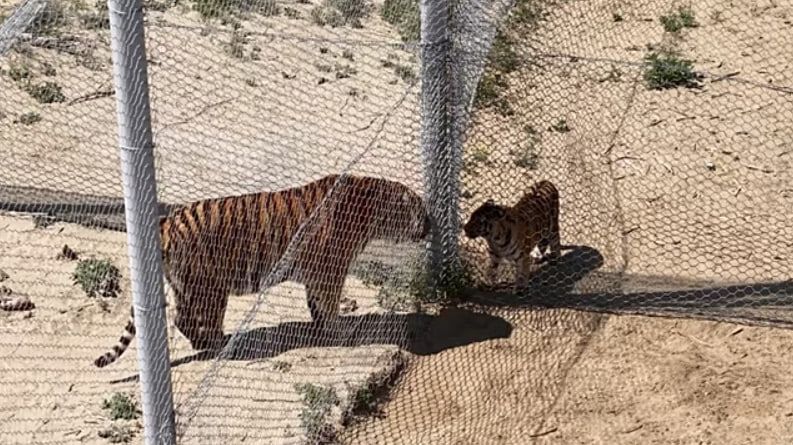
Source: Euronews
Reintroduction program
The restoration of the animal population consists of several stages. Initially, tigers are kept in a large enclosed environment where they adapt to local conditions. Only after that are they released in the Ile-Balkhash nature reserve.
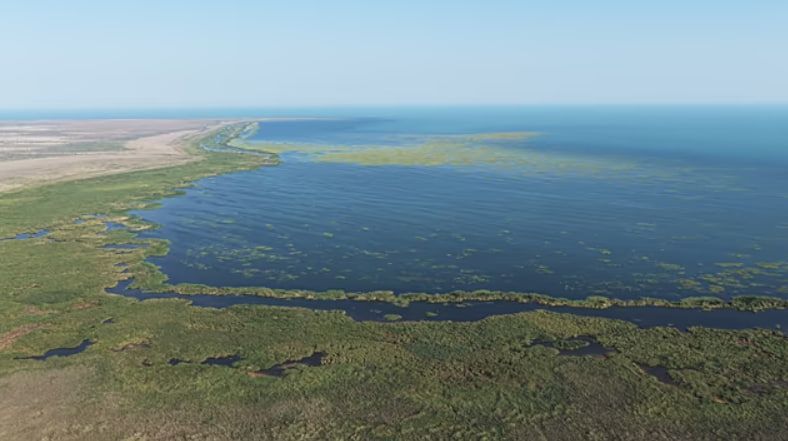
Source: Euronews
The reserve is a protected area but does not have fencing, so the tigers can move freely within their new habitat.
However, conservationists do not intend to lose sight of Umit. The tigress was fitted with a GPS/GSM satellite tracking collar.
Scientists worked beforehand to make sure there would be enough prey for the tigers. Since 2018, experts have been returning Bukhara deer and kulan to the reserve and monitoring the development of their populations. A single tiger needs 50–70 large animals per year to survive.
Priority – human safety
Special attention has been given to human safety. After all, tigers are predators, so residents of nearby areas have been notified about the project. If scientists spot the animal within a 5 km zone near settlements, they will alert the local population.
“We have taken measures to prevent conflicts between people and tigers, including the creation of a special team that will respond if the animal approaches a settlement,” stated representatives of the Ministry of Ecology of Kazakhstan.
Choosing the species for restoration
Turan tigers previously inhabited this territory but became extinct in the wild more than 70 years ago. Genetic studies have shown that the closest relative of the extinct species is the Amur tiger, so this subspecies was chosen for the large-scale predator reintroduction project.
The program itself may last for decades. It will only be considered successful when tigers begin to reproduce in the wild.
If successful, Kazakhstan will become the first country in the world to restore a wild tiger population in a region where the species had disappeared.
EcoPolitic previously reported that wild European bison in Europe were saved from extinction. Now these animals play an important role in preserving the ecosystem.
At the same time, the Chornobyl Reserve became a habitat for an ever-growing population of Przewalski’s horses, which had been considered extinct in the wild for more than 60 years.