On Saturday, 1 August, the 22nd protest in support of the animals at Odessa Zoo will take place. For months, the public and activists have been demanding decent living conditions for the animals and transparency in the institution’s operations. In response, the administration cites pressure, financial losses and difficulties in securing international aid due to its tarnished reputation.
EcoPolitic has investigated the situation and sets out the arguments of all sides in the conflict, at the heart of which lie the health and lives of hundreds of animals.
In the spotlight
On Tuesday, 29 July, members of the public once again inspected the animals and their living conditions at the Odesa Zoo. The meeting was by volunteers, campaigners and a member of the regional council. As reported by the media outlet ‘Suspilne Odesa’, the visit was prompted by appeals from Odesa residents concerned about the condition of certain animals.
The meeting highlighted quite different perspectives on the situation from both sides. For example, councillor Andrii Babenko stated that the Siberian ibex was in a terrible condition and demanded to see its medical record. In response, Olga Pavlova, Deputy Director for Veterinary Affairs, explained that such animals typically live for 10–15 years, and the Odessa Zoo’s specimen is already 13 years old. All animals of his age suffer from joint problems, so he is being treated with chondroprotectors and his condition has improved.
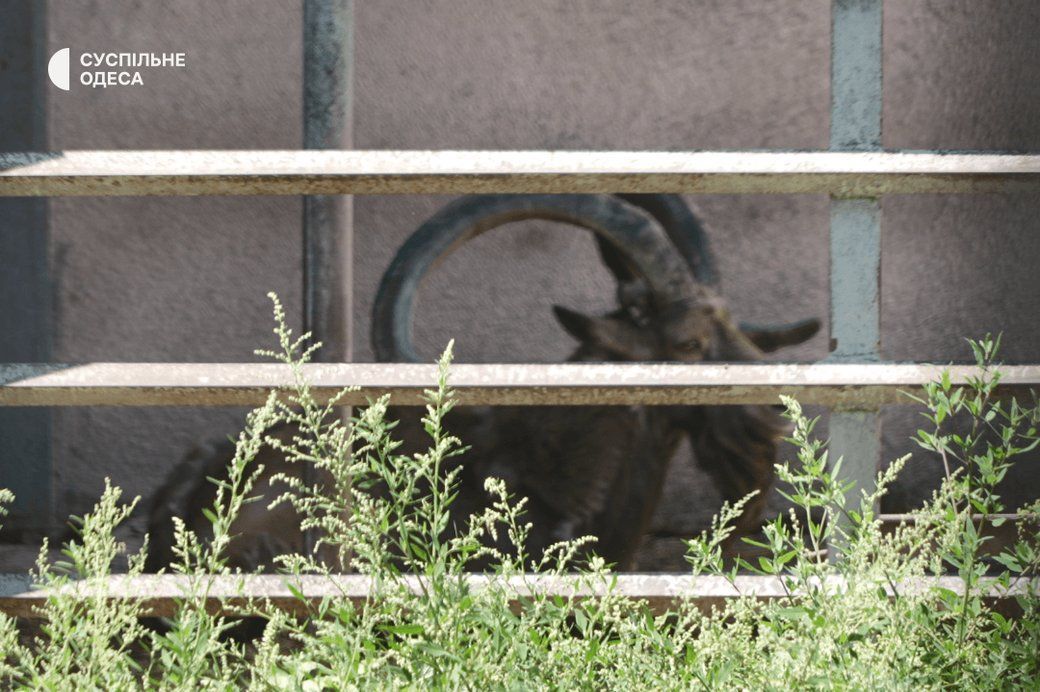
Source: suspilne.media
The administration described its problems, while the visitors raised questions regarding the animals' conditions, possible corruption, and cases of animal deaths in previous years. No final decisions were made at the meeting, so the discussion was postponed until next week.
Months of protests
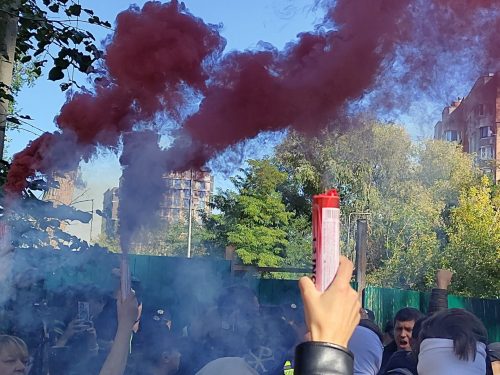
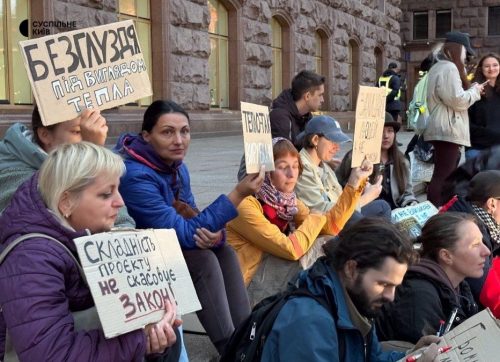
The active phase of the scandal surrounding the Odessa Zoo has been ongoing since January 2026, while the protests themselves began in March. On Saturday, August 1, another protest titled “We Are Alive, We Are Not Exhibits” will take place in front of its main entrance.
Local journalist Anzhelika Karapetyan, described in the media as one of the zoo’s most vocal critics, formulated a list of demands supported by protesters, including:
- accountability and transparency of operations, the establishment of a Supervisory Board, and proper public oversight;
- compliance with animal protection legislation;
- the creation of adequate conditions for housing and treatment;
- inviting international animal welfare organizations to provide grant assistance.
Activists are not opposed to reducing the animal collection by transferring animals to rehabilitation centers in Europe.
It Started with a Leopard
At the end of December 2024, the police shot a leopard. During the clean-up, workers failed to follow safety protocols, so the animal injured one of them and escaped from its enclosure. The Association of Zoos then emphasized that killing the animal was the only solution to prevent it from escaping into the city, as zoos have long been without access to powerful tranquilizers.
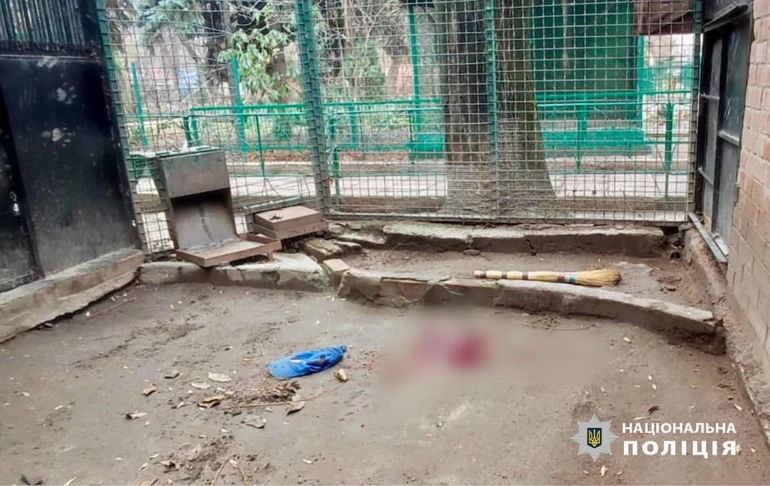
Source: Police of Odesa Region
This event triggered subsequent developments. The animal's death outraged the public. Following that, inspections by the State Environmental Inspectorate and the launch of criminal proceedings at the request of UAnimals took place. However, this incident also highlighted other issues.
“Enclosures, where the animals are currently kept, lag behind modern standards. When they were built, there were different standards, and now there are new ones – there is not enough space for these animals. We are trying to gradually address this, but these enclosures have not yet been improved,” – said Ihor Bilyakov at the time.
Such statements caused dissonance, since the city managed to find funds for the renovation of the entrance area and engineering utilities. Although the budgets had to be revised due to the excessive scope of requested funding, as the estimated cost to complete the renovation of the Odesa Zoo reached 1.6 billion UAH.
There were also corruption scandals. Some did not directly involve the administration, such as the overpayment of 2.5 million UAH for heating system repairs – in this case, the contractor decided to “earn extra.” However, there were other issues that local media reported on, including bribery cases and administrative offenses related to corruption.
Later, the public began to pay attention to the condition of other animals as well. In particular, people are concerned about an elephant that has been living alone without socialization and in improper conditions for 18 years. There are also questions regarding the tigress, whom people have not seen for a long time.
“Only the male is shown to visitors. According to our sources, the tigress suffers from kidney failure. We do not know her current condition or whether she is still alive,” – reported by ALTERNATYVA.ORG media.
The zoo is losing income and reputation
The administration of Odesa Zoo describes the protests as “mass strikes and walkouts” and insists that such activities are prohibited during wartime. The institution has appealed to the Regional State Administration (RSA), the city council, and law enforcement regarding permits and the general legality of holding rallies.
According to Odesa Online media, during a press conference, representatives of the administration listed a number of challenges the zoo is facing:
- administrative burden. Due to the large number of complaints, inspections, and requests, the work of several departments has become more complicated and some employees are resigning;
- financial losses. According to the administration’s estimates, the institution lost 600,000 UAH on ticket sales alone compared to the previous year. To recover the losses, the zoo plans to go to court.
During a public visit on July 29, employees told journalists about other problems as well-staff outflow due to low wages and difficulties with budget procurement of medicines. Because these processes are so lengthy, they sometimes have to purchase medicines with their own money or with help from sponsors.
“People who always cooperated with the zoo, as well as potential patrons, are now afraid. They attack anyone who publicly supports the zoo in the media. In eight months of fighting for animal welfare, they have caused great harm to these animals,” stated the zoo’s former director and current head of its scientific department, Ihor Bilyakov.
There Has Been No Progress So Far
One of the activists’ main demands is the creation of a supervisory board for the zoo. In July 2026, deputies of the Odesa City Council considered the relevant regulation for the second time, and again did not approve it. This was reported by “Suspilne Odesa.”
The regulation was supposed not only to establish a supervisory board, but also to provide for a competitive selection for the director’s position and update the facility’s management system.
This time, the remarks concerned the fact that the document did not specify the procedure for forming the board. Therefore, the draft regulation is subject to revision.
Previously, the appointment of a director without a competition had already sparked a scandal. In April, Ihor Bilyakov’s contract ended and he left the position. The head of the municipal institution became an employee of the private structure "Biopark-Nemo".
Odesa City Council deputy Anastasiia Bolshedvorova hinted at the unscrupulousness of activists who were already picketing the zoo at that time.
“Handing over the management of a municipal institution to an employee of a private zoo effectively means a monopoly for the ‘Biopark-Nemo’ structure. Has someone’s dream of taking over come true? I have only one question: is this what the ‘activists’ who trolled the zoo were seeking? Or were they used to carry out certain ‘budget’ tasks?”
Later, this same deputy expressed criticism of the draft resolution on the Odesa Zoo, particularly regarding the lack of transparency in establishing the supervisory board.
Meanwhile, as people are unable to reach an agreement, the animals remain hostages of the situation.
EcoPolitic has previously raised the issue of petting zoos and why they should be banned.