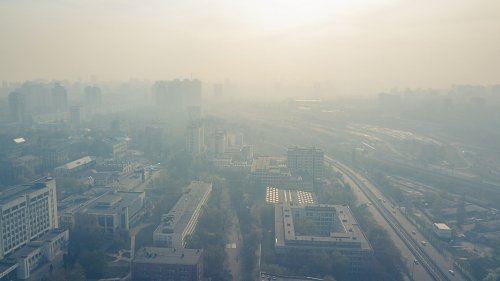
Most cities in Ukraine today, 14 July, cannot boast of clean air. For some, there are even warnings — pollution levels there are so high that it is advisable to limit time spent outdoors.
EcoPolitic reports on air quality based on data from the international monitoring platform IQAir.
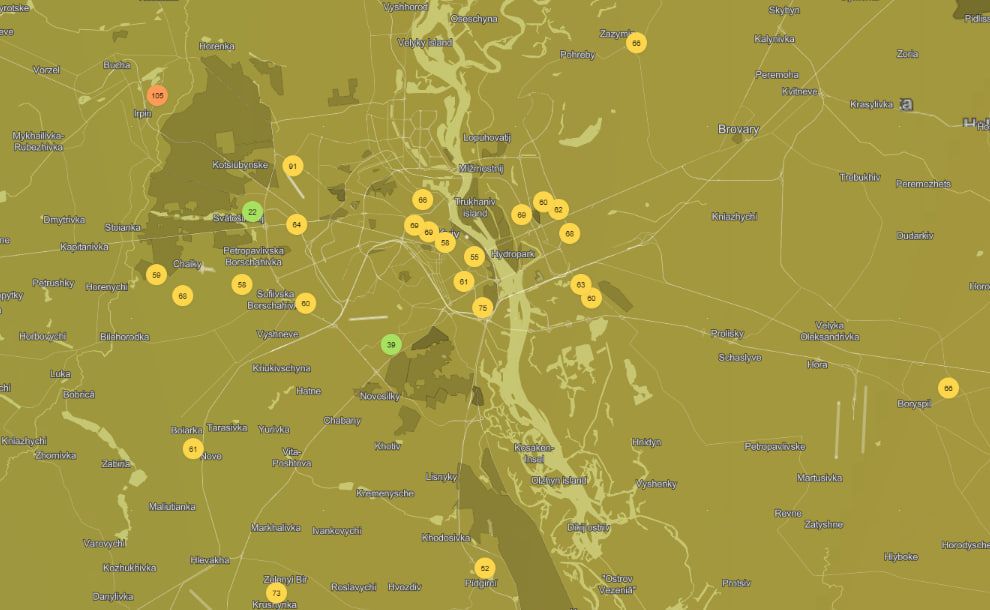
Air pollution levels in the capital are in the ‘yellow’ zone. This refers to the average concentration of harmful substances. The concentration of PM2.5 fine particulate matter is 14.6 µg/m³. This is 2.5 times higher than the standard. It should be noted that, according to WHO guidelines, a concentration of this fraction of particulate matter of no more than 5.5 µg/m³ is considered “healthy”.
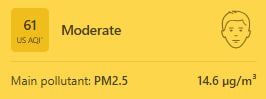
Only at two locations in Kyiv does the monitoring equipment detect good air quality, specifically on Chornobylska Street and Zdanovska Street.
In nearby cities, air pollution levels are also moderate, except in Irpin, where the air is hazardous for sensitive population groups. The dust content there is 35.7 µg/m³, which is nearly 6.5 times higher than the acceptable limit.
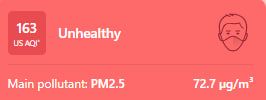
Currently, the dirtiest air is observed in Cherkasy, where equipment indicates a red danger level. The average PM2.5 content there is 72.7 µg/m³, which is over 13 times the WHO recommended level.
At such pollution levels, people are advised to limit outdoor activities, keep windows and doors closed, and purify indoor air if suitable equipment is available. Otherwise, it is recommended to do wet cleaning.
A moderate level of pollution is being recorded in most cities in Ukraine, including:
- Dnipro. PM2.5 concentration – 11.5 µg/m3;
- Lviv. PM2.5 concentration – 11.2 µg/m3;
- Odesa. PM2.5 concentration – 13.2 µg/m3;
- Kharkiv. PM2.5 concentration – 10.3 µg/m3;
- Zhytomyr. PM2.5 concentration – 10.8 µg/m3;
- Poltava. PM2.5 concentration – 11.8 µg/m3;
- Vinnytsia. PM2.5 concentration – 10 µg/m3;
- Rivne. PM2.5 concentration – 16.9 µg/m3;
- Zaporizhzhia. PM2.5 concentration – 10.7 µg/m3;
- Ternopil. PM2.5 concentration – 12.2 µg/m3;
- Khmelnytskyi. PM2.5 concentration – 11.2 µg/m3.
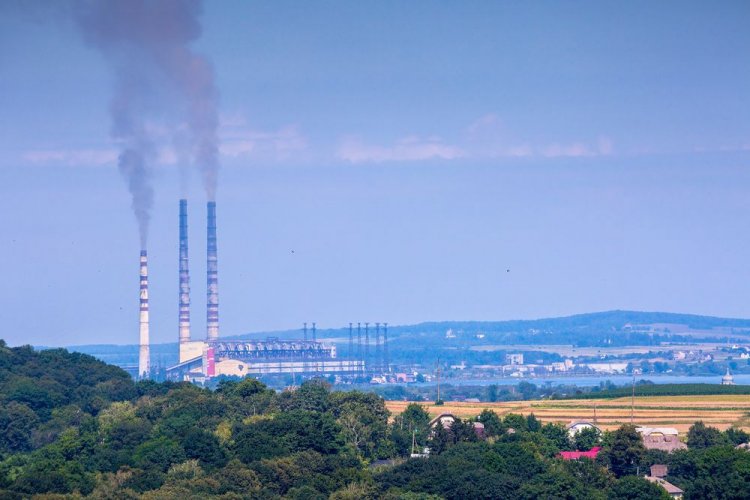
In Zaporizhzhia and Kryvyi Rih, there is an increased risk of industrial pollution.
EcoPolitic has reported that extreme heat negatively affects air pollution. High atmospheric pressure keeps toxic substances closer to the ground and prevents their dispersion.