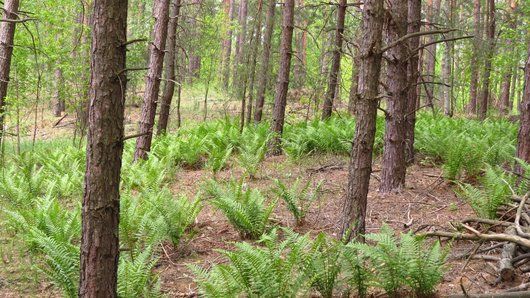
A unique forest-steppe ecosystem in the Cherkasy region, which is home to rare species of flora and fauna, has recently been granted protected status. In order for ‘Borovychok’ in the Moshnyva community to officially become a landscape reserve, environmentalists and the public prosecutor’s office had to join forces.
Environmental activists from the Ukrainian Nature Conservation Group (UNCG) explained that establishing the reserve proved to be no easy task. The regional council considered the issue on several occasions. Moreover, during a preliminary vote, councillors did not support the creation of the reserve, so the environmental activists had to appeal to the public prosecutor’s office.
The regional district court ruled that the Cherkasy Regional Council had failed in its duty to grant these valuable natural areas the status of a nature reserve.
“The creation of ‘Borovychek’ is another step toward preserving the biodiversity of Cherkasy region and expanding Ukraine’s nature reserve fund. The Cherkasy Regional Prosecutor’s Office played an important role in safeguarding the area by filing a lawsuit to protect valuable and unique natural complexes,” the Ukrainian Nature Conservation Group noted.
Source: “Suspilne”/Kateryna Lavrinenko
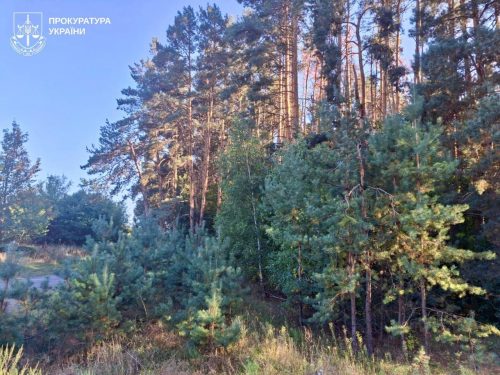
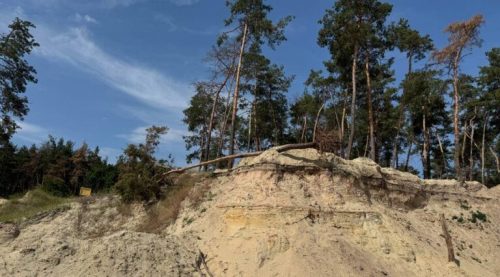
What the protected area looks like
“Borovychek” consists of 85 hectares of land with natural pine-oak open woodland, featuring meadow clearings and steppe sections. This unique mosaic of different natural biomes creates favorable conditions for the existence of various biological species, including those listed in the Red Book.
“Here, valuable natural habitats of European significance have been preserved – thermophilic deciduous forests, namely, light oak forests according to the National Biotope Catalogue, as well as forest edges and glades, which, without the impact of wild hoofed animals, would quickly become overgrown. Their presence indicates that hoofed animals are indeed abundant in the reserve,” said Kateryna Lavrinenko, PhD in Biological Sciences, to the media outlet “Suspilne.”
Artificial monoculture forests with even-aged pines surround the reserve. In contrast, the protected area’s vegetation is diverse in composition, features various ages, and clearly has a natural origin.
Source: “Suspilne”/Kateryna Lavrinenko
What can be found in “Borovychek”
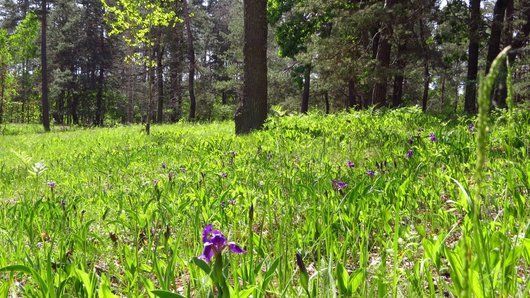
The reserve boasts a wide array of rare biodiversity. For example, three plant species listed in the Bern Convention are found here: Pasque flower (Pulsatilla patens), Hungarian iris (Iris hungarica), and Linum austriacum.
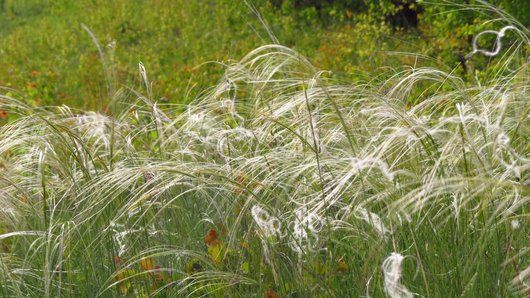
There are also representatives of the Red Book of Ukraine – meadow pasque flower, open pasque flower, fragrant mezereon, and Dnipro feather grass. Five more species from the regional red list are present.
However, the area’s richness is not limited to plants. Fifty-three animal species inhabiting this territory have varying conservation statuses. The majority are birds listed in the Bonn and Bern Conventions.
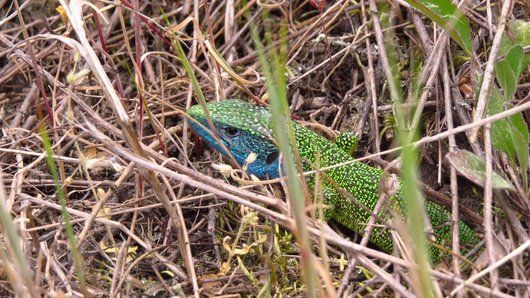
“Among them are the western marsh harrier, the European elk, the green lizard, the smooth snake, the stag beetle, the clay bumblebee, the common carpenter bee, and other species listed in the Red Data Book. Notably, special attention should be given to the grooved rhizodus, a relict beetle that serves as an indicator of the most valuable natural forests. Currently, ‘Borovychek’ remains the only known habitat for this species in Central Ukraine,” said Kateryna Lavrinenko.
Source: “Suspilne”/Kateryna Lavrinenko
EcoPolitic previously reported that communities in Kharkiv region refuse to create nature conservation sites. During 2025 alone, they rejected the proposal to protect 10,000 ha of unique ecosystems within six landscape parks.