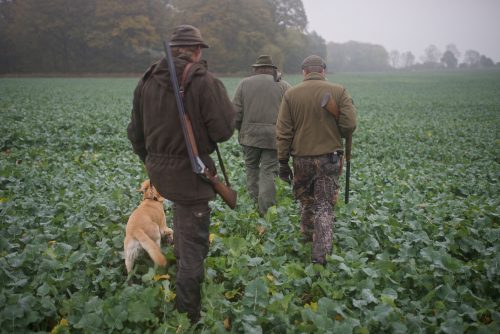
By its order, the Khmelnytskyi Regional State Administration authorised 241 hunters to shoot animals in the “Podilski Tovtry” National Nature Park. The regional authorities had no quotas, no scientific justification, nor permission from the Ministry of Economy. Consequently, the Khmelnytskyi District Administrative Court upheld the arguments put forward by civil society activists. It ruled that the decision was a breach of the law and ordered it to be revoked.
This was reported by the environmental organisation “Kyiv Ecological and Cultural Centre” (KECC).
A comprehensive breach
The plaintiffs in the court case were the KECC and the Association of Animal Protection Organisations of Ukraine (AAPOU). The activists were outraged by the arbitrary and unfounded sentence handed down to the animals in the nature reserve “simply because the hunters really fancied a spot of shooting”.
The KECC added that the Ministry of Economy had joined the case as a third party on the plaintiffs’ side. Its representatives appeared in court to oppose the regional officials.
The court justified the illegality of the administration’s actions as follows:
- Lack of a quota from the Ministry of Economy, the environment, and agriculture. Such a quota is required for any special use of natural resources within the nature reserve fund of national importance. Essentially, the region bypassed the hierarchy by issuing a permit based solely on its own order.
- Lack of specificity. The Khmelnytsky Regional Military Administration effectively gave hunters a free hand by not specifying particular animal species for culling. The administration's order only mentioned "predatory and harmful animals."
"The annulment of the unlawful order is significant for the future: it prevents issuing similar acts in the future with reference to previous respondent 'practice'," the court's decision additionally emphasized.
EcoPolitic previously shared information on how much it costs animal rights activists to evacuate animals from the combat zone. For a hundred animals, expenses exceed UAH 600,000, and most of the funds go toward medical services.