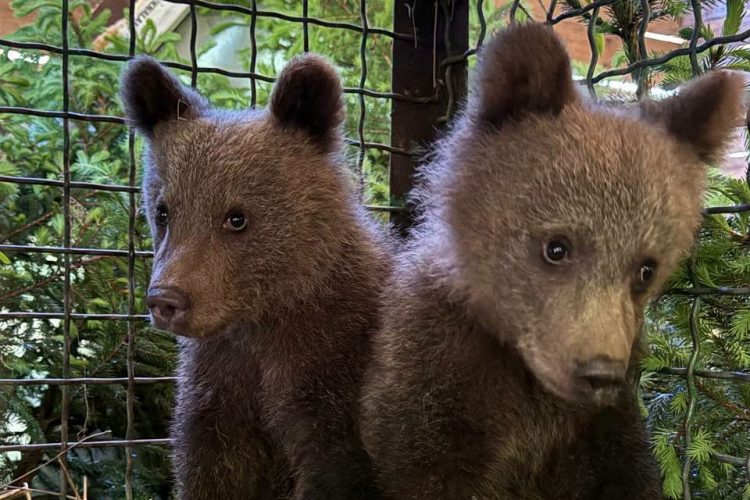
What started as a routine walk through the Carpathian forests turned into a bear cub rescue operation for newlyweds Roman and Anna. The orphaned cubs had been stranded in a tree for several days, and their mother had not returned. The couple therefore rescued the cubs and handed them over to a specialist rehabilitation centre.
The story of the wild animals’ rescue was shared by the Synevyr National Nature Park on its Facebook page.
They were not left to fend for themselves
Whilst walking in the woods near their village, a couple heard pitiful sounds. It turned out that two bear cubs were sitting in one of the trees, looking utterly helpless.
At the same time, they realised that such a discovery could be dangerous, as the mother bear was likely to be nearby. Sensing a threat to their cubs, these animals are capable of mauling a person or even killing them. Therefore, Roman and Anna immediately left the area.
However, just in case, the couple decided to keep an eye on the animals.
“Since the family lives in a mountain settlement very close to the forest, the man dared to check how the cubs were doing. The next day, he went back to the same place and again heard the familiar mournful cries. There was no mother bear nearby,” reported Synevyr.
Monitoring the bear cubs allowed timely detection that the mother never returned to them. All this time, the animals remained on the tree, hungry and frightened. So Roman decided to take the cubs home and feed them.
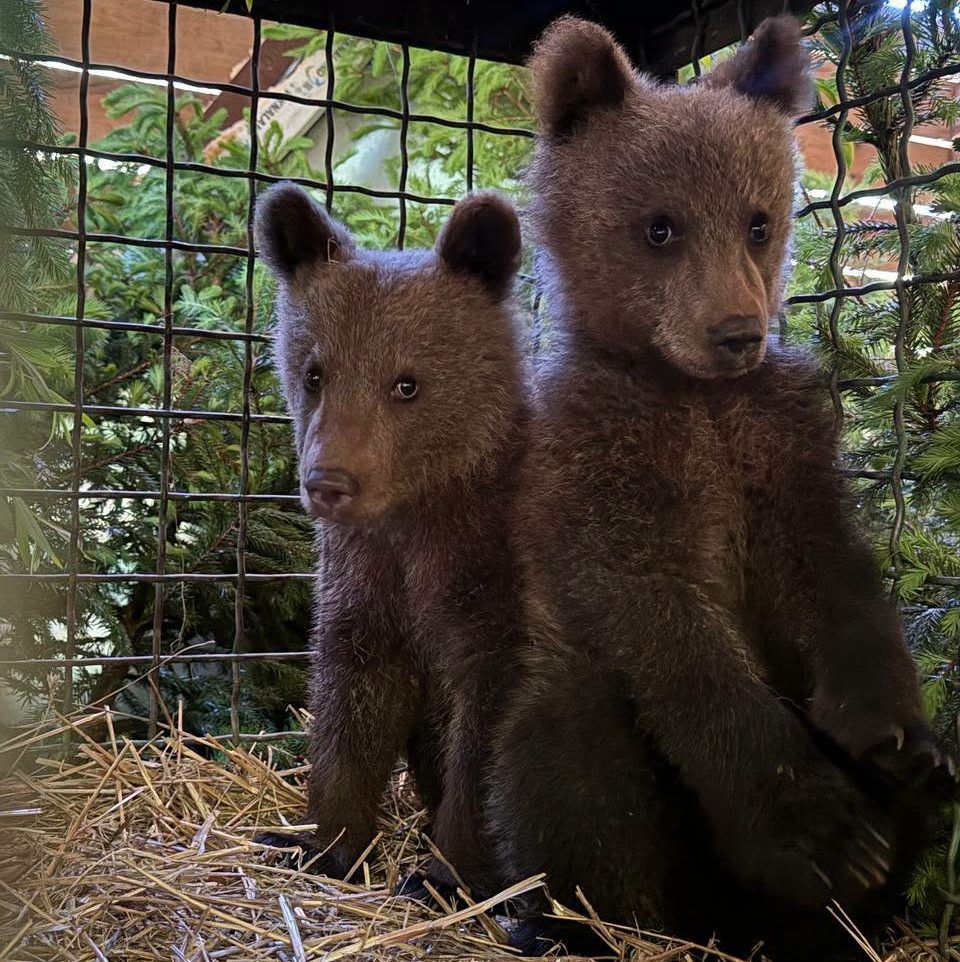
Source: Synevyr National Nature Park
The cubs are now safe
The man immediately contacted the Brown Bear Rehabilitation Center (BBRC) at Synevyr National Park. After hearing the story of the rescued animals, the management agreed to accept the bears and arranged their transfer. The head of the BBRC, Yaroslav Bundzyak, and veterinary doctor Yuriy Masley, participated in the transportation of the cubs.
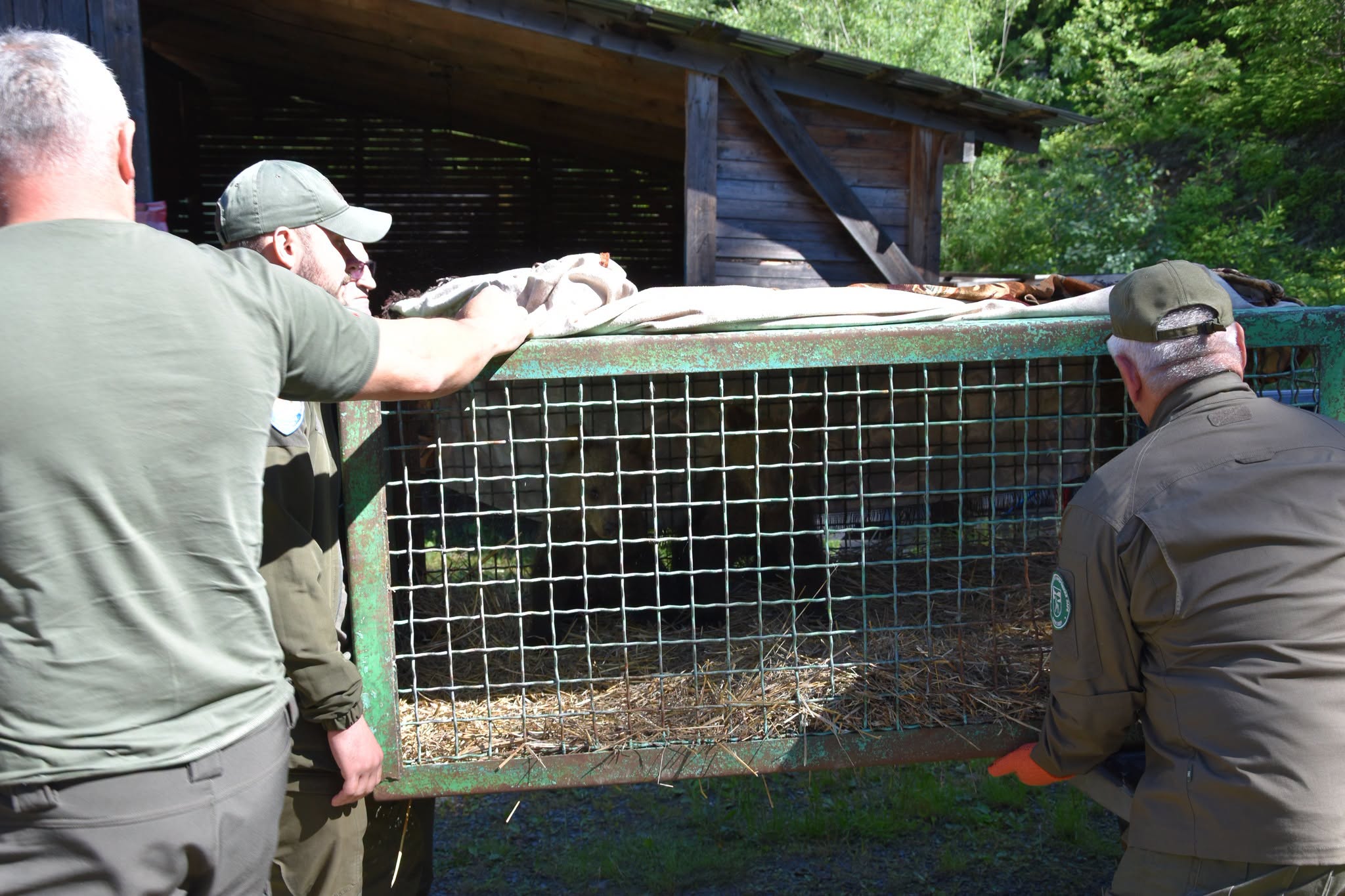
Source: Synevyr National Nature Park
Experts emphasize that such a journey, along with the sudden change of environment, usually causes stress for all animals. However, based on the examination of the young bears, everything is fine with them.
“The cubs feel a little anxious, which is absolutely natural for this situation, but overall their condition is satisfactory,” commented veterinarian Yuriy Masley.
Going forward, the animals will undergo a rather lengthy adaptation period under the supervision of the center’s specialists. Synevyr notes that they have all the necessary resources to ensure the bears grow up healthy and well-adjusted.
EcoPolitic previously reported that activists won a case against the Khmelnytskyi Regional State Administration, which allowed hunters to shoot wild animals in the Podilski Tovtry National Park.
We also reported which freshwater fish species in Ukraine are on the verge of extinction due to river pollution and the excessive regulation of riverbeds.