Threats to physical and economic security have not shaken Ukrainians’ conviction that environmental issues are equally important, and that each of us bears personal responsibility for them. Certain eco-friendly practices have become part of everyday life for most people, and 51% of those surveyed are willing to pay extra for waste sorting.
These findings were published by the research company Gradus.
The environment is not a priority
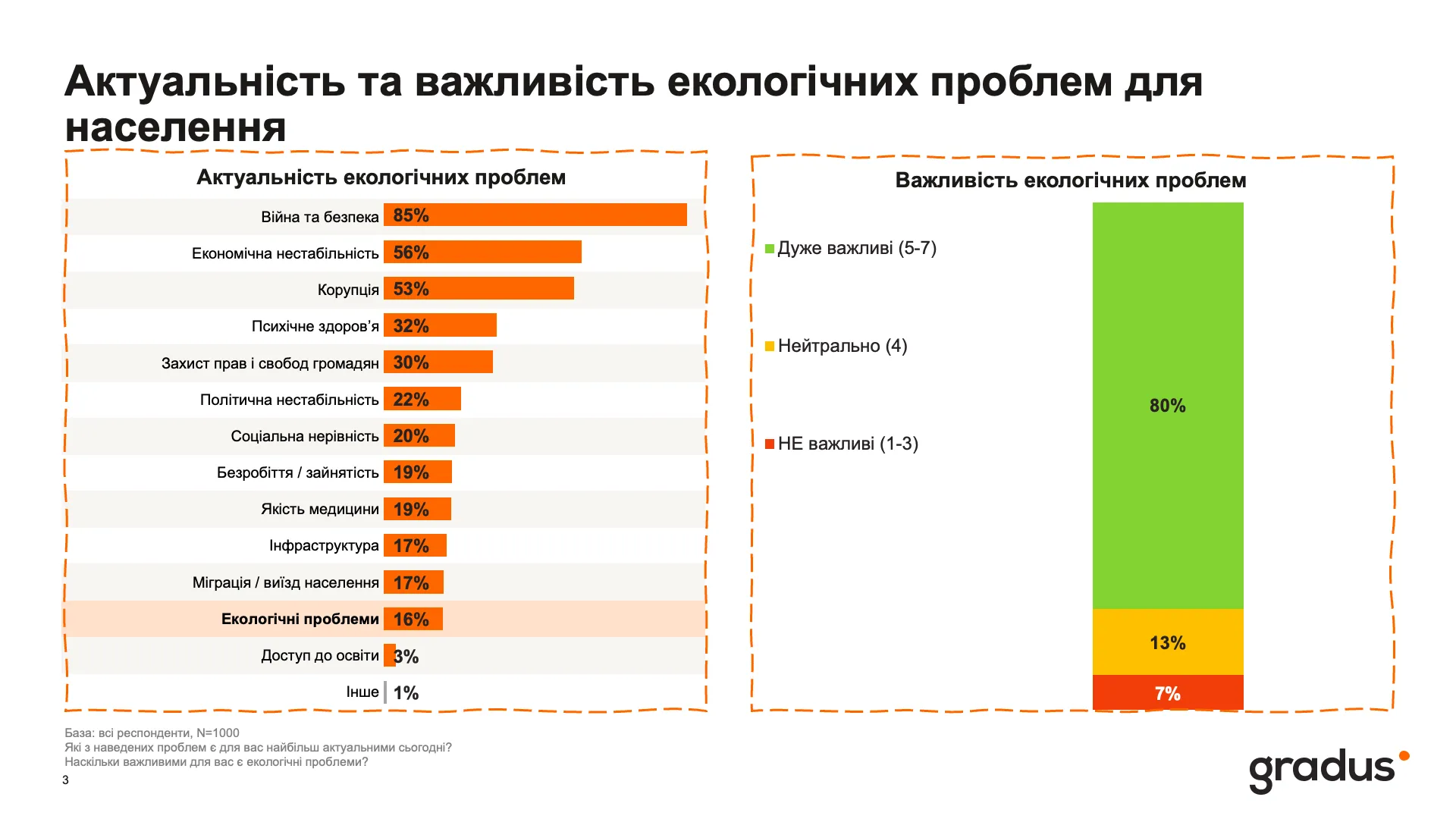
During a full-scale invasion, it is entirely to be expected that war and security are the main causes of concern for Ukrainians. According to the survey, 85% of respondents ranked these issues as their top priority.
The top five issues causing people concern also included economic instability, corruption, mental health and the protection of citizens’ rights.
Compared to other problems, the state of the natural environment is of the least concern to Ukrainians — the environment ranked second to last, ahead of only access to education.
Source: Gradus
However, this does not mean that respondents view environmental protection as unimportant. When asked about environmental issues outside the context of daily threats, 80% of those surveyed noted the high importance of this topic.
Environmental awareness in everyday life
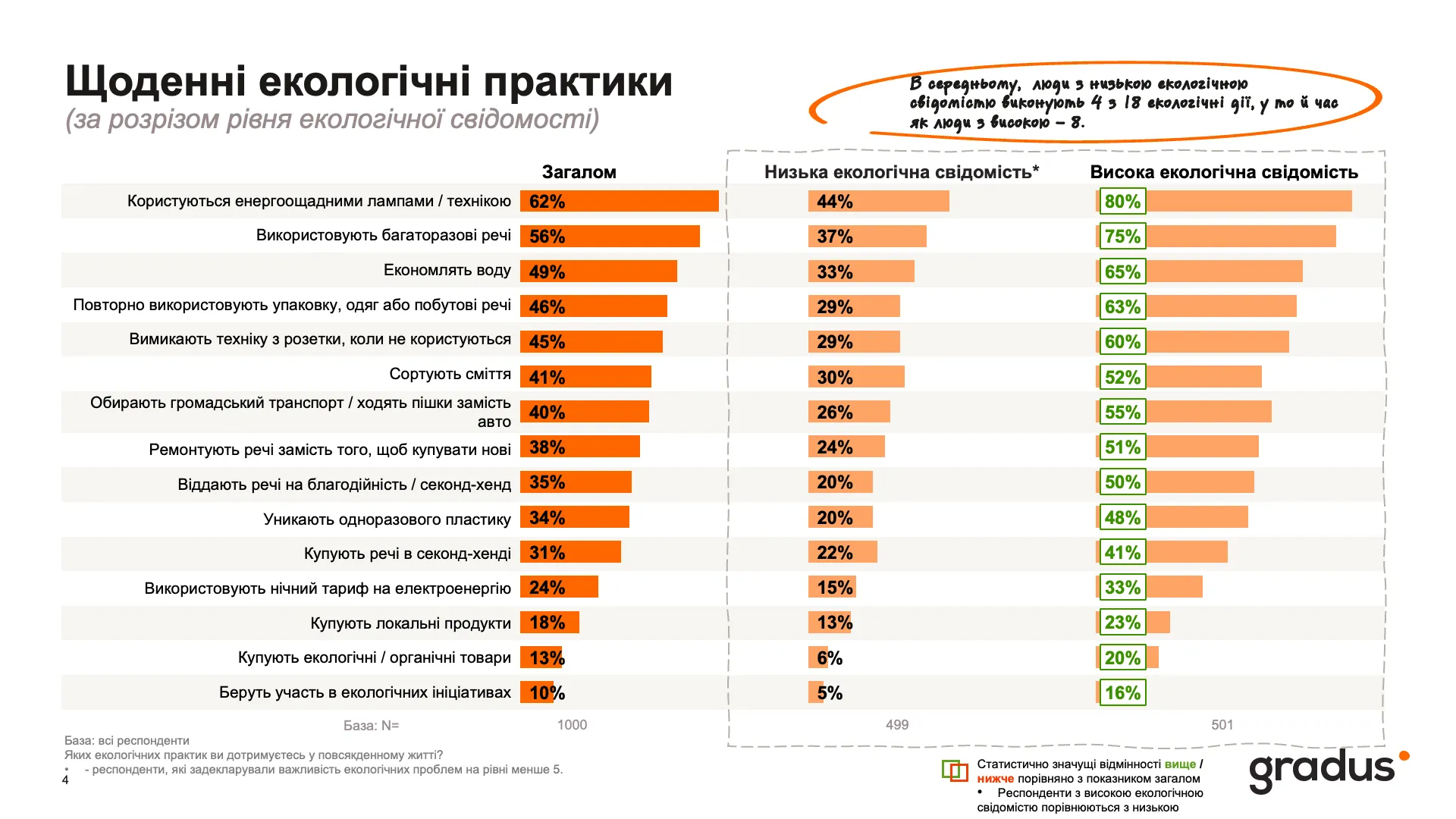
The research also identified which environmental practices are most commonly adopted by Ukrainians. The leading practice – is the use of energy-saving lamps and household appliances (62%). Reusable items are used by 56% of respondents. Another 49% of people save water. At the bottom of the list was participation in environmental initiatives – only 10% of respondents have taken part in them.
Source: Gradus
Gradus also found a pattern – the more environmentally conscious a person is, the more ecological habits they exhibit in their daily life. On average, this means 8 practices versus 4.
From personal to collective responsibility
Some 74% of respondents feel personally responsible for the state of the environment. However, most people (88%) believe that responsibility should be shared collectively – by the state, business, and society.
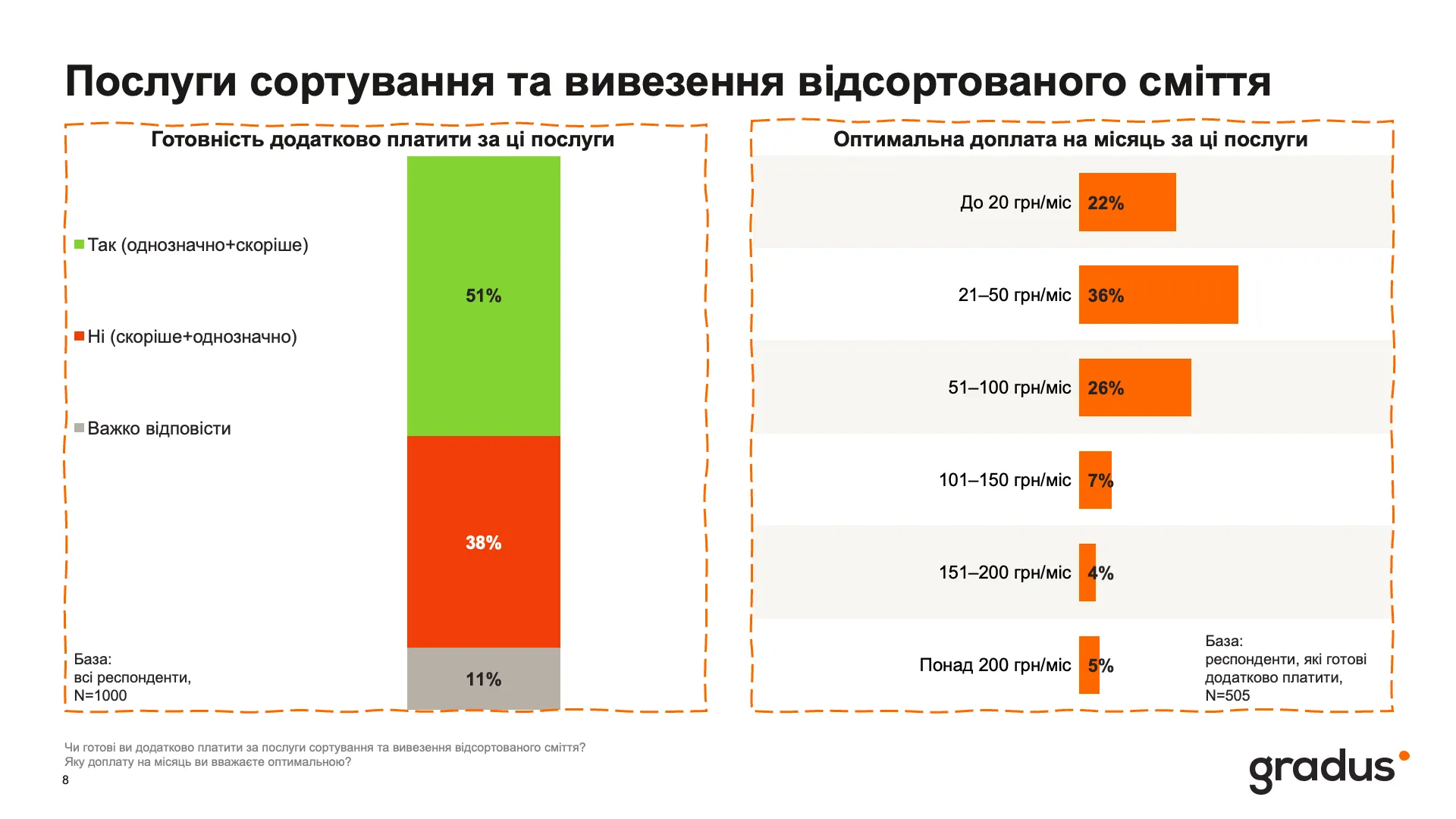
When asked whether they are willing to pay extra for waste sorting and removal, 51% of respondents answered positively. At the same time, the majority of citizens (36%) believe that an optimal surcharge would be 21–50 UAH per month.
Source: Gradus
Strict control and investments in recycling
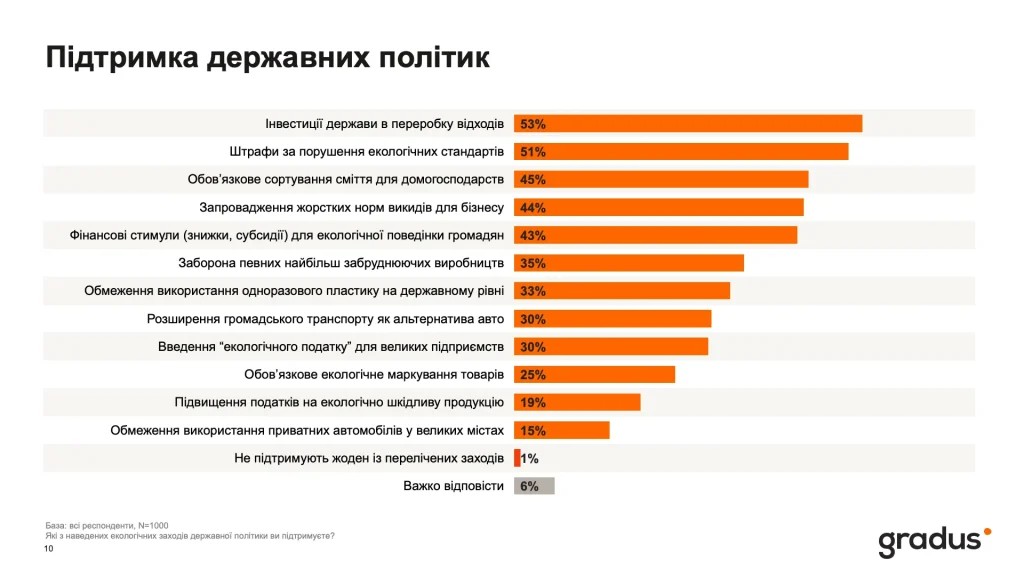
The survey also helped identify which theoretical government initiatives would receive the greatest support from the public.
The largest share of respondents (53%) support government investment in waste recycling. More than half of respondents (51%) support increasing penalties for anti-ecological actions. Compulsory waste sorting is supported by 45% of those surveyed.
Source: Gradus
The least support was given to the potential restriction of private car use in cities (15%) and the increase of taxes on environmentally harmful products (19%).
“Despite the fact that safety is the main priority for 85% of surveyed Ukrainians, environmental protection has become a stable internal value – 80% of citizens recognize its importance, and half of them are willing to personally pay extra for waste sorting. However, individual efforts are not enough: over 50% of respondents expect government investment in recycling and stricter fines for environmental violations,” said sociologist, founder, and CEO of Gradus, Yevheniia Blyzniuk.
EcoPolitic previously explained how to get started with waste sorting at home.