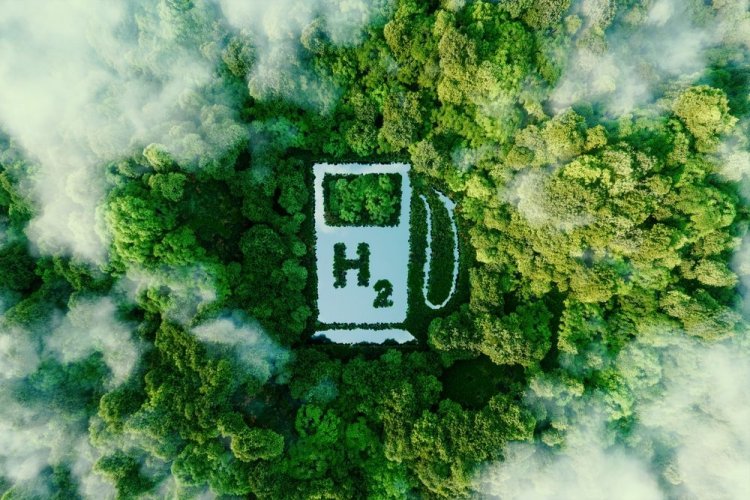
The European Commission has officially approved a €1.3 billion German state aid program to support the development of green hydrogen production.
This was announced on the official website of the EU’s executive body.
The decision was made in accordance with EU state aid rules, and the program itself will operate using the “Auctions-as-a-Service” tool within the framework of the European Hydrogen Bank.
The main goal of the program is to accelerate the decarbonization of European industry, reduce dependence on Russian fossil fuels, and support the implementation of the EU Hydrogen Strategy.
What the program entails
Germany plans to support the construction of electrolysers with a total capacity of up to 1,000 MW. It is expected that this will enable the production of up to 10 million tons of renewable hydrogen and avoid approximately 55 million tons of CO₂ emissions.
Funding will be allocated through competitive auctions overseen by the European Climate, Infrastructure, and Environment Executive Agency (CINEA).
Support will be provided to companies that build new electrolysers to supply hydrogen via the Danish Hydrogen Backbone 1 pipeline. This is a major cross-border infrastructure project designed to connect sources of "green" hydrogen with large consumers in Germany.
In fact, the program is aimed not only at hydrogen production itself but also at the development of European hydrogen infrastructure.
How the support will work
Companies will receive a direct subsidy for every kilogram of renewable hydrogen produced. Payments can last up to 10 years.
At the same time, participants must meet European requirements for the production of RFNBO—renewable fuel of non-biological origin.
Why the European Commission approved the program
European Commissioners believe that the program:
- is truly necessary for the development of the “green” hydrogen market;
- will stimulate investments that would likely not have been realized without state support;
- will not create excessive distortions in competition, as funding will be allocated through open auctions;
- will help reduce the cost of renewable hydrogen in the future through infrastructure development;
- will have a positive environmental impact and contribute to the EU’s transition to clean energy.
Recently, EcoPolitics published an article on Ukraine’s prospects as a European hydrogen hub. We examined how far our country has progressed in developing its own energy cluster for “green” hydrogen production and what the immediate prospects are in this area.