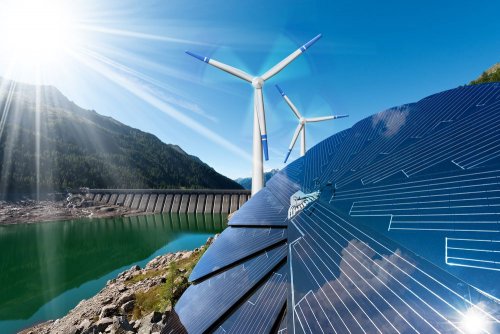
In the first quarter of 2026, Europe set new records for the number of hours with negative electricity prices. This phenomenon is caused by an excess of power generation from renewable sources. However, sub-zero prices will by no means lead to cheaper energy in the long term. On the contrary, they discourage investment in clean energy.
According to a report by Euronews.
Historical performance
On the Iberian Peninsula, energy prices fell to record lows below zero, as evidenced by data from the analytical company Montel.
In Spain, there were 397 hours registered with negative prices, which is dramatically higher than the 48 hours in the first quarter of 2025. In Portugal, negative prices were observed for 222 hours.
This problem was not exclusive to the sunny Pyrenees. Bloomberg analysts noted that this year, the period with negative energy prices in Germany grew by 50%, while in France it doubled by 100%.
The lowest average daily energy price was recorded on April 5 in Germany, at -16.34 euros per 1 MWh. In France, this figure was -3.56 euros, and in Belgium – 0.05 euros.
Causes and consequences
The price of energy drops below zero when supply exceeds demand. This is happening more often with the onset of bright, sunny weather.
Producers are forced to pay extra to have their energy purchased. Sometimes, this proves cheaper than shutting down equipment to curtail production. Some do so as they still receive subsidies or have contracts in place.
How can the problem be solved?
This is a real challenge given that Europe’s power grids are outdated. They were designed for steady supply from fossil fuel power plants and are not equipped to handle renewables – with their generation peaks and drops.
Over the past five years, investments in the power system have risen by 47%, now totaling about 70 billion euros annually. However, this is still insufficient.
Analysts at Emder have warned that, due to the power grid’s incapacity, the creation of 120 GW of new renewable generation capacity is currently under threat.
There are two possible ways out – giving away energy for free, as the United Kingdom plans, or intensively developing battery energy storage systems (BESS).
For the past 12 years, Europe has broken its own records for BESS deployment. Since 2021, their cumulative capacity has increased tenfold to reach 77 GWh.
Yet this is not enough. To meet the 2030 targets, Europe needs BESS capable of storing a colossal 750 GWh of energy.
EcoPolitic previously reported that, due to excess generation in the UK, a model is being considered for paying residents for their energy consumption on windy days.
In Ukraine, people are encouraged to make maximum use of energy-intensive appliances between 10:00 and 17:00 to avoid a surplus in the grid.