German scientists have developed a portable device that allows users to quickly determine whether water is safe to drink. This invention does not require special reagents or trained personnel, making it particularly useful for communities with limited resources.
This was reported by the German Federal Research Institute (WAM).
The urgency of the problem
Water contamination is one of the greatest risks to water safety worldwide. Conventional laboratory tests take hours or even days, and in many regions of the world, there is simply a shortage of laboratories and specialists.
This problem is relevant even for developed countries. During natural disasters or man-made accidents, the timely detection of threats in water can save the health of entire communities and regions.
Rapid analysis
The German Federal Institute for Materials Research (BAM) has developed a rapid test to detect urobilin content. This is a substance formed after hemoglobin breakdown and is "excreted" from the bodies of humans and animals through waste.
Urobilin is a marker indicating that contamination has entered the water. Its presence is evidence of nearby hazardous sources.
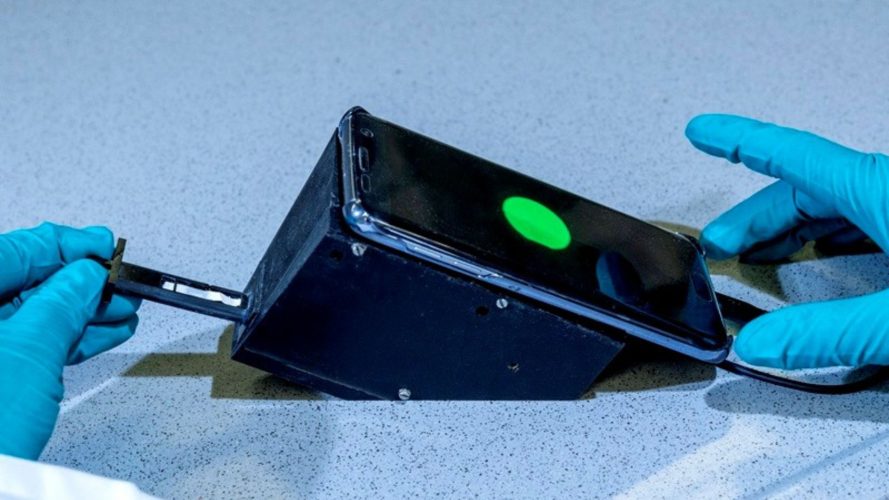
To detect the compound, the system uses a test strip. When in contact with the molecule, it emits light. This optical reaction is sufficient to determine within seconds whether the water is contaminated.
The role of the smartphone
The rapid system does not require special equipment – a standard smartphone is sufficient. The device integrates with a mobile gadget by connecting a small LED module.
The phone powers the light source, while its camera captures the strip's emission.
The importance of the system
The invention does not require specialized knowledge, complex preparation, or additional chemicals. This simplifies deployment in environments where resources are scarce or difficult to access and eliminates the risk of 'lab technician error.'
During testing, the system demonstrated its sensitivity and efficacy. It detects even low concentrations of urobilin.
"The rapid test was successfully validated using real water samples from rivers, as well as at the inflow and outflow of Berlin's wastewater treatment plant. Even under challenging environmental conditions with naturally occurring substances affecting the body, urobilin was reliably detected," explains Swayam Prakash, one of the developers of the rapid test.
EcoPolitic prepared for its readers a list of tips on saving water.
Work is also underway in Ukraine to strengthen accountability for violations of water legislation. Fines may increase several times over.