A team of American researchers has invented a breakthrough method for producing ethylene, which is the basis for most types of plastics. Scientists at Northwestern University propose to produce it directly from waste industrial gases.
This was reported by NV media with reference to an article in Nature Energy magazine.
When ethylene is produced using the "traditional" method, the emissions from the process are equal to the volume of the substance produced. Therefore, scientists worked to solve several problems at once: reduce the amount of harmful production gases, reduce the impact of ethylene production, and adapt the process to work with renewable energy sources (RES).
The essence of the technology
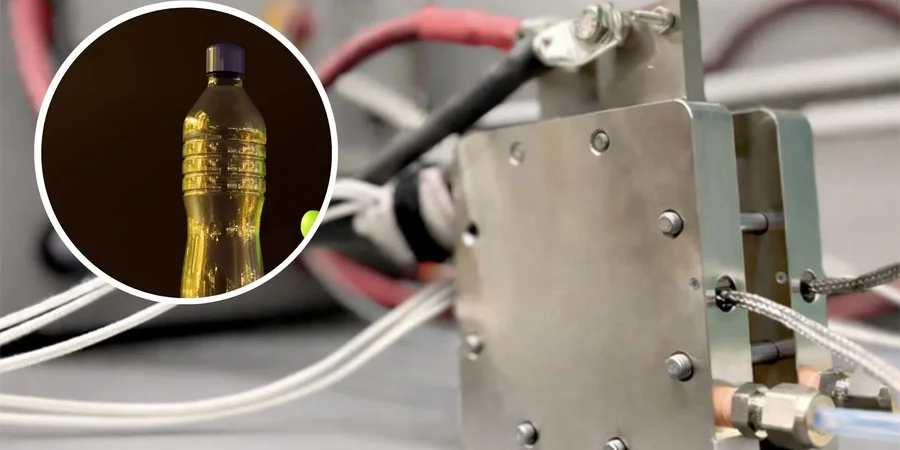
Synthesis gas is one of the wastes of industrial production, but it can be converted into ethylene. This requires the use of a special electrolyzer. The key task for the scientists was to select a high-quality catalyst for this process.
The breakthrough was identifying an effective “assistant” – sodium polyacrylate. It enables the creation of a microenvironment within the system that has the properties of a cell filled with extremely salty water, but without either salt or water. This discovery makes the use of alkaline electrolytes unnecessary.
Impressive efficiency
The new approach demonstrates a leap in efficiency – it is 60% more economical than previous solutions. In fact, this is not just another improvement, but a technological breakthrough.
The system produces ethylene at a voltage of only 1.2 V and a current density of 100 mA·cm⁻². In terms of energy, this is about 49 GJ of electricity per ton of product. For the industry, this means a significant reduction in energy costs and, consequently, a lower carbon footprint from production.
Potential “synergy” with RES
The electrolyzer has also demonstrated its durability: more than 80 hours of continuous operation and 30 on-off cycles without loss of stability. This very flexibility makes the technology suitable for integration with renewable energy sources, where power supply depends on the time of day and weather.
Professor Ted Sargent and his team have set themselves an ambitious goal – to develop a closed-loop production process without using fossil fuels. If the system operates under conditions of unstable power supply, then wind and solar energy are quite suitable for such production. In the future, this invention may lead to the formation of an exclusively “green” sector in the chemical industry.
EcoPolitic previously reported that the United Kingdom is considering the deployment of space-based solar generation. A recent study found that rectennas at “ground” wind power plants are capable of receiving radiation from orbital solar power stations and transferring it to the country's general power grid.