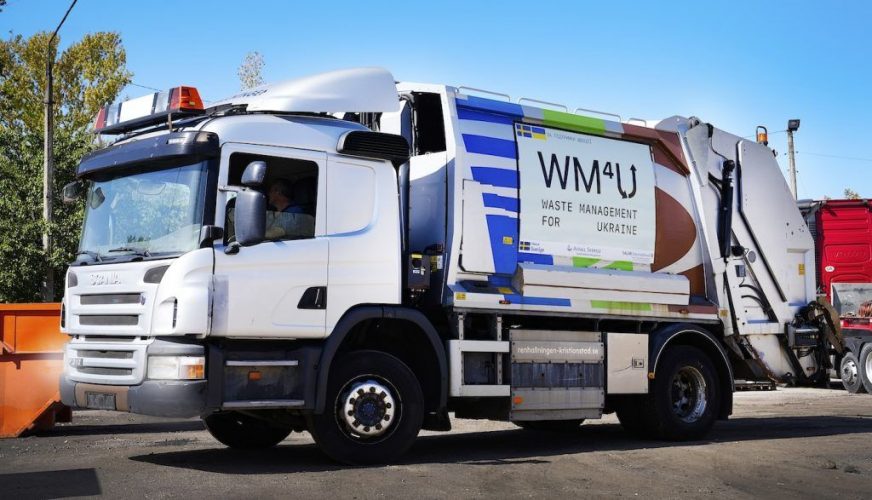
Sweden has allocated additional funds to modernize Ukraine's waste management system, including the management of construction waste. The amount is 200 million Swedish kronor (approximately $22.4 million) for the program "Strengthening Municipal Waste Management in Ukraine" (WM4U), which is already being implemented in four regions. In total, funding for the program already amounts to almost $99.5 million.
This was reported on the website of the Swedish-Ukrainian WM4U program.
Sweden has its own strategy for the ecological restoration of Ukraine for 2023-2027. Its main focus is on the formation of a sustainable waste management system, particularly at the local level, through new opportunities that comply with European Union standards.
Features of local cooperation
The program uses the Team Sweden approach, promoting interaction between local authorities in Ukrainian regions and Swedish stakeholders.
Among the activities that the WM4U program helps to implement are:
- mapping existing infrastructure involved in the waste management system;
- analyzing the system to identify weak points;
- developing approaches to prevent the generation of waste, as well as recycling and utilizing it as secondary raw material;
- WM4U carries out such measures through local investment projects, first preparing feasibility studies.
Pilot projects of the program are already being implemented in Kharkiv, Poltava, Vinnytsia, and Ivano-Frankivsk regions. Local municipalities are receiving investments to purchase specialized vehicles for waste collection, waste containers, and funds for acquiring technical equipment for landfills.
“By combining Sweden's resources and NEFCO’s expertise, we aim to achieve tangible improvements in municipal services, environmental sustainability, and quality of life for Ukrainian citizens,” said Malin Perhult, head of the Ukrainian unit at the Swedish International Development Cooperation Agency (Sida).
EcoPolitic previously reported on how the residents of Kropyvnytskyi responded to the launch of the separate waste collection system. Unfortunately, it is harder to form ecological habits than to install separate containers.