In our previous article, we analyzed how successfully the European Union and Ukraine, as its future member, are coping with the decarbonization of industry and the development of clean energy. In parallel with the construction of new megawatts of green generation, we need to stop thoughtlessly wasting the energy we produce.
Today, we will talk about another fundamental component of the "green" transition—energy efficiency—as well as the problems and challenges on the path to climate neutrality that Ukraine needs to address.
How the EU optimizes energy consumption and what works (and doesn't work) in Ukraine
Energy efficiency is always a win-win: both for the budget and for the climate. In the EU, it's not just about intentions. The working formula is as follows: clear standards + strict requirements + big money for implementation. The following are working in the bloc:
- The Energy Performance of Buildings Directive (EPBD), which effectively obliges member states to modernize the housing stock and to ensure that new constructions qualify as “Zero-Emission Buildings.”
- The Ecodesign for Sustainable Products Regulation (ESPR), which sets minimum energy efficiency standards for equipment and appliances, and bans products with low energy efficiency classes.
- requirements for industry to conduct energy audits and reduce energy consumption.
Industry is also under strict oversight: large enterprises must regularly undergo energy audits and implement energy-saving measures. National governments report annually to the European Commission on the progress of their plans to reduce demand for energy resources.
Without funding – nothing works
These requirements are backed by significant financing. Investments in building energy efficiency within the European Union have nearly doubled over the past decade, reaching $100 billion. The region leads the world in issuing “green” bonds to finance environmental construction. For modernization of the energy sector, the following tools are available:
- The Modernisation Fund, which supports projects in the energy sector, buildings, and industry, especially in Central and Eastern European countries.
- For households, there is the Social Climate Fund, which compensates costs for insulation, heat pumps, and other modernization measures.
- Hundreds of municipal projects are financed by the European Investment Bank – the world’s largest creditor of “green” projects.
- The Horizon Europe program addresses the need for innovation, from new materials to digital energy management systems.
The logic is simple: if you oblige businesses and citizens to modernize, you have to provide money and guarantees for this transition.
After the start of the Russian invasion, the EU launched the REPowerEU program, which accelerates the transition away from gas, the insulation of buildings, and the installation of heat pumps. In fact, this is an anti-crisis package that reduces dependence on fossil fuels and stimulates energy efficiency. Add to this the EU's green bonds, which finance modernization projects, and you get the full picture: Europe is not just talking about energy savings, it is investing heavily in them.
And what about Ukraine?
Ukraine is following a different scenario. We are champions in strategies and presentations. Formally, we also have state energy efficiency programs, strategies, goals for 2030–2050, and concepts for green recovery. Their real effectiveness is often hampered by a lack of funding, unstable rules, and fragmented decisions.
The State Energy Efficiency Fund, which was supposed to become the Ukrainian equivalent of European mechanisms, has been operating slowly and in a limited manner for a long time, and some programs have been effectively frozen due to a lack of resources or changes in government priorities.
The Ukraine Decarbonization Fund also provides loans for energy efficiency projects to communities and businesses. Its financial capabilities are extremely insufficient compared to existing needs.
Communities
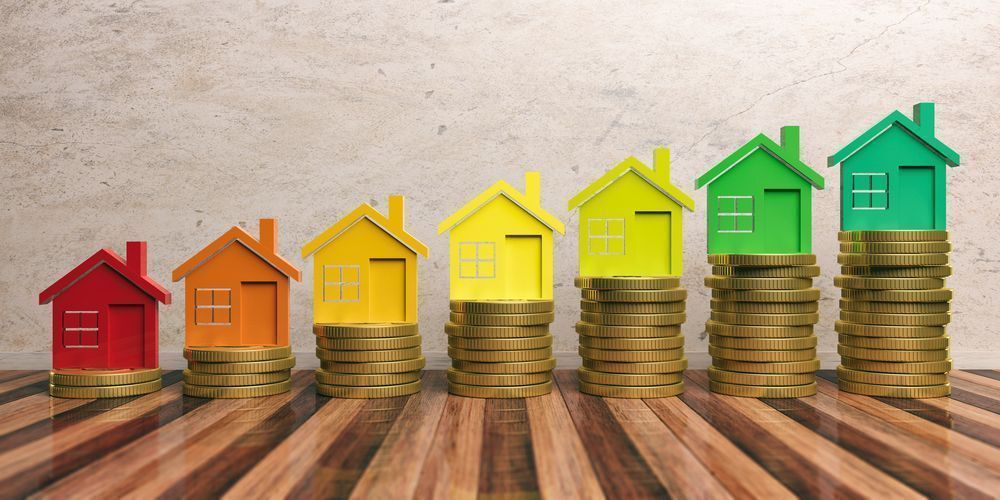
For households, there are initiatives such as “warm” loans or “Energy House”, but their scale is incomparable with that of the EU – the programs were launched and stopped repeatedly, and access to funds depended on the political calendar.
Municipalities also receive grants, but mostly from international partners rather than from the Ukrainian state. In fact, it is donors and international financial institutions—the IFC, GIZ, EBRD, and World Bank—that provide most of the support for energy efficiency projects, rather than the national budget.
Business
Industry finds itself in an even more difficult situation. It is required to modernize, but is not provided with compensation or incentives similar to those available in the EU. As a result, Ukrainian companies either postpone energy efficiency projects until better times or are effectively forced to modernize on their own, without systematic state support.
Ukrainian reality: when there are goals but no action
We have identified the main challenges and barriers on Ukraine's path to climate neutrality:
1. Lack of real assistance for producers seeking decarbonization
Today, Ukrainian companies find themselves in a very peculiar situation:
- there are EU requirements for decarbonization (CBAM, export obligations);
- there are expectations from international partners;
- there is the willingness of enterprises themselves to upgrade.
What is critically important is missing:
- compensation or grant programs;
- tax incentives;
- affordable loan products for modernization;
- clear state rules and priorities.
As a result, businesses either delay projects or move investments to other countries where support exists and actually works.
 Еxpert, Chairman of the Committee on Industrial Ecology and Sustainable Development of the European Business Association, and Director of GMK Center, Stanislav Zinchenko, considers the search for funding sources to be the main challenge in the decarbonization of Ukrainian industry in his opinion. Many other specialists agree with this view. They emphasize the critical importance of financial factors at every stakeholder meeting organized by the relevant ministry, associations, or international technical assistance projects.
Stanislav Zinchenko notes that the available international support instruments, in particular the Ukraine Facility, are mainly targeted at small and medium-sized businesses, not large-scale industry, where the cost of decarbonization projects exceeds €1 billion.
2. A stack of negative factors associated with full-scale war:
- lack of access to investment;
- destroyed infrastructure;
- workforce shortage;
- problematic export of new modern equipment and no possibility to invite foreign specialists for its installation and commissioning due to security concerns;
- an extremely unstable situation in the energy sector.
3. Lack of systemic investor support
International investors have repeatedly signaled: Ukraine has tremendous potential in solar, wind, bioenergy, and hydrogen. But there are three “buts”:
-
regulatory unpredictability;
-
high capital risks;
-
no government guarantees.
What is standard in the EU (risk insurance, investment return guarantees, stable tariffs or auctions) still remains at the level of intentions or draft laws in Ukraine, which gather dust for years.
If we truly want to become part of the European “green” market, we need not just a declarative investment climate but one that works. Investors do not enter a market where the rules change every six months and the judicial system is run in manual mode.
4. Supporting business is not a request, but a requirement of the times
The world is moving toward decarbonization not because it is trendy, but because it is economically advantageous. Ukraine risks ending up in a situation where our companies will be forced to pay carbon duties, lose competitiveness, or move production abroad. This is not an exaggeration – it is the mathematical reality of CBAM.
If the state does not create conditions under which modernization is an incentive rather than a punishment, we will lose not just the climate race, but the competition for investment and market access.
5. Instead of declaring loud goals, daily methodical work is needed
In the EU, decarbonization means:
-
long-term planning;
-
hundreds of programs that function;
-
support for municipalities and business;
-
transparent rules;
-
mandatory standards.
In Ukraine, for now, these are predominantly political statements which are very rarely implemented through systematic work.
A genuine path to climate neutrality is impossible unless the state stops being a bystander and becomes an active partner for business and investors. Without this, all strategies will remain attractive presentations filled with numbers and charts, but without real results.