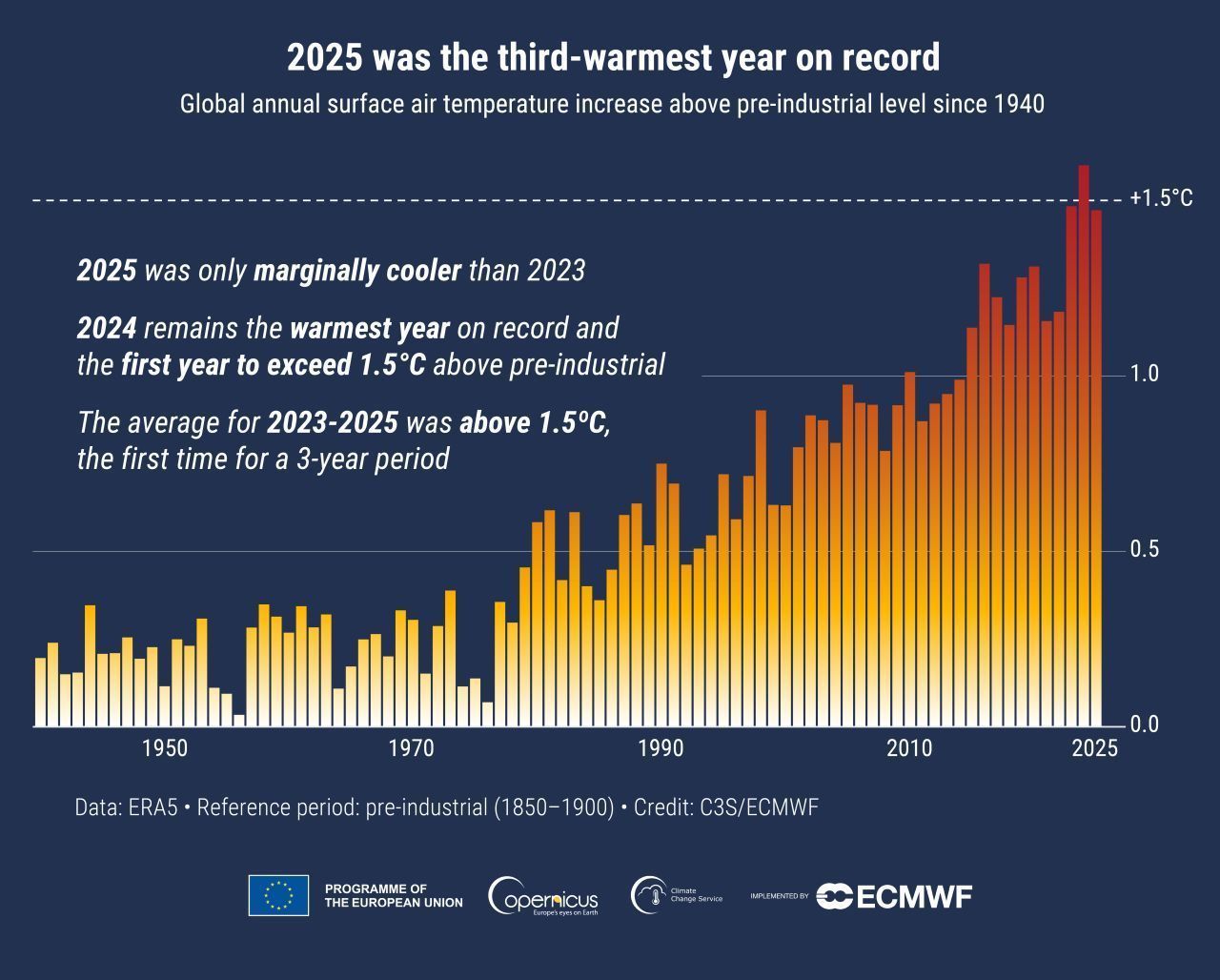
Over the past 11 years, global temperatures have been breaking records—all of these years have been the hottest in the entire period of climate observations. 2025 ranked third in terms of exceeding pre-industrial temperature levels. It was 0.01°C cooler than 2023 and 0.13°C cooler than 2024.
According to data from the European Earth observation program Copernicus, last year exceeded the pre-industrial temperature "norm" by 1.47°C, and the previous year, 2024, by 1.6°C.
Based on data from the last three years, humanity has already exceeded the 1.5°C mark on average.
"The 1.5°C limit for long-term global warming set by the Paris Agreement could be reached by the end of this decade – more than ten years earlier than predicted based on the rate of warming at the time the agreement was signed," the Copernicus report emphasizes.
Source: climate.copernicus.eu.
Causes of extreme exceedances
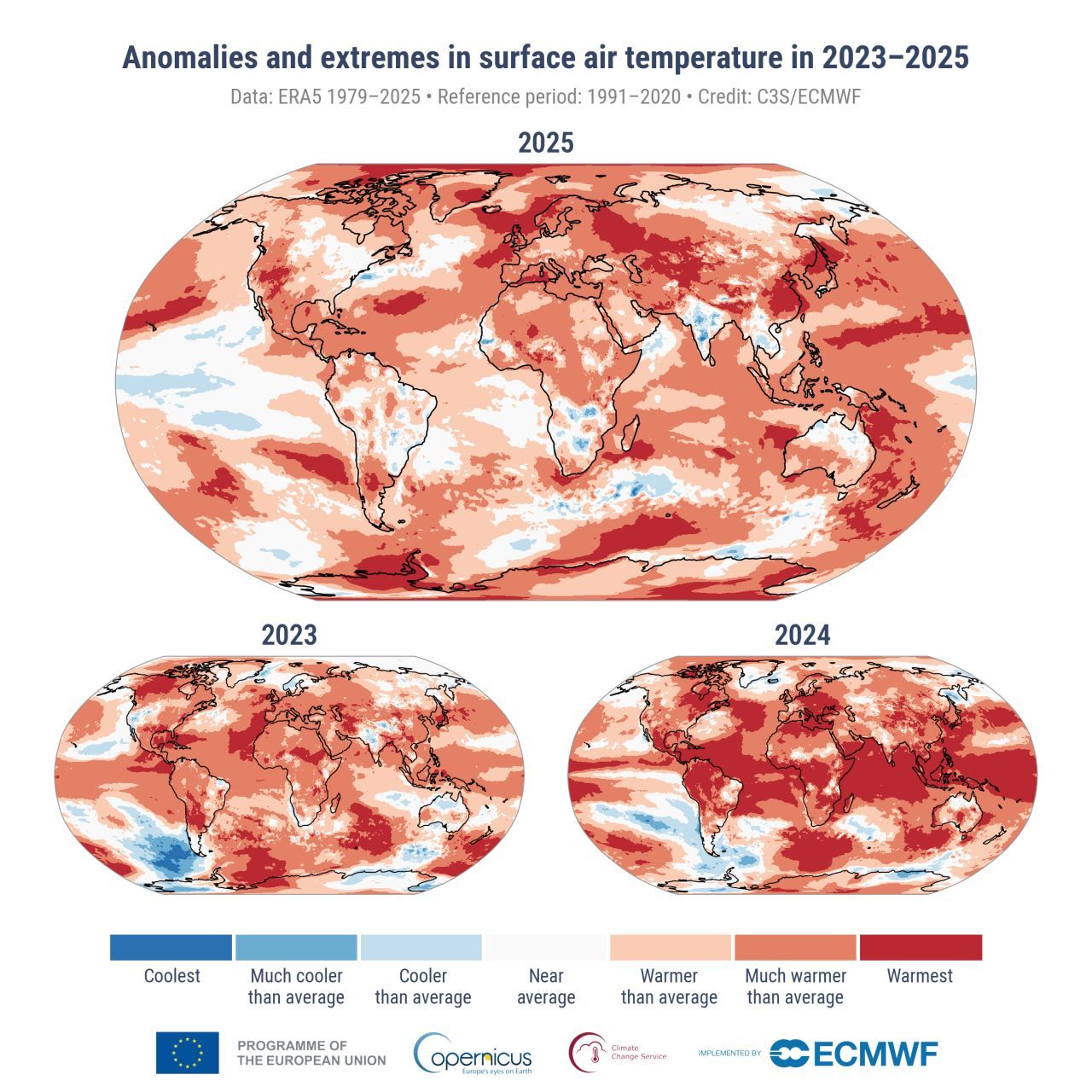
The high temperatures observed over the past three years are explained in the report by the following factors:
- Accumulation of greenhouse gases due to ongoing emissions and reduced absorption of carbon dioxide by natural sinks;
- Exceptionally high temperatures across the ocean surface. This is connected with the El Niño phenomenon and other ocean variability factors exacerbated by climate change;
- Low cloud cover, changes in the amount of atmospheric aerosols, and fluctuations in atmospheric circulation.
Source: climate.copernicus.eu.
Extreme consequences
The number of extremely hot days worldwide has generally increased. Such periods are marked by severe heat stress – a subjective temperature sensation of 32°C or higher. The World Health Organization (WHO) identifies heat stress as the main cause of mortality attributable to climate change.
Drought, combined with strong winds, contributed to the spread of forest fires. The highest annual emissions from this type of fire occurred in Europe. North America also suffered greatly from wildfires.
There have also been extremely large-scale natural disasters around the world, including severe storms in Asia and Europe.
“We will definitely exceed the temperature limit. The choice we have now is how best to cope with the inevitable temperature breach and its consequences for societies and natural systems,” said Carlo Buontempo, Director of the Copernicus Climate Change Service.
EcoPolitic previously reported that to protect the population from heat waves, Spain will establish a network of “climate shelters”.
Global warming has led to the proliferation of a previously rare phenomenon known as zombie fires. These fires “hibernate” beneath the snow in the soil and resurface in the spring.