Against the backdrop of news about rising greenhouse gas emissions and the likely failure to achieve the goals of the Paris Climate Agreement, the world is still seeing a number of significant environmental developments. In particular, the pace of green energy production is accelerating, and cheaper batteries are raising hopes for a stronger electric car market.
Bloomberg reported on these and other environmental successes around the world.
The peak of green energy
The world is purposefully investing in clean technologies and doing so more actively than financing "dirty" industries. The ratio of investments in such projects is about 1:2 in favor of clean energy. In the largest polluting countries, this figure is even higher — about 2.6. We are talking about China, the US, India, and the EU.
If we compare investments in green energy with previous years, we can see a new record: in the first half of 2025, they were 10% higher than in the same period in 2024. This is evidenced by data from a BloombergNEF study.
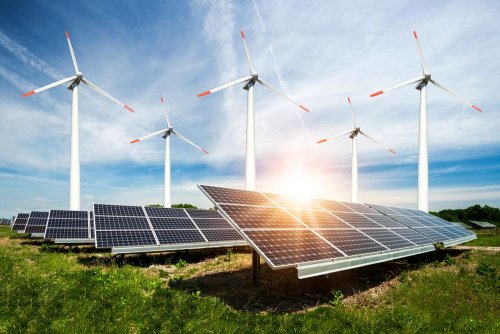
Another record will be set by the growth in renewable energy capacity. The British analytical center Ember predicts it will be 11%. During the first three quarters of the year, it was clean energy from wind and solar that met the growth in global demand for electricity. Overall, renewable energy capacity has grown by about 30% in three years.
China remains the leader in renewable energy production. The largest polluter is also creating the most additional clean energy generation facilities. China accounts for 66% of new solar generation and 69% of wind generation.
AI as a catalyst for clean generation and eco-optimization
Powering artificial intelligence infrastructure requires enormous energy costs. However, new renewable energy capacities are largely becoming the sources of this energy. Investments in them for the first three quarters of 2025 were greater than for the whole of 2024.
AI technologies have also opened up additional opportunities that have an indirect positive impact on the environment:
- accelerating scientific research and the search for new climate solutions;
- increasing the accuracy of weather forecasts;
- identifying and counting species threatened with extinction.
Decrease in battery costs
Optimization of production and its surplus outweighed the high prices of the necessary metals, so the cost of batteries fell by 8% in terms of capacity per kilowatt*hour.
Thus, the production of battery technology has become more profitable, which may also affect the electric vehicle market—they may become cheaper and have a longer range.
Climate change policy
Under Trump, the US has consistently distanced itself from global environmental efforts. However, other countries have demonstrated ambitious emission reduction targets, including Denmark, Australia, and the UK.
China remains cautious, but its progress in developing clean energy leads analysts to believe that it will exceed its target of reducing emissions by 7-10% by 2035.
Even at the municipal level, environmental policy is having a tangible impact. European cities continue to promote public transport and cycling to reduce car dominance. In New York, drivers are strongly advised not to drive in certain areas of the city, which has already reduced traffic congestion.
Financing adaptation to change
Weather disasters are becoming increasingly destructive, so the world has become convinced of the effectiveness of new financial instruments for sustainability. In particular, we are talking about catastrophe bonds. A deadly hurricane in Jamaica led to a payout of $150 million under this instrument.
At the same time, COP30 decided to triple adaptation funding to $120 billion by 2045. The Bill Gates Foundation will allocate $1.4 billion over four years to expand access to innovations that will make farms in Africa and Asia more sustainable.
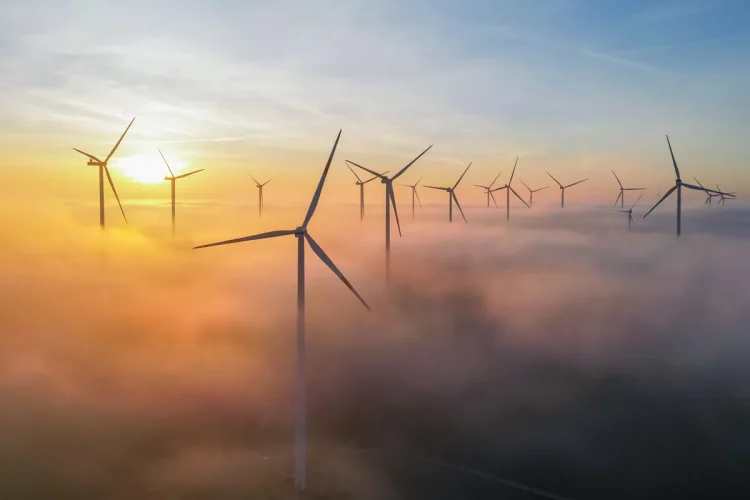
EcoPolitic previously reported that in the first half of 2025, the global wind energy sector added 70 GW of capacity.
Europe increased its production of biogas and biomethane to 22 billion cubic meters.