
The 2025 Nobel Prize in Chemistry was awarded to Susuma Kitagawa (Japan), Richard Robson (Australia), and Omar Yaggi (USA) for the creation of metal-organic frameworks (MOFs) that effectively absorb CO2. In particular, the innovation is capable of accumulating hydrogen and purifying water.
This was reported by the press service of the most prestigious international award The Nobel Prize on its official website.
MOF frameworks combine metal ions and organic links to form a crystal lattice with numerous micropores. This porosity allows molecules of gases or liquids to penetrate and stay inside. In this way, MOFs can act as a "sponge" to capture greenhouse gases at the molecular level.
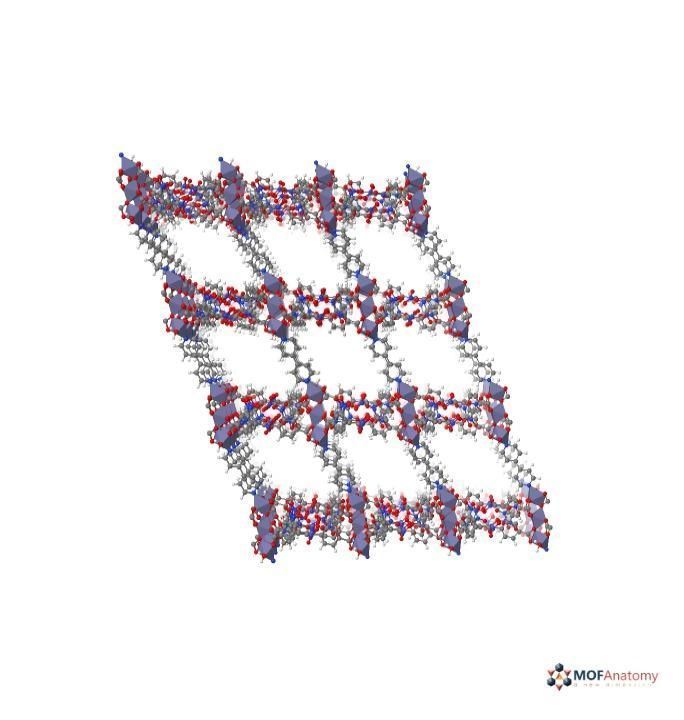
Photo: nobelprize.org
What are the functions of this invention?
1) One of the key tasks of metal-organic frameworks is to combat climate change to reduce the concentration of greenhouse gases in the air.
2) In arid areas, MOFs can help "pull" moisture from the atmosphere. In particular, to provide drinking water to regions with a shortage of resources.
3) MOFs kill harmful substances from water or gases, such as chemicals (PFAS) or pharmaceutical residues.
Representatives of the European Commission note that the discovery of MOFs supports the EU's climate neutrality goals, as such materials are important for carbon capture technologies, energy storage, and resource purification.
We would like to remind EcoPolitic readers that in September, for the first time in Ukraine, the innovative South Korean EcoSteelAscon eco-technology was used on the Zalissia-Zavorichi highway in Kyiv Oblast.
The EcoSteelAscon technology involves replacing natural crushed stone with steelmaking slag, a waste product of metallurgical production. The Republic of Korea has been using this technology for 10 years and this method of road construction has proven to be effective.