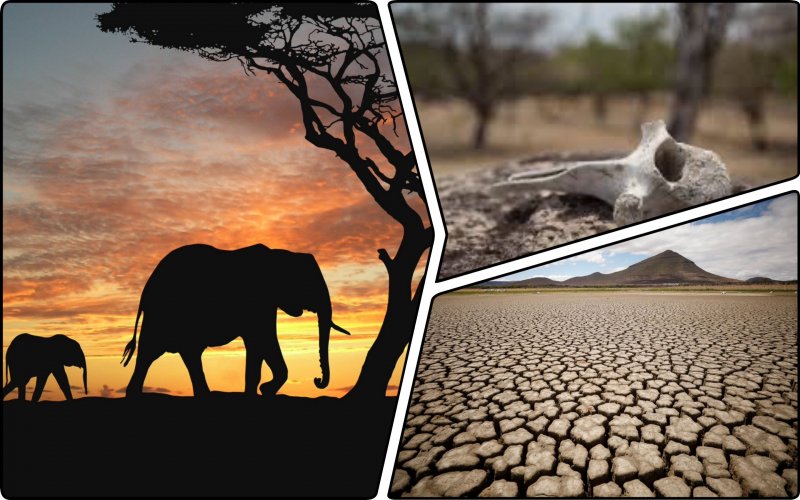
In Zimbabwe, due to a large-scale drought against the background of climate change, elephants, buffaloes and a number of other animals began to migrate to the neighboring Botswana.
Animal movements are likely to increase human-wildlife conflict as they pass through human-populated areas, reports Bloomberg.
Botswana's elephant population is said to be the largest in the world at over 130,000. Zimbabwe has the second largest population of these animals – more than 65,000 individuals.
Zimbabwe Parks and Wildlife Authority spokesperson Tinashe Farawo said the animals were migrating from Hwange National Park.
"These are not only buffaloes, elephants, but also most of the animals, because we are facing a great shortage of water in the park. Most of the natural water bodies have now dried up," he said.
Farawo added that the Matabeleland North region, where the park is located, experienced low rainfall in November-March. The Department of Meteorological Services warned that the drought will continue amid the El Niño climate phenomenon. In addition, the amount of precipitation may decrease at the end of the year.
The UN's international panel of experts on climate change has identified southern Africa as a "hot spot region". That is, the continent has an increased risk of extreme heat and a decrease in precipitation as the temperature on the planet increases.
Earlier, EcoPolitic wrote, that in Antarctica at the end of 2022 about 10,000 chicks of the emperor penguin died due to climate change, namely the abnormal melting of sea ice.
As EcoPolitic previously reported, a study by a group of scientists from the University of Copenhagen showed that the Earth's life support systems were so damaged that the conditions on the planet do not correspond to a safe environment for human existence.