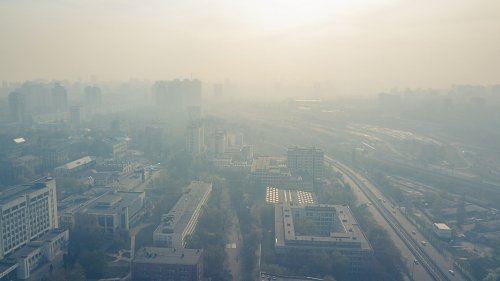
On the evening of Tuesday, June 6, in the Kharkiv region, Russian troops shelled the Kupyan district and damaged the Tolyatti-Odesa ammonia pipeline.
This is the second shelling of the ammonia pipeline in two days, Oleg Synegubov, the head of Kharkiv OVA, reported in Telegram.
According to him, a total of 6 "arrivals" will be recorded in the area of the pumping station near the village of Masyutivka.
He emphasized that as of 21:00 on June 6, air pollution by ammonia was not recorded, and the situation was under control.
Earlier, Synegubov said on the air of the national marathon that the day before, on June 5, the Russian occupiers fired at an ammonia pipeline in the Kupyan district. There was a leak of 134 tons of technical ammonia. However, air pollution was not detected in Ukrainian-controlled settlements, except for the village of Masyutivtsi, where the ammonia content reached 7 nanograms per cubic meter with a norm of up to 10 ng/m3.
Earlier, EcoPolitic wrote, that on June 5, in Kharkiv Oblast, Russian troops shelled the Kupyan district and damaged an ammonia pipeline. Upon impact, the emergency shut-off valves were activated, and the ammonia leak occurred over a 2.3 km long section.
As EcoPolitic previously reported, according to OSINT researchers, the ecological and economic consequences of the destruction of the Kakhovskaya HPP can be compared to the consequences of the use of tactical nuclear weapons of 5-10 kilotons.